Top Recycling Equipment for Sale: Insider Picks
The global recycling equipment market is experiencing unprecedented growth, with the industry valued at approximately $57 billion in 2023 and projected to expand at a compound annual growth rate of 5.8% through 2030. For businesses entering or scaling within the waste management and recycling sector, selecting the right equipment is critical to operational efficiency, profitability, and environmental impact. Whether you’re launching a small-scale recycling operation or upgrading an established facility, understanding which recycling equipment for sale offers the best return on investment has never been more important.
The decision to invest in recycling equipment extends beyond simple cost considerations. Modern recycling operations demand machinery that balances throughput capacity, material sorting accuracy, energy efficiency, and long-term durability. This comprehensive guide examines the leading recycling equipment options available today, breaking down their applications, price ranges, and performance metrics to help you make data-driven purchasing decisions.
Baling Equipment and Compactors
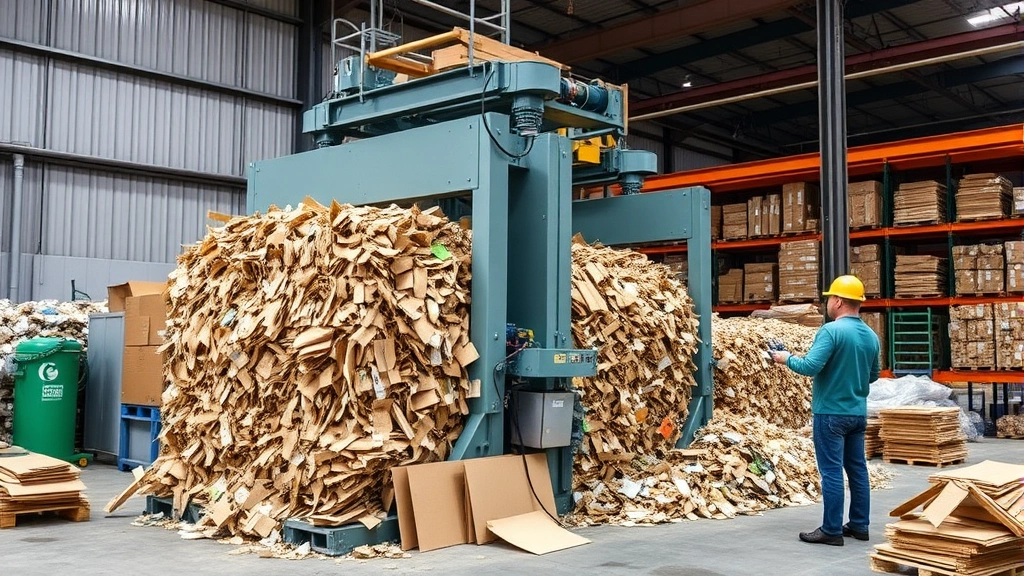
Baling equipment represents one of the most essential investments for any recycling operation. These machines compress recyclable materials—including cardboard, paper, plastics, and metals—into dense, manageable bales that reduce storage space requirements by up to 80% and significantly lower transportation costs. Horizontal balers, the industry standard, can process 10-20 tons of material per hour, making them ideal for high-volume operations.
Hydraulic balers dominate the market due to their reliability and efficiency. Entry-level models start around $15,000-$25,000, while industrial-grade horizontal balers range from $40,000 to $150,000 depending on capacity and automation features. Premium models with automatic ejection systems, integrated conveyor systems, and advanced safety features command prices between $100,000-$250,000. According to Statista’s waste management analysis, facilities utilizing automated baling systems report 35-40% improvements in operational throughput compared to manual alternatives.
Vertical balers serve smaller operations and businesses with space constraints, offering footprints as small as 6×4 feet. These units typically cost $8,000-$30,000 and handle 3-8 tons per hour. When evaluating baling equipment, calculate the payback period by dividing equipment cost by monthly savings generated through reduced waste disposal fees and recovered material revenue.
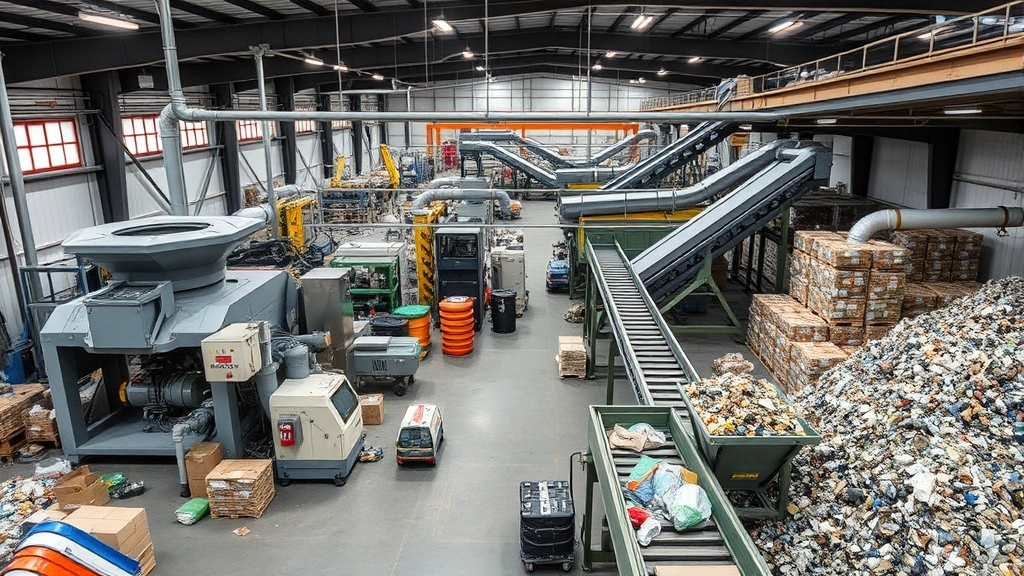
Sorting and Separation Systems
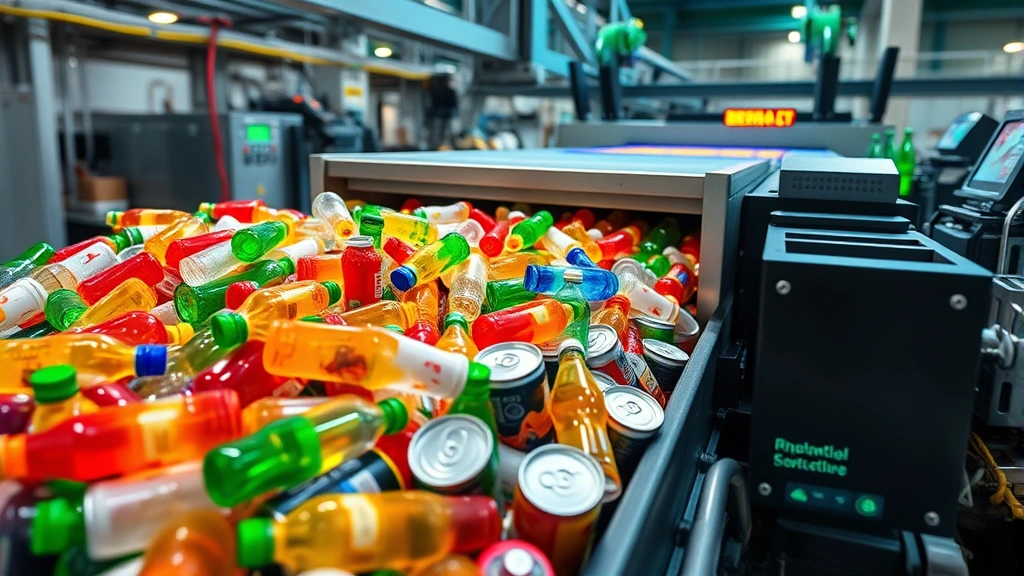
Advanced sorting technology has revolutionized recycling operations by enabling facilities to achieve material purity rates exceeding 98%, substantially increasing the value of recovered materials. Optical sorting systems use near-infrared and visible light sensors to identify and separate materials based on composition, color, and density with unprecedented accuracy.
Single-stream sorting lines can process 50-100 tons per day and cost between $500,000-$2,000,000 depending on sophistication and customization. These systems integrate multiple technologies including magnetic separators for ferrous metals, eddy current separators for non-ferrous metals, air classification systems, and optical sorters working in tandem. The EPA’s Sustainable Materials Management program reports that facilities with advanced sorting systems achieve contamination rates below 3%, compared to 15-20% at facilities using manual sorting exclusively.
Magnetic separators, essential for iron and steel recovery, range from $5,000 for overhead electromagnets to $50,000+ for industrial-grade systems. Eddy current separators for aluminum and copper recovery cost $20,000-$100,000 depending on processing capacity. Air classifiers, which separate light and heavy materials, typically cost $30,000-$150,000. Investing in quality sorting equipment directly correlates with material market value—a 5% improvement in aluminum purity can increase revenue per ton by $15-$30.
Shredding and Grinding Machinery
Size reduction is fundamental to recycling operations, transforming bulky waste into uniform, processable material. Industrial shredders and grinders serve diverse applications from plastic film processing to metal scrap reduction, with capabilities ranging from 500 pounds per hour for small operations to 30+ tons per hour for large facilities.
Single-shaft shredders, ideal for mixed waste and general-purpose applications, cost $30,000-$150,000 for models processing 2-10 tons per hour. Double-shaft shredders, which provide superior size uniformity and reduced dust generation, range from $80,000-$300,000+. For specialized applications like plastic film recycling or tire shredding, expect pricing between $100,000-$500,000 depending on throughput capacity.
Choosing shredding equipment requires analyzing material type, desired output size, and volume requirements. A facility processing 50 tons daily of mixed commercial waste needs different specifications than one focusing exclusively on plastic film. Energy consumption represents a significant operational cost—modern variable-frequency drive (VFD) equipped shredders reduce power consumption by 20-30% compared to fixed-speed models. Over a 10-year equipment lifespan, this translates to savings of $50,000-$150,000 for typical operations.
Conveyor Systems and Material Handling
Efficient material flow is essential for maximizing equipment utilization and worker safety. Conveyor systems move processed materials between stations, connecting your baling equipment, sorting systems, and shredders into an integrated operation. Industrial conveyor systems cost $15,000-$100,000+ depending on length, speed, and incline requirements.
Modular conveyor systems offer flexibility for evolving operations, with individual sections costing $3,000-$8,000. These allow you to expand or reconfigure your facility layout without complete system replacement. Inclined conveyors for elevation changes cost 30-50% more than horizontal models but eliminate the need for separate elevating equipment.
When considering trucks for sale near me to transport recycled materials, remember that properly configured material handling systems reduce product damage and contamination. Integration of conveyor systems with your facility design minimizes material handling costs and improves safety metrics. According to industry data, well-designed material flow systems reduce operational labor costs by 25-35% while simultaneously improving worker safety outcomes.
Specialized Equipment by Material Type
Plastic Recycling Equipment: Plastic processing requires specialized machinery including plastic film extruders, pelletizers, and washers. Industrial plastic pelletizers cost $40,000-$300,000 depending on output capacity (50-500 kg/hour). Plastic washers, essential for removing contaminants, range from $20,000-$80,000. Complete plastic recycling lines processing 500 kg/hour cost $150,000-$400,000.
Metal Recycling Equipment: Metal-specific equipment includes metal balers, shears, and granulators. Hydraulic metal shears capable of cutting structural steel cost $50,000-$200,000. Metal granulators for processing aluminum or copper waste range from $80,000-$400,000 depending on output specifications. When exploring metal recycling opportunities, consider how Ford trucks for sale could support material collection and distribution operations.
Paper and Cardboard Equipment: Cardboard balers, discussed earlier, represent the primary equipment investment. Pulping equipment for converting waste paper into pulp costs $100,000-$500,000+ for industrial-scale operations. Secondary equipment includes paper shredders ($20,000-$60,000) and pulp screens ($15,000-$50,000).
Glass and Construction Waste: Glass processing requires specialized crushers and screens due to the material’s hardness and contamination sensitivity. Glass crushers cost $30,000-$150,000. Construction waste sorting lines, which separate wood, metal, and concrete, range from $200,000-$800,000 depending on capacity.
Cost Analysis and ROI Projections
Evaluating recycling equipment requires comprehensive financial modeling beyond initial purchase price. A typical mid-sized recycling facility investing $400,000 in equipment should project the following annual costs:
- Equipment maintenance and parts: 5-8% of equipment value annually ($20,000-$32,000)
- Energy consumption: $30,000-$60,000 depending on equipment efficiency and local electricity rates
- Labor costs: $150,000-$300,000 for 3-5 full-time operators and technicians
- Facility costs: $24,000-$48,000 for lease/mortgage and utilities
- Insurance and regulatory compliance: $15,000-$25,000
Total annual operating costs typically range from $240,000-$465,000 for a mid-scale operation. Revenue streams include:
- Material sales: Aluminum ($1,200-$1,500/ton), copper ($3,500-$4,500/ton), steel ($150-$250/ton), cardboard ($100-$200/ton), plastic ($400-$800/ton depending on type)
- Tipping fees: $30-$80 per ton for accepting waste from commercial sources
- Processing services: $50-$150 per ton for specialized processing
A well-managed facility processing 50 tons daily (18,250 tons annually) with average material value of $400/ton generates approximately $7.3 million in annual revenue. After operating costs of $350,000, gross profit reaches $6.95 million, providing equipment payback within months and substantial ongoing profitability.
Vendor Selection and Quality Standards
Selecting reputable equipment vendors is critical to long-term success. Leading manufacturers including Recycling Today’s equipment guides provide comprehensive vendor databases and performance ratings. When evaluating vendors, consider:
- Warranty coverage: Minimum 2 years on equipment, 5+ years on wear parts
- Service network: Local technicians for rapid maintenance response
- Parts availability: Verify genuine parts availability and pricing
- Training and support: Comprehensive operator training and technical documentation
- Customization options: Ability to configure equipment for your specific material streams
- Financial terms: Lease, financing, and buyback options
Industry certifications matter significantly. Equipment meeting ISO 14001 environmental standards and OSHA safety requirements ensures regulatory compliance and worker protection. According to ISRI (Institute of Scrap Recycling Industries) standards, properly certified equipment reduces liability exposure and improves resale value.
Used equipment represents an alternative to new purchases, with potential savings of 40-60% on initial investment. However, thoroughly inspect used equipment for wear, verify maintenance history, and ensure vendor support remains available. Used baling equipment typically costs $5,000-$40,000, while used sorting systems range from $100,000-$800,000 depending on age and condition.
When launching your recycling business, exploring adjacent opportunities like how to start an online thrift store can create additional revenue streams by selling reclaimed materials directly to consumers. Similarly, garage sales near me represent potential material sourcing opportunities for your recycling operation.
The recycling equipment market continues evolving with increasing automation, AI-powered sorting capabilities, and IoT integration enabling real-time monitoring of equipment performance and material quality. Forward-thinking operators investing in modern equipment position themselves advantageously as regulatory requirements tighten and material values fluctuate.
Successful recycling operations balance capital investment with operational efficiency, material quality, and market dynamics. By carefully evaluating equipment options, understanding total cost of ownership, and selecting reliable vendors, you can build a profitable, sustainable recycling business capable of generating significant returns while contributing positively to environmental conservation.
FAQ
What is the minimum investment needed to start a recycling operation?
A basic single-material recycling operation (such as cardboard or aluminum) can launch with $50,000-$150,000 in equipment investment, including a baler, basic conveyor system, and collection containers. Multi-material facilities require $300,000-$1,000,000+ depending on sorting complexity and processing capacity.
How long does recycling equipment typically last?
Well-maintained recycling equipment lasts 10-15 years for balers and conveyors, 8-12 years for shredders, and 5-10 years for advanced sorting systems. Regular maintenance, genuine parts replacement, and proper operator training significantly extend equipment lifespan.
Can I lease recycling equipment instead of buying?
Yes, many vendors offer lease programs with monthly payments of 2-5% of equipment value. Leasing provides flexibility for growing operations and includes maintenance coverage, though total lease costs over time exceed purchase prices. Lease-to-own options combine benefits of both approaches.
What certifications and permits do I need for recycling equipment?
Requirements vary by jurisdiction but typically include environmental permits, business licenses, worker safety certifications, and material handling credentials. Equipment must meet OSHA safety standards and EPA environmental regulations. Consult local environmental agencies for specific requirements.
How do I calculate ROI for recycling equipment?
Calculate annual revenue from material sales and tipping fees, subtract annual operating costs (maintenance, energy, labor, facility), and divide equipment cost by annual profit. Most properly managed facilities achieve payback within 6-18 months and generate 40-60% annual returns on equipment investment.
What materials generate the highest revenue in recycling?
Copper and precious metals yield highest per-unit value ($3,500-$8,000+ per ton), followed by aluminum ($1,200-$1,500/ton) and stainless steel ($800-$1,200/ton). High-volume materials like cardboard and mixed plastics generate consistent revenue despite lower per-ton values due to processing volumes.