Boiling Potatoes for Salad: Chef’s Advice on Perfect Timing
Mastering the art of boiling potatoes for potato salad is fundamental to creating a dish that impresses at any gathering, from casual backyard barbecues to formal catering events. The difference between a mediocre potato salad and an exceptional one often comes down to one critical factor: knowing precisely how long to boil potatoes for potato salad. Too short, and you’ll end up with hard, undercooked potatoes that resist your fork. Too long, and you’ll have mushy, falling-apart pieces that lose their structure and absorb dressing unevenly. Professional chefs understand that this seemingly simple cooking task requires attention to detail, proper technique, and knowledge of the variables that affect cooking time.
The journey to perfect potato salad begins before the water even comes to a boil. Understanding potato varieties, proper preparation methods, and precise timing transforms a basic side dish into a culinary highlight. Whether you’re managing a food service operation, running a restaurant, or preparing meals for a catering business, consistency in potato preparation directly impacts customer satisfaction and operational efficiency. This comprehensive guide draws from professional culinary practices and food science to help you achieve perfectly cooked potatoes every single time.
Choosing the Right Potato Variety
Not all potatoes are created equal when it comes to potato salad preparation. The variety you select fundamentally determines how the potato will behave during cooking and how it will hold up in the finished dish. Waxy potatoes, such as red potatoes, fingerling potatoes, and new potatoes, are the gold standard for potato salad. These varieties contain less starch and hold their shape beautifully during cooking and throughout the salad-making process. Their creamy texture and firm structure make them ideal for absorbing dressing without becoming mushy or disintegrating.
Conversely, starchy potatoes like russets and Idahoes are better suited for applications where you want a fluffier texture, such as mashed potatoes or baked potatoes. If you use starchy potatoes for salad, they tend to break apart and create a gluey consistency that undermines the dish’s appeal. Professional food service operations understand that ingredient selection directly impacts consistency, customer satisfaction, and the ability to maintain quality standards across multiple service periods. When you’re sourcing potatoes for a catering business or food service operation, establishing relationships with reliable suppliers who can provide consistent waxy potato varieties becomes essential to your operational success.
Medium-sized waxy potatoes are typically ideal for salad applications. They cook evenly, cut into attractive pieces, and maintain structural integrity throughout the preparation and serving process. When selecting potatoes, look for firm specimens without soft spots, sprouting eyes, or significant blemishes. Uniformity in size ensures that all pieces cook at approximately the same rate, eliminating the frustration of having some pieces overcooked while others remain firm.
Preparation Steps Before Boiling
Proper preparation before the boiling process begins sets the foundation for success. Start by thoroughly washing your potatoes under cool running water, using a vegetable brush to remove any clinging soil. This step is crucial not only for food safety but also for maintaining the potato’s skin integrity during cooking. Never peel potatoes before boiling for salad; the skin acts as a protective barrier that keeps the potato firm and prevents excessive water absorption and nutrient loss.
After washing, examine each potato and remove any eyes or dark spots using a small paring knife. Pat the potatoes dry with a clean kitchen towel to prevent excess water from diluting your cooking liquid. For optimal cooking consistency, cut larger potatoes into uniform pieces approximately 1.5 to 2 inches in size. If you’re using smaller new potatoes or fingerlings, you may leave them whole or cut them in half lengthwise. Uniformity in size is non-negotiable in professional kitchens; it ensures even cooking and prevents the quality inconsistencies that frustrate customers and damage your reputation.
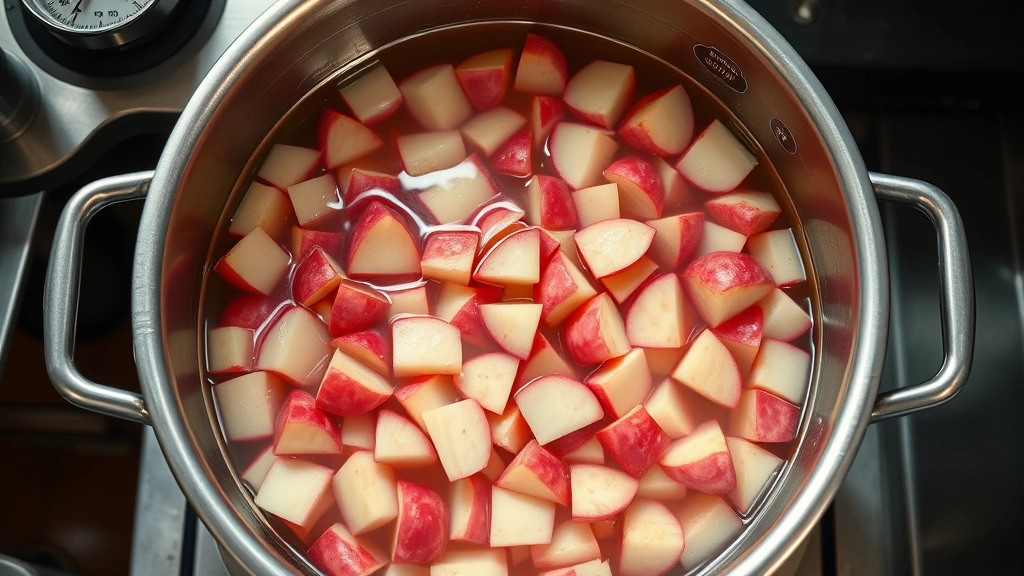
Place your prepared potatoes in a large pot and cover them completely with cold water. Starting with cold water rather than hot water allows the potatoes to cook through evenly from the inside out. This technique, known as “starting in cold water,” is preferred by professional chefs because it prevents the exterior from overcooking while the interior remains firm. Add approximately one tablespoon of salt per quart of water at this stage. The salt season the potatoes throughout the cooking process and slightly raises the boiling point of water, which can contribute to firmer potatoes with better texture.
Boiling Time Guidelines by Potato Size
The fundamental answer to “how long to boil potatoes for potato salad” depends primarily on the size of your potato pieces. Small whole new potatoes or fingerling potatoes typically require 15 to 20 minutes of boiling time. Medium-sized whole potatoes need approximately 20 to 25 minutes. If you’ve cut potatoes into 1.5 to 2-inch pieces, expect cooking times of 12 to 18 minutes depending on the specific size and density of your pieces.
Once the water reaches a rolling boil, maintain a consistent simmer rather than a vigorous, rolling boil. A gentle boil provides adequate heat for cooking while minimizing the physical agitation that can damage potatoes and cause them to break apart. Many professional chefs recommend covering the pot with a lid to retain heat and speed cooking slightly, though this isn’t absolutely necessary. The key is maintaining consistent temperature and checking for doneness regularly rather than relying solely on clock time.
The actual cooking time can vary based on several factors beyond just potato size. The starch content of your specific potatoes, the mineral content of your water, the altitude at which you’re cooking, and even the temperature of your starting water can all influence cooking time. This is why professional kitchens train staff to test for doneness rather than blindly following time guidelines. Building this flexibility into your training programs ensures that your team can adapt to varying conditions while maintaining consistent quality.
When cooking larger batches for catering or food service, avoid overcrowding the pot. Potatoes need space to cook evenly, and excessive crowding creates temperature fluctuations and uneven cooking. If you’re preparing large quantities, it’s better to cook in multiple batches than to compromise quality by overloading a single pot. This approach takes slightly longer but ensures that every potato reaches the perfect level of doneness, which directly translates to superior final product quality and customer satisfaction.
Testing for Doneness
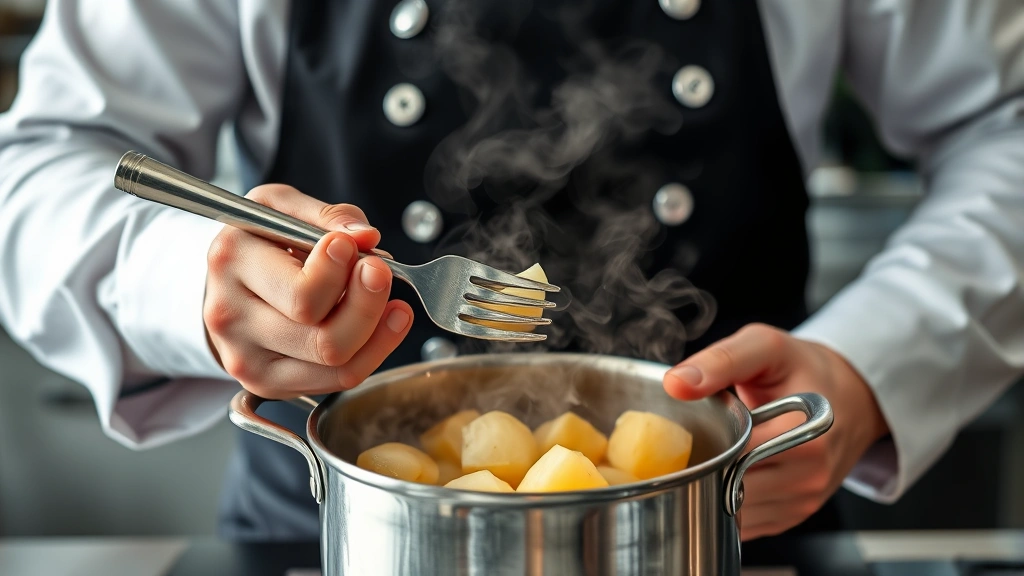
Rather than relying exclusively on time, professional chefs use multiple methods to determine when potatoes have reached perfect doneness. The fork test is the most straightforward approach: pierce a potato piece with a fork or sharp knife. The utensil should slide through with minimal resistance, but the potato should not be so soft that it crumbles or falls apart. The flesh should feel creamy rather than grainy, indicating that the starches have been properly cooked.
The knife test provides another reliable indicator. Insert a thin-bladed knife into the center of your largest potato piece. It should pass through with just slight resistance, similar to cutting through soft butter. If the knife meets significant resistance, the potatoes need more time. If the knife slides through with no resistance at all and the potato begins to crumble, you’ve likely overcooked it. This is why consistent testing throughout the cooking process matters; you want to catch the potatoes at that perfect moment when they’re fully cooked but still structurally sound.
For food service operations managing multiple cooking stations, establishing clear doneness standards helps ensure consistency across your team. Some operations use a simple visual standard where the potato skin just begins to crack slightly when fully cooked. Others conduct a taste test by sampling a small piece to verify texture and flavor. Document these standards in your training materials and reinforce them regularly. When every team member understands what “done” looks like, tastes like, and feels like, you eliminate guesswork and ensure that quality standards remain consistent shift after shift.
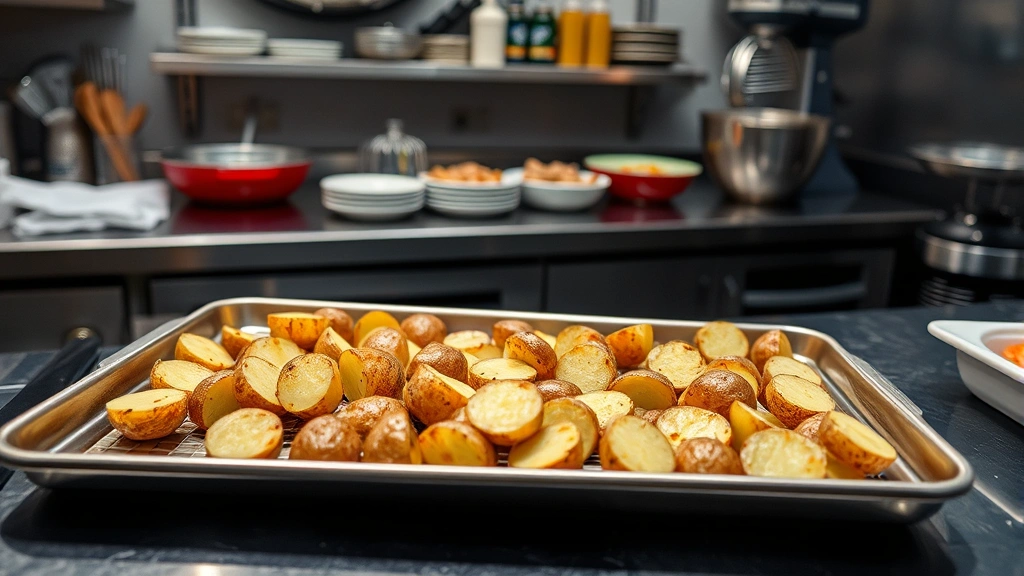
The moment you determine that potatoes are done, immediately drain them in a colander. Don’t let them sit in the hot water; residual heat continues cooking them, and extended soaking causes them to absorb excess water, which dilutes flavor and creates a mushy texture. Shake the colander gently to remove excess water, then spread the potatoes on a clean sheet pan to cool slightly before proceeding with dressing and mixing.
Water Temperature and Seasoning
The temperature of your cooking water plays a surprisingly significant role in the final texture of your potatoes. As mentioned, starting with cold water promotes even cooking throughout the potato. Once you add the potatoes, bring the water to a boil over high heat. Once boiling, reduce the heat to maintain a gentle simmer. This approach prevents the exterior from becoming mushy while the interior finishes cooking.
Salting your cooking water is not optional; it’s fundamental to flavor development. The salt penetrates the potato during cooking, seasoning it from within rather than just coating the surface. This creates potatoes with well-developed flavor that don’t require additional seasoning before mixing into the salad. For food service operations, this approach also reduces the risk of inconsistency; potatoes seasoned during cooking are less dependent on proper seasoning technique during the assembly phase, where multiple staff members might be involved.
Some chefs add other aromatics to the cooking water, such as bay leaves, whole peppercorns, or fresh thyme. These additions subtly infuse the potatoes with complementary flavors that enhance the finished dish. However, for commercial operations managing high volumes, keeping the cooking process streamlined often makes more sense. Focus on mastering the basics—proper potato selection, correct sizing, adequate salting, and precise timing—before experimenting with additional flavor layers.
The mineral content of your water can affect cooking time and texture. Hard water, which contains higher mineral content, may require slightly longer cooking times. If you’re in an area with particularly hard water and consistently encounter cooking time issues, you might consider using filtered water or adjusting your initial salt quantity slightly. These small refinements, discovered through careful observation and record-keeping, help you maintain consistency even as external conditions change.
Cooling and Storage Techniques
How you handle potatoes immediately after cooking significantly impacts the final dish. Once drained, spread the hot potatoes on a sheet pan in a single layer. This allows steam to escape and prevents the potatoes from continuing to cook from residual heat. Never cover hot potatoes with plastic wrap or a lid; the trapped steam creates condensation that makes potatoes waterlogged and mushy.
For the best flavor absorption, dress the potatoes while they’re still warm, not piping hot. Warm potatoes absorb dressing more effectively than cold potatoes, and the flavors meld together more thoroughly. If you’re making potato salad ahead of time, which is common in food service and catering operations, cool the potatoes to room temperature first, then refrigerate them in an airtight container for up to three days. This advance preparation reduces stress during service and allows flavors to develop and meld overnight.
When storing prepared potato salad, keep it at proper refrigeration temperatures, ideally below 40°F, to prevent foodborne illness. Most health departments recommend consuming prepared potato salad within three to four days. For large catering operations or food service businesses, understanding these storage timelines and building them into your production schedule prevents waste and ensures food safety compliance. Label containers with preparation dates and use the first-in, first-out system to maintain inventory rotation.
If you need to transport potato salad, keep it in an insulated container with ice packs, maintaining temperatures below 40°F throughout transport and service. For events in warm weather, consider placing the serving bowl on a bed of ice to maintain safe temperatures throughout the service period. These seemingly small details prevent foodborne illness outbreaks that can damage your reputation and create legal liability, making them essential components of any professional food service operation.
Commercial Applications and Scaling
When scaling potato salad production from home cooking to commercial food service, several operational considerations emerge beyond simply multiplying ingredient quantities. The equipment you use matters significantly; commercial-grade kettles with thermostatic controls allow precise temperature management that’s difficult to achieve on standard stovetops. These kettles also distribute heat more evenly, reducing the risk of scorching or creating hot spots that cook potatoes unevenly.
For high-volume operations, batch cooking becomes essential. Rather than attempting to cook 50 pounds of potatoes simultaneously, which creates temperature fluctuations and uneven cooking, divide the potatoes into manageable batches of 10 to 15 pounds. This approach takes slightly longer overall but ensures consistent quality across all potatoes. Document your batch sizes and cooking times; this information becomes invaluable for training new staff and troubleshooting when quality issues arise.
Establishing standard operating procedures (SOPs) for potato preparation ensures consistency even as staff changes. Your SOP should specify: potato variety and size, washing and cutting procedures, water temperature and quantity, salt amounts, cooking times, and doneness testing methods. Include visual references or photos showing properly cooked potatoes, cut sizes, and finished dishes. When every team member follows the same procedures, quality becomes predictable and reproducible, which is fundamental to building customer loyalty and maintaining food safety standards.
Consider implementing a quality control checkpoint where a supervisor or designated staff member tests potatoes for doneness before draining. This simple verification step prevents entire batches from being overcooked or undercooked, catching errors before they affect finished product. The time investment in quality control is minimal compared to the cost of wasting potatoes or losing customers due to inconsistent quality.
For businesses interested in expanding into catering or food service, understanding how to scale recipes while maintaining quality is essential. Potato salad is a commodity item that many customers expect, but consistency in quality is what separates excellent operations from mediocre ones. If you’re exploring opportunities in food service or looking to develop a catering business, mastering fundamental techniques like potato cooking builds the foundation for success. Similarly, if you’re considering acquiring a business in the food service sector, understanding these operational details helps you evaluate the quality of existing systems and identify areas for improvement.
FAQ
How long does it take to boil potatoes for potato salad?
Cooking time typically ranges from 12 to 25 minutes depending on potato size. Small whole potatoes need 15-20 minutes, medium whole potatoes need 20-25 minutes, and cut pieces (1.5-2 inches) need 12-18 minutes. Always test for doneness rather than relying solely on time, as variables like potato variety, water temperature, and altitude affect cooking duration.
Should I peel potatoes before or after boiling for salad?
Leave skins on during cooking for potato salad. The skin acts as a protective barrier, keeping potatoes firm and preventing excess water absorption. You can peel them after cooking if desired, though many prefer leaving the nutritious, flavorful skins intact in the finished salad.
Why do my boiled potatoes turn mushy?
Mushiness typically results from overcooking, using starchy potato varieties instead of waxy varieties, or letting potatoes sit too long in hot water after cooking. Use red potatoes or fingerlings, test frequently for doneness, and drain immediately once cooked. Avoid vigorous boiling; maintain a gentle simmer instead.
Can I boil potatoes ahead of time for salad?
Yes, you can boil potatoes up to three days ahead. Cool them completely, then store in an airtight containers in the refrigerator. For best flavor, dress them while still warm if possible, or dress them shortly after cooking. This advance preparation is common in commercial food service operations.
What’s the best water temperature to start with?
Start with cold water and bring it to a boil. This ensures even cooking throughout the potato. Add salt (about one tablespoon per quart) to the cold water before adding potatoes. Once boiling, reduce heat to maintain a gentle simmer rather than a rolling boil.
How do I know when boiled potatoes are done?
Use the fork test: a fork should slide through with minimal resistance. Use the knife test: a thin blade should pass through with slight resistance, like cutting butter. The potato flesh should feel creamy, not grainy. If you’re unsure, taste a small piece to verify texture and ensure it’s fully cooked but not mushy.
Should I salt the boiling water?
Absolutely. Salt the water with approximately one tablespoon per quart. This seasons potatoes throughout cooking rather than just on the surface, creating better flavor development. Salted cooking water also slightly raises the boiling point, which can contribute to firmer potatoes with better texture.
Why do some potatoes cook faster than others?
Several factors affect cooking time: potato variety (waxy vs. starchy), size and uniformity of pieces, water mineral content, starting water temperature, altitude, and the intensity of heat applied. This is why testing for doneness throughout cooking is more reliable than following strict time guidelines.


