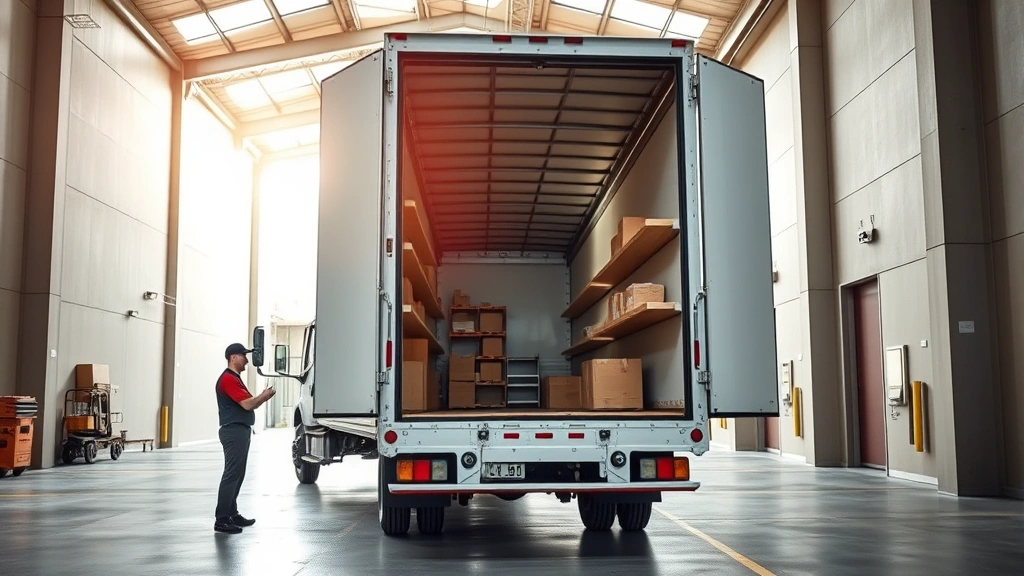
Best Box Trucks for Sale? Dealer Insights for E-Commerce and Logistics Businesses
Finding the right box truck for sale requires more than a quick online search. Whether you’re scaling your e-commerce fulfillment operation, launching a last-mile delivery service, or expanding your logistics fleet, the box truck you choose directly impacts your bottom line. Dealer insights reveal that most business owners overlook critical factors like total cost of ownership, fuel efficiency, cargo capacity, and maintenance history—decisions that can cost thousands in unexpected repairs or operational inefficiency.
The commercial vehicle market has shifted dramatically over the past three years. Supply chain constraints, rising fuel costs, and increased demand for same-day delivery have transformed how businesses evaluate box trucks. According to TruckInfo industry reports, used box truck prices have stabilized after pandemic-driven inflation, creating a genuine buyer’s market for savvy operators. This guide synthesizes dealer expertise, market data, and operational best practices to help you make an informed purchase decision.
Beyond just acquiring a vehicle, successful businesses integrate their box truck fleet into broader logistics strategies. If you’re building a comprehensive e-commerce operation, understanding how fleet management fits into your overall strategy is essential—much like how selecting the best e-commerce platform for small businesses requires evaluating multiple variables simultaneously.
Understanding Box Truck Classifications and Specifications
Box trucks fall into distinct categories based on Gross Vehicle Weight Rating (GVWR), which determines payload capacity, regulatory requirements, and operational costs. Class 4 and Class 5 trucks typically range from 14,000 to 16,000 pounds GVWR and accommodate 12-16 foot cargo beds. Class 6 vehicles push toward 26,000 pounds, enabling 20-24 foot cargo areas. Understanding these classifications is fundamental because they dictate licensing requirements, insurance premiums, and driver qualifications.
Dealers emphasize that cargo volume doesn’t automatically translate to efficiency. A 16-foot box truck with optimal weight distribution often outperforms a 24-foot truck with poor load planning. Cubic footage matters, but so does accessibility. Side-opening doors, roll-up rear gates, and interior height clearance directly affect loading times—a critical metric for e-commerce businesses operating on tight delivery windows. Commercial Truck Trader data shows that businesses prioritizing ergonomic loading features report 15-20% faster turnaround times.
Engine specifications warrant careful analysis. Modern box trucks typically feature diesel or gasoline powerplants, with diesel offering superior fuel economy for high-mileage operations. Fuel tank capacity, transmission type (manual vs. automatic), and suspension systems all influence operational costs. Dealers recommend prioritizing trucks with proven engine lineups—Ford’s 6.7L Power Stroke, Cummins’ ISB series, and Duramax engines have established track records in commercial applications.

Key Performance Metrics Dealers Use to Evaluate Value
Professional dealers evaluate box trucks using standardized metrics that go far beyond asking price. Cost per mile represents the total ownership cost divided by expected mileage. This includes fuel consumption, maintenance, insurance, registration, and depreciation. A truck costing $35,000 with annual maintenance of $2,500 and 12 miles-per-gallon fuel efficiency has dramatically different economics than a $30,000 option requiring $5,000 in annual repairs.
Payload capacity relative to curb weight determines operational efficiency. If a box truck weighs 12,000 pounds empty and has a 16,000-pound GVWR, you have only 4,000 pounds of payload capacity—potentially problematic for high-density cargo. Dealers calculate the weight utilization ratio: payload capacity divided by GVWR. Ratios above 0.35 indicate well-designed commercial vehicles.
Maintenance history significantly impacts acquisition value. Trucks with documented service records, regular oil changes, and preventive maintenance command 10-15% premiums over comparable vehicles without documentation. This reflects genuine reliability differences. Fleet management industry studies demonstrate that properly maintained vehicles experience 40% fewer breakdowns and 25% lower repair costs over their operational lifetime.
Fuel economy ratings deserve rigorous scrutiny. EPA estimates often exceed real-world performance by 15-25%, particularly for loaded commercial applications. Dealers recommend consulting actual fleet data from businesses operating identical models in comparable conditions. Websites like fueleconomy.gov provide real-world mpg reports from commercial operators.
Resale value and depreciation curves influence long-term economics. Premium brands like Freightliner and Isuzu maintain stronger residual values, retaining 45-55% of original value after five years. Generic box trucks depreciate faster, retaining only 30-40%. This matters significantly if you plan fleet turnover or upgrades. Dealers track depreciation data meticulously because it directly affects their acquisition strategies and customer recommendations.
New vs. Used: Making the Financial Case
The new versus used decision hinges on operational timeline, capital availability, and risk tolerance. New box trucks cost $45,000-$75,000 depending on specifications, offering full manufacturer warranties (typically 3 years/100,000 miles), zero mechanical surprises, and optimal fuel efficiency. However, new vehicles depreciate $8,000-$12,000 in the first year—an immediate financial loss.
Used box trucks, particularly 3-7 year old models, present compelling value propositions for cash-flow conscious businesses. A well-maintained used truck at $28,000-$40,000 eliminates steep depreciation hits while providing proven reliability data. However, used purchases require diligent inspection. Dealers recommend hiring independent mechanics to conduct pre-purchase inspections, costing $150-$300 but potentially saving thousands in hidden repairs.
Certified Pre-Owned (CPO) programs offer middle-ground solutions. Dealer-certified trucks undergo rigorous inspections, include extended warranties (often 2 years), and come with service records. CPO premiums typically run 8-12% above private-party used prices, but the warranty protection and inspection certainty justify costs for many operators. NADA Guides provides comprehensive pricing data for evaluating fair market value.
Financing impacts the new versus used calculus dramatically. New vehicles often qualify for manufacturer financing at competitive rates (4-6%), while used truck financing carries higher rates (7-12%). A $50,000 new truck financed at 5% over 60 months costs $943 monthly; a $35,000 used truck at 9% costs $745 monthly. However, warranty costs for the new vehicle might average $200 monthly in avoided repairs, narrowing the financial gap considerably.
For e-commerce businesses with established operations and predictable growth patterns, used trucks often make financial sense. Startups or rapidly scaling businesses benefit from new vehicle reliability and warranty protection, reducing operational risk during critical growth phases.
Top Box Truck Models Recommended by Industry Dealers
Dealer recommendations cluster around proven platforms with strong parts availability, affordable maintenance, and reliable performance records. Isuzu NPR-HD models dominate the 14,000-16,000 GVWR segment, offering 16-foot cargo areas, excellent maneuverability in urban environments, and exceptional fuel economy (10-12 mpg loaded). Parts availability is exceptional due to Isuzu’s extensive dealer network. Used NPR-HD trucks command strong resale values and cost $28,000-$42,000 depending on model year and mileage.
Freightliner MT-45 and MT-55 models represent the Class 6 category, offering 20-24 foot cargo beds, diesel engines, and robust payload capacities. These trucks excel for regional delivery and warehousing applications. Freightliner’s extensive dealer network ensures parts availability, though maintenance costs run slightly higher than Isuzu platforms. Used MT-series trucks range $32,000-$55,000 depending on specifications.
Ford F-650 and F-750 models provide American-built alternatives with familiar Ford engine technology. F-650 models offer excellent parts compatibility with standard Ford components, reducing maintenance complexity. However, some dealers note that Ford box truck resale values lag Japanese competitors slightly, making them better value propositions in the used market.
Hino 268 and 338 models represent Japanese engineering with strong reliability records. These trucks are particularly popular in California and Western markets due to emissions compliance and fuel efficiency. Cargo capacities range from 16-24 feet, with pricing similar to comparable Isuzu and Freightliner offerings.
Dealers consistently caution against vehicles with unknown maintenance histories, accident damage, or frame repairs. Carfax and AutoCheck reports provide ownership history documentation, but physical inspections remain essential. Rust, water damage, suspension wear, and transmission hesitation reveal operational abuse that documentation might miss.
Financing and Acquisition Strategies
Strategic financing approaches optimize cash flow and tax benefits. Commercial equipment loans typically offer 5-7 year terms with interest rates 1-2% below consumer auto loans. Monthly payments on a $40,000 truck at 6% over 72 months run approximately $635—manageable for businesses generating consistent revenue.
Lease options deserve consideration for businesses prioritizing operational flexibility over ownership. Commercial truck leases ($700-$1,200 monthly for comparable Class 4-5 vehicles) include maintenance, insurance, and warranty coverage. Leasing eliminates depreciation risk but provides no equity building and includes mileage restrictions. For businesses uncertain about long-term fleet requirements, leasing offers valuable flexibility.
Equipment financing through SBA loans can provide favorable terms (5-10 year amortization, 7-9% rates) for qualified small businesses. SBA programs often accommodate lower down payments (10-20%) compared to conventional financing (20-25%). This preserves working capital for operational needs—particularly important for scaling e-commerce businesses managing inventory, marketing, and staffing simultaneously.
Tax considerations significantly impact acquisition economics. Section 179 deductions allow businesses to immediately deduct up to $1,160,000 in equipment purchases (2023 limits) rather than depreciating over years. This generates immediate tax benefits, effectively reducing net acquisition costs. Bonus depreciation provisions provide additional tax advantages. Consult tax professionals regarding your specific situation, as benefits vary based on business structure and income levels.
Negotiation strategies matter considerably. Dealers hold significant pricing flexibility, particularly on used inventory. Presenting pre-approved financing, offering cash deposits, and demonstrating serious intent typically unlock 5-10% price reductions. Timing purchases at month-end or quarter-end when dealers face sales quotas amplifies negotiating leverage.
Integration with Your E-Commerce Logistics Network
Acquiring a box truck represents more than a vehicle purchase—it’s a strategic logistics investment. Successful e-commerce businesses integrate fleet vehicles into comprehensive fulfillment strategies. If you’re developing e-commerce marketing strategies, your logistics capabilities directly impact customer satisfaction and repeat purchase rates.
Route optimization software (Routific, OptimoRoute, Samsara) transforms box trucks into data-generating assets. These platforms analyze delivery patterns, identify efficiency opportunities, and reduce fuel consumption by 15-25%. Integration with your order management system ensures real-time visibility into delivery status—information customers increasingly expect.
Telematics systems track vehicle performance, driver behavior, and maintenance needs. GPS data reveals idle times, harsh braking events, and route deviations. Combined with maintenance alerts, telematics systems prevent breakdowns before they occur. Reducing unplanned downtime by just one day monthly generates $2,000-$5,000 in avoided lost revenue for delivery-dependent businesses.
Driver recruitment and retention become increasingly important as you scale. Box truck operators increasingly expect technology integration, safety features, and professional work environments. Modern vehicles with backup cameras, automatic transmissions, and climate control appeal to quality drivers. Investing in vehicle quality directly impacts workforce stability—critical for consistent service delivery.
For businesses exploring broader logistics capabilities, understanding how e-commerce analytics tools can optimize fleet performance ensures data-driven decision-making. Analytics platforms reveal which delivery windows generate highest customer satisfaction, which routes prove most profitable, and which vehicle types maximize utilization rates.
Regulatory compliance becomes increasingly complex with fleet expansion. DOT regulations, vehicle maintenance schedules, driver licensing requirements, and insurance coverage demands require systematic management. Fleet management software automates compliance tracking, preventing costly violations. Staying ahead of regulatory requirements protects both operational continuity and reputation.
Consider how box truck acquisition fits within broader fulfillment strategies. Some businesses prefer outsourcing last-mile delivery to established carriers rather than building internal fleets. Others develop hybrid models combining owned vehicles for high-frequency routes with third-party logistics for variable demand. Your choice depends on order volume, geographic concentration, and capital availability.
FAQ
What’s the average lifespan of a commercial box truck?
Well-maintained box trucks typically operate 8-12 years or 200,000-400,000 miles before major overhauls become uneconomical. Diesel engines generally outlast gasoline counterparts by 50,000-100,000 miles. Maintenance quality dramatically impacts longevity—vehicles receiving regular service often extend operational life by 2-3 years compared to neglected counterparts.
How much should I budget for annual maintenance?
Annual maintenance costs typically range $2,000-$5,000 depending on vehicle age, mileage, and specifications. Newer vehicles lean toward lower costs; older trucks require more frequent repairs. Budget 10-15% of purchase price annually as a conservative estimate. Preventive maintenance (oil changes, filter replacements, inspections) costs significantly less than emergency repairs.
Should I purchase extended warranties?
Extended warranties provide valuable protection for used vehicles, particularly those 3-7 years old. Coverage typically costs $1,500-$3,500 but protects against major repairs (transmission, engine, differentials) costing $5,000-$15,000. For businesses with limited capital reserves, extended warranties reduce financial risk. However, well-documented maintenance histories and thorough pre-purchase inspections often eliminate warranty necessity.
What financing options work best for small business fleets?
Commercial equipment loans, SBA financing, and equipment leasing each offer advantages depending on business circumstances. Equipment loans provide ownership and equity building. SBA loans offer favorable terms for qualifying businesses. Leasing preserves cash flow but eliminates ownership benefits. Evaluate options based on your cash flow position, tax situation, and long-term fleet strategy.
How do I compare box trucks from different manufacturers?
Standardize comparisons using consistent metrics: cost per mile, payload capacity, fuel economy, maintenance costs, parts availability, and resale value. Request pre-purchase inspection reports from independent mechanics. Consult industry resources like NADA Guides and Kelley Blue Book for pricing benchmarks. Connect with other businesses operating similar vehicles for real-world performance feedback.
What’s the best time to purchase a box truck?
Month-end and quarter-end periods typically offer strongest negotiating leverage as dealers face sales quotas. Late fall and winter months see reduced demand, creating buyer’s market conditions. Avoid peak seasons (spring/early summer) when pricing firms and dealer inventory depletes. For used vehicles, purchasing shortly after model year transitions often yields better values as dealers clear previous-year inventory.
Can I use a box truck for personal purposes?
Commercial vehicle insurance typically restricts personal use. Using a commercial-registered truck for personal transportation can void coverage and create liability exposure. Maintain clear business-use documentation. If occasional personal use occurs, discuss specifics with insurance providers to ensure adequate coverage and compliance.