Arkansas Land for Sale: Realtor Insights and Market Intelligence
The Arkansas real estate market presents compelling opportunities for investors, farmers, and entrepreneurs seeking to acquire land across diverse regions. Whether you’re exploring agricultural properties, commercial development sites, or residential acreage, understanding current market dynamics, pricing trends, and investment strategies is essential for making informed decisions. This comprehensive guide provides realtor insights into the land market throughout Arkansas, covering everything from rural farmland to prime commercial parcels positioned for growth.
Arkansas has emerged as an attractive destination for land acquisition, offering competitive pricing compared to neighboring states, favorable tax incentives, and increasing infrastructure development. The state’s diverse geography—from the Ozark Mountains in the north to the Mississippi Delta in the east—creates varied opportunities suited to different investment profiles and business objectives. Real estate professionals consistently report strong interest from both domestic and international investors recognizing Arkansas’s potential for long-term appreciation and operational viability.

Current Arkansas Land Market Overview
The Arkansas land market in 2024 demonstrates resilience and steady growth, driven by economic development initiatives, population migration trends, and investment capital seeking value. According to recent data from the National Association of Realtors, rural and agricultural land values in Arkansas have appreciated approximately 4-6% annually over the past five years, significantly outpacing inflation while remaining affordable compared to national averages.
Key market indicators show increased activity in land sales, particularly in counties near major metropolitan areas including Little Rock, Fayetteville, and Bentonville. Real estate professionals report that buyer inquiries have shifted from traditional residential focuses toward diversified land portfolios, reflecting broader economic trends. The median price per acre for unimproved land ranges from $1,500 to $4,500 depending on location, zoning, and development potential—representing exceptional value for commercial real estate investors.
Institutional investors and land development companies have recognized Arkansas’s strategic positioning as a logistics and distribution hub. The state’s central location, proximity to major interstate corridors, and established business infrastructure create compelling fundamentals for property appreciation. When evaluating business for sale opportunities, many entrepreneurs simultaneously acquire land parcels to establish operational headquarters or expand existing ventures.
Regional Market Variations and Opportunities
Arkansas comprises distinct regional markets, each with unique characteristics, pricing dynamics, and investment potential. Understanding these geographic nuances enables investors to identify opportunities aligned with their objectives and risk tolerance.
Northwest Arkansas Growth Corridor: The region encompassing Fayetteville, Bentonville, Rogers, and Springdale represents Arkansas’s fastest-growing market. Technology companies, retail operations, and corporate headquarters have established significant presence, driving land values upward. Commercial land in this corridor commands premium pricing, ranging from $8,000 to $15,000+ per acre for development-ready parcels. Residential and mixed-use properties demonstrate particularly strong appreciation potential.
Central Arkansas and Little Rock Metro: The state capital region provides balanced opportunities combining urban development potential with nearby agricultural land. Little Rock’s revitalization initiatives, riverfront development projects, and expanding business districts create varied investment options. Land prices in central Arkansas remain moderate, typically $2,500 to $6,000 per acre depending on proximity to metropolitan areas.
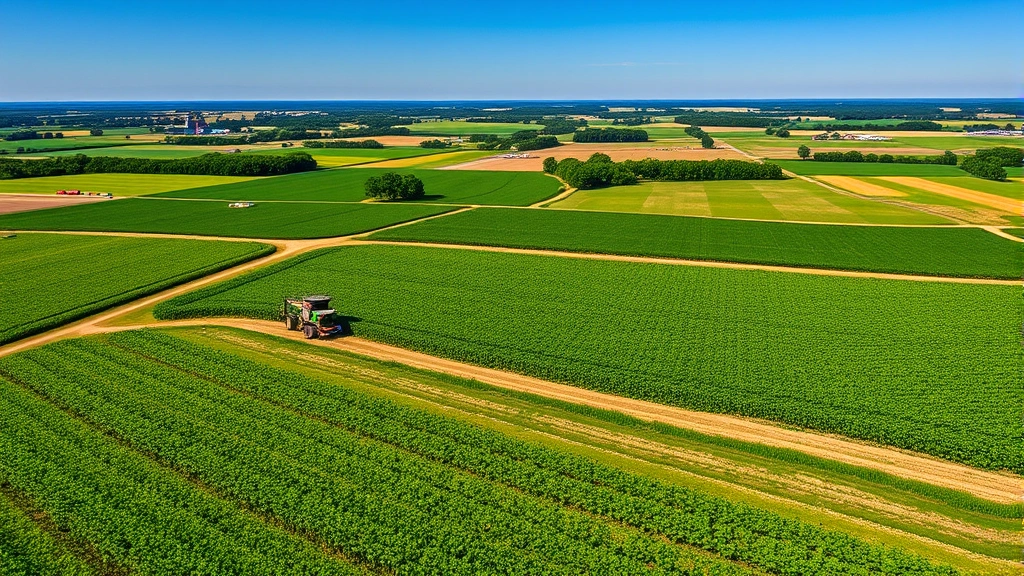
Eastern Arkansas Delta Region: Traditional agricultural heartland continues offering excellent opportunities for farming operations and agribusiness ventures. Land prices remain lowest in the state, frequently between $1,200 and $2,800 per acre for productive farmland. This region attracts investors focused on agricultural commodity production, forestry operations, and conservation-minded land stewardship.
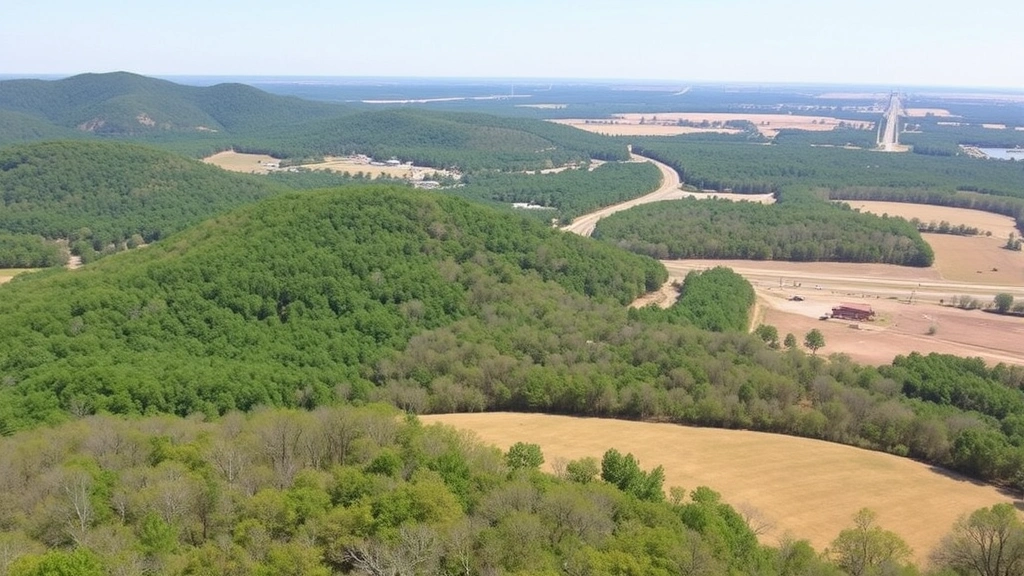
Southwestern Arkansas: Pine forest regions and industrial operations characterize this area. Timber and forestry land investments remain popular, with prices ranging from $1,500 to $3,500 per acre depending on timber quality and harvest readiness. Industrial development sites near Texarkana present emerging commercial opportunities.
Agricultural Land Investment Strategies
Agricultural land represents a cornerstone of Arkansas’s real estate market, attracting both operational farmers and investment-focused buyers. Successful agricultural land acquisition requires understanding crop economics, soil quality, water access, and operational infrastructure.
Row crop land in the Delta region produces cotton, soybeans, rice, and corn, generating consistent cash flow and lease income potential. Investors frequently acquire productive farmland and lease acreage to established farming operations, creating passive income streams while maintaining property appreciation. Current lease rates typically range from $40 to $80 per acre annually for row crops, though premium land commands higher rates.
Pastureland and livestock operations represent another significant segment. Cattle ranching, poultry production, and specialty livestock enterprises require suitable land with adequate forage and water resources. Investors pursuing business for sale owner financing arrangements often include agricultural land parcels within acquisition packages, enabling operational continuity and financing flexibility.
Conservation and organic farming have gained momentum, creating premium pricing for certified sustainable properties. Investors aligning agricultural land investments with environmental stewardship goals access federal conservation programs, tax incentives, and premium market positioning. The USDA’s Natural Resources Conservation Service provides technical assistance and financial programs supporting sustainable agricultural land management.
Timber and forestry land investments offer long-term appreciation with tax advantages. Arkansas contains approximately 19 million acres of forestland, representing significant investment opportunity. Timber land appreciation historically averages 3-5% annually while generating periodic harvest income. Professional forestry management and sustainable harvesting practices enhance returns while maintaining environmental stewardship.
Commercial and Development Properties
Commercial land acquisition for development projects represents the highest-value segment of Arkansas’s real estate market. Developers, entrepreneurs, and institutional investors pursue strategically located parcels positioned for retail, industrial, office, and hospitality development.
Retail and hospitality development concentrates along major transportation corridors, particularly Interstate 49 and Interstate 40. Highway-accessible land with strong visibility and traffic counts commands premium pricing justified by revenue-generating potential. Developers evaluate demographic data, competitive positioning, and market saturation before acquiring commercial parcels, ensuring alignment with business plans.
Industrial and logistics properties have experienced accelerated demand as companies establish distribution networks and manufacturing operations throughout the state. Flat, well-drained land with rail access, interstate proximity, and utilities infrastructure attracts major logistics providers and light manufacturing. These properties frequently trade at $5,000 to $10,000+ per acre depending on development readiness and strategic location.
Office and mixed-use developments proliferate in metropolitan areas as companies establish regional headquarters and professional service centers. Downtown revitalization initiatives in Little Rock, Fayetteville, and other municipalities create redevelopment opportunities, often with municipal incentives and tax increment financing supporting project viability.
Pricing Trends and Valuation Factors
Land valuation in Arkansas incorporates multiple variables, each influencing price per acre and investment return potential. Professional appraisals and comparative market analysis guide pricing decisions and investment evaluation.
Location and Accessibility: Proximity to major highways, airports, and metropolitan areas significantly impacts value. Interstate-accessible land commands 30-50% premiums compared to rural parcels lacking convenient transportation access. School quality, municipal services, and utility infrastructure availability further influence pricing.
Zoning and Development Potential: Land zoned for commercial, industrial, or residential development attracts premium pricing compared to agricultural-only classifications. Properties with flexible zoning enabling multiple uses offer enhanced value and investment flexibility. Comprehensive plan designations indicating future development priority support appreciation expectations.
Soil Quality and Agricultural Productivity: Soil testing, drainage characteristics, and historical productivity ratings directly correlate with agricultural land values. Prime farmland commands 20-40% premiums over marginal agricultural classifications. Water access, whether through rainfall adequacy or irrigation infrastructure, substantially influences value for farming operations.
Environmental Factors: Flood risk, wetland presence, and environmental regulatory status significantly impact both value and financing availability. Properties with clean environmental assessments and minimal regulatory constraints enable straightforward development and financing. Wetland delineation and endangered species presence may restrict development options and reduce value.
Recent market analysis indicates land price appreciation averaging 4-6% annually across Arkansas, with premium locations in growth corridors appreciating 6-10% or higher. However, rural agricultural land in stable but non-growth regions appreciates more modestly at 2-3% annually. Investors should carefully evaluate location-specific fundamentals rather than assuming uniform appreciation across the state.
Financing Options for Land Purchases
Land acquisition financing differs substantially from traditional residential mortgage lending, requiring specialized knowledge and strategic planning. Multiple financing mechanisms enable land purchases suited to different investor profiles and transaction structures.
Conventional Land Loans: Traditional banks and credit unions offer land financing, typically requiring 20-30% down payment and shorter amortization periods (10-15 years) compared to residential mortgages. Interest rates generally run 1-2% higher than residential rates, reflecting increased perceived risk. Strong credit profiles and substantial liquid reserves improve financing terms and approval probability.
Agricultural Loans: Farm Credit organizations and USDA loan programs provide specialized agricultural land financing with favorable terms for farming operations and conservation-minded investors. These programs often feature lower down payment requirements, longer amortization periods, and interest rates below conventional lending. Borrower eligibility requires agricultural operation involvement or conservation commitment.
Owner Financing: Sellers frequently provide financing for land transactions, particularly for agricultural properties and rural acreage. Owner-financed arrangements offer flexibility in terms, down payment requirements, and qualification criteria compared to institutional lending. These transactions often facilitate faster closings and smoother negotiations. Many entrepreneurs exploring business for sale owner financing simultaneously negotiate owner financing for associated land parcels.
Cash and Institutional Investment: Experienced investors and institutional capital providers frequently acquire land through cash transactions, leveraging pricing advantages and negotiating strength. Private equity partnerships and real estate investment trusts maintain significant Arkansas land portfolios, pursuing buy-and-hold strategies and development opportunities.
Development Financing: Developers typically employ construction loans and permanent financing structured around development timelines and revenue generation. These arrangements coordinate land acquisition financing with development project funding, enabling synchronized property improvements and infrastructure development.
Working with Realtors and Due Diligence
Professional real estate representation significantly enhances land acquisition outcomes, providing market expertise, transaction facilitation, and risk mitigation. Experienced land realtors understand market nuances, pricing dynamics, and property characteristics critical for informed investment decisions.
Realtor Selection and Expertise: Land specialists possess detailed knowledge of regional markets, zoning regulations, and development potential beyond generalist residential agents’ scope. Selecting realtors with established networks, transaction experience, and local market presence ensures superior representation. Investor references and transaction history provide valuable selection criteria.
Market Analysis and Property Evaluation: Qualified realtors provide comparative market analysis, identifying pricing benchmarks and investment opportunities aligned with client objectives. They evaluate property characteristics including soil quality, drainage, utilities access, and development potential, informing investment decisions. Market trend analysis and demographic research support strategic timing and location selection.
Due Diligence and Property Investigation: Comprehensive due diligence protects investor interests and identifies potential issues before acquisition. Title research, boundary surveys, environmental assessments, and zoning verification establish property condition and legal status. Phase I environmental site assessments identify contamination risks or regulatory concerns affecting value and development potential.
Negotiation and Transaction Management: Experienced realtors negotiate favorable terms, manage contingencies, and coordinate closing logistics. Their market knowledge enables compelling offers balancing price competitiveness with investor returns. Effective negotiation frequently yields 5-10% price reductions compared to listed prices, substantially improving investment yields.
Environmental and Legal Considerations
Land acquisition involves complex legal and environmental considerations requiring careful attention and professional guidance. Protecting investor interests demands thorough environmental assessment, title verification, and regulatory compliance evaluation.
Environmental Assessment: Phase I and Phase II environmental site assessments identify contamination, regulatory violations, or environmental liabilities affecting property value and development potential. Particularly important for commercial, industrial, and previously developed properties, environmental assessments provide liability protection and development feasibility confirmation. Clean assessment reports facilitate financing and future transactions.
Title and Boundary Issues: Professional title insurance and boundary surveys establish clear ownership and eliminate boundary disputes. Encroachments, easements, and utility rights-of-way may restrict development options or create operational complications. Title insurance protects against historical claims and defects, ensuring unencumbered ownership transfer.
Zoning and Regulatory Compliance: Comprehensive zoning review and code compliance assessment prevent future restrictions or development limitations. Zoning verification confirms permitted uses align with intended development. Conditional use permits, variance requirements, or comprehensive plan amendments may be necessary for non-conforming proposed uses. Municipal officials and planning departments clarify regulatory status and approval requirements.
Water Rights and Drainage: Water access and drainage characteristics significantly impact agricultural and development potential. Water rights documentation, riparian considerations, and drainage easements require thorough evaluation. Wetland presence triggers federal regulations affecting development options and requiring specialized permits.
Future Growth Corridors
Strategic Arkansas land investments benefit from understanding anticipated growth patterns, infrastructure development, and economic trends positioning certain regions for accelerated appreciation.
Northwest Arkansas Continued Expansion: The Fayetteville-Bentonville-Rogers corridor will likely continue rapid growth driven by technology sector expansion, corporate relocations, and retail development. Land values in peripheral areas adjacent to established development present appreciation potential as urbanization expands outward. Investors acquiring land 10-15 miles from metropolitan cores may realize substantial appreciation as development extends into currently rural areas.
Interstate Corridor Development: Interstate 49 completion between Missouri and Louisiana creates new logistics and development opportunities. Communities along this corridor anticipate increased commercial activity and development investment. Land acquisition in municipalities positioned along Interstate 49 offers long-term appreciation potential as regional connectivity improves.
Emerging Tech Hubs: Beyond Fayetteville’s established technology presence, secondary markets including Little Rock, Jonesboro, and Hot Springs are developing technology and innovation ecosystems. Land acquisition in emerging tech communities offers growth potential at lower prices than established centers, providing attractive risk-return profiles.
Entrepreneurs establishing technology ventures, e-commerce operations, or digital businesses frequently acquire land alongside commercial real estate for office and operational facilities. Understanding how to start an Etsy shop or launch online bookstore operations may not directly involve physical land, yet many successful entrepreneurs acquire property to establish warehousing, fulfillment, or headquarters operations supporting digital ventures. Similarly, entrepreneurs implementing best e-commerce plugins for WordPress often transition to brick-and-mortar locations requiring physical land acquisition.
FAQ
What is the average price per acre for Arkansas land?
Land pricing varies significantly by region and property type. Agricultural land in rural areas typically ranges from $1,200 to $3,500 per acre, while commercial development land near metropolitan areas commands $5,000 to $15,000+ per acre. Regional variations, zoning classification, and development potential substantially influence pricing.
What financing options exist for Arkansas land purchases?
Conventional land loans, agricultural financing, owner financing, and cash purchases represent primary options. Farm Credit and USDA programs offer favorable terms for agricultural operations. Owner financing provides flexibility for transactions where conventional lending proves challenging. Down payment requirements typically range from 10-30% depending on financing type and lender requirements.
How long does Arkansas land transactions typically require?
Land transactions typically close within 30-60 days, though timelines vary based on financing complexity, due diligence requirements, and contingencies. Cash transactions may close faster, while development properties with complex financing require longer timelines. Title work, environmental assessments, and survey completion significantly influence transaction duration.
What factors most significantly influence Arkansas land values?
Location relative to metropolitan areas, zoning classification, soil quality for agricultural land, infrastructure access, and development potential drive valuation. Environmental conditions, water access, and regulatory status also substantially impact value. Professional appraisals and comparative market analysis quantify these factors, establishing fair market value.
Are there tax incentives for Arkansas land investment?
Arkansas offers various tax incentives for agricultural conservation, sustainable forestry, and economic development. Conservation easements, agricultural preservation programs, and opportunity zone investments provide tax benefits. Consultation with tax professionals and agricultural extension services clarifies available incentives aligned with specific investment strategies.
Should I use a realtor for land acquisition?
Professional realtor representation substantially enhances transaction outcomes through market expertise, network access, pricing negotiation, and due diligence guidance. Land specialists understand zoning, development potential, and regional market dynamics beyond generalist agent knowledge. Realtor representation typically costs 5-6% commission, representing excellent value for transaction facilitation and risk mitigation.