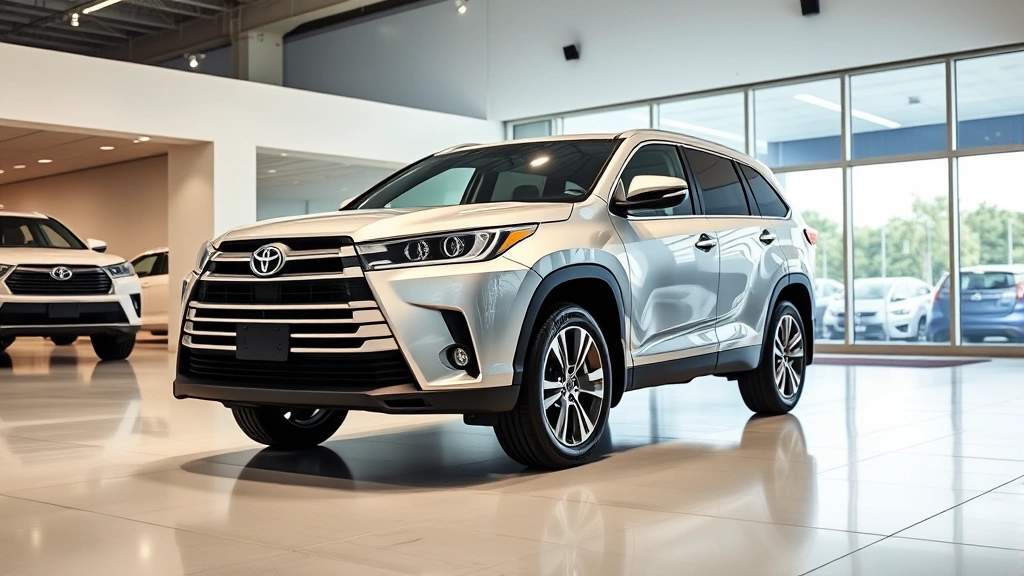
2025 Toyota Highlander Deals: Market Insights & Pricing Trends
The 2025 Toyota Highlander continues to dominate the midsize SUV segment, offering consumers a compelling combination of reliability, spaciousness, and advanced technology. As dealerships enter a new model year, understanding the current market dynamics, available incentives, and pricing strategies becomes crucial for buyers seeking the best deals on this popular three-row vehicle. Recent industry data shows that the 2025 Highlander maintains strong demand, with pricing reflecting both manufacturer incentives and regional market variations.
In 2025, the automotive retail landscape has shifted significantly compared to previous years. Supply chain stabilization has improved inventory levels, creating more competitive pricing opportunities for consumers. The Highlander, as a flagship family vehicle, represents a substantial investment for most buyers—with base models starting around $38,000 and fully loaded variants exceeding $50,000. This comprehensive guide examines current market conditions, financing options, and strategic approaches to securing the best possible deal on your next Highlander purchase.
Current Market Conditions for 2025 Highlander
The automotive market for 2025 has normalized considerably from the supply-constrained environment of 2021-2023. Toyota’s manufacturing capacity has returned to near-normal levels, which directly impacts Highlander availability and pricing. According to Edmunds automotive pricing data, the 2025 Highlander benefits from increased inventory across most regional markets, giving buyers genuine negotiating leverage previously unavailable during inventory shortages.
Demand for three-row SUVs remains robust, driven by families seeking versatile transportation and enhanced safety features. The Highlander’s reputation for long-term reliability—with many vehicles surpassing 200,000 miles—creates sustained market interest. However, this demand is no longer outpacing supply, meaning dealers must compete more aggressively for sales. Understanding e-commerce analytics tools and market data helps consumers identify pricing anomalies and regional opportunities.
Interest rates, while moderating from 2023 peaks, remain a significant factor in vehicle affordability. Current rates typically range from 5.5% to 7.5% for well-qualified buyers, influencing total ownership costs and monthly payments. This economic backdrop creates an environment where strategic shopping and timing yield meaningful savings.
Pricing Breakdown & Trim Analysis
The 2025 Toyota Highlander lineup includes four primary trim levels: LE, XLE, Limited, and Platinum. Understanding the pricing structure and feature differentiation helps buyers identify optimal value propositions for their needs.
- LE Trim: Starting MSRP approximately $38,000-$39,000. Base model includes eight-seat configuration, Toyota Safety Sense 2.5+, 8-inch touchscreen, and standard safety features. Best for budget-conscious families prioritizing reliability over luxury amenities.
- XLE Trim: Mid-range option at $42,000-$43,500. Adds leather-trimmed seats, power liftgate, upgraded audio system, and enhanced convenience features. Popular choice offering balanced value and comfort improvements.
- Limited Trim: Premium positioning around $46,000-$47,500. Includes panoramic sunroof, premium JBL audio, power seats with heating/cooling, and upgraded interior materials. Targets buyers seeking luxury features without extreme pricing.
- Platinum Trim: Top-tier at $50,000-$52,000. Full luxury specification with premium leather, Mark Levinson audio, adaptive suspension, and advanced driver assistance packages. Appeals to buyers prioritizing maximum amenities.
Hybrid variants add approximately $2,000-$2,500 to pricing but deliver superior fuel economy—critical for families calculating long-term ownership costs. When evaluating B2B sales principles, understanding value chains helps identify which trim levels offer genuine feature advantages versus premium pricing without substantial improvements.
Manufacturer Incentives & Rebates
Toyota’s incentive strategy for 2025 Highlander varies by region and timing. Manufacturer-backed incentives typically include cash rebates, APR reductions, and lease specials. According to Cars.com incentive tracking, current programs frequently feature $1,000-$3,000 cash rebates for qualified buyers, particularly on outgoing 2024 inventory and slower-moving trim combinations.
APR financing promotions represent significant value opportunities. Toyota occasionally offers 0% APR financing for 60 months on select trims, effectively saving buyers thousands in interest charges. A $45,000 vehicle financed at 6.5% versus 0% APR creates approximately $7,000 in interest savings over a standard 60-month loan term.
Loyalty incentives reward existing Toyota owners with additional rebates—typically $500-$1,500 depending on program specifics. Conquest rebates targeting owners of competing brands (Honda, Mazda, Nissan) often match or exceed loyalty programs, making them relevant for first-time Highlander buyers.
Trade-in value optimization works in conjunction with manufacturer incentives. Understanding current used vehicle market values ensures you’re not subsidizing dealer profits through undervalued trade-in assessments. Resources like Kelley Blue Book provide independent valuation benchmarks against dealer offers.
Dealer Negotiations & Best Practices
Effective dealer negotiations require preparation and strategic communication. Begin by establishing your target price based on MSRP, applicable rebates, and regional market data. Websites like Edmunds and Cars.com publish dealer invoice prices—the amount dealers pay manufacturers—providing realistic negotiation anchors.
Timing dealer visits strategically maximizes negotiating power. Month-end, quarter-end, and year-end periods create dealer pressure to meet sales quotas, often resulting in improved pricing. Similarly, visiting dealerships during slow traffic hours (Tuesday-Thursday, mid-morning) ensures salesperson availability for focused negotiations without time pressure.
Pre-approval financing from credit unions or banks strengthens your negotiating position. Dealer financing rates often exceed bank rates by 1-2%, and presenting pre-approval documentation signals serious intent while eliminating dealer financing markup. This approach, similar to understanding Virginia sales tax implications for major purchases, demonstrates financial sophistication.
Documentation requests should include all available manufacturer incentives, dealer-specific promotions, extended warranty options, and destination charges. Transparency prevents surprise fees during final paperwork. Never commit to a deal until reviewing complete documentation, including GAP insurance recommendations and service plan options.
Walk-away readiness strengthens your position immeasurably. Dealers recognize when buyers lack alternative options; demonstrating willingness to shop competitors significantly improves negotiating outcomes. This principle applies across commercial contexts—understanding car wash for sale valuation or vending machines for sale market dynamics follows identical frameworks of preparation and alternatives assessment.
Financing Options & APR Rates
Financing represents a critical decision point affecting total ownership costs. Current market conditions provide multiple viable options, each with distinct advantages.
Dealer Financing: Toyota Financial Services typically offers competitive rates, particularly with manufacturer APR promotions. Advantages include convenience and immediate loan completion. Disadvantages include potential rate markups and limited rate shopping ability.
Bank Financing: Traditional banks offer competitive rates for well-qualified borrowers, typically 0.5-1.5% below dealer rates. Requires separate application and approval timeline but provides rate certainty and negotiating leverage with dealers.
Credit Union Financing: Often provides the most favorable rates for members, frequently 1-2% below bank rates. Membership requirements vary; some credit unions offer membership based on geographic location or employer affiliation.
Lease Options: Leasing provides lower monthly payments (typically 30-40% less than purchase financing) with warranty coverage and mileage allowances. Disadvantages include mileage restrictions (typically 10,000-12,000 miles annually), wear-and-tear charges, and no equity build. Optimal for drivers with predictable mileage patterns and preference for new vehicles every 3-4 years.
Loan term selection significantly impacts total interest paid. A 48-month loan versus 72-month loan at identical APR rates creates $3,000-$5,000 in interest savings, though monthly payments increase. Calculate your affordability threshold and prioritize shorter terms when feasible.
Regional Market Variations
Vehicle pricing and incentive availability vary substantially by region, reflecting local demand, competition intensity, and dealership cost structures. Western states, particularly California, typically feature higher pricing due to stringent emissions regulations and concentrated population demand. Conversely, Midwest and Mountain West regions often show more competitive pricing with deeper incentive packages.
Inventory levels vary regionally, with urban markets typically maintaining larger selections than rural areas. This inventory advantage translates to greater model/color choice and negotiating leverage. Customers in limited-inventory regions may justify driving 100+ miles to access better deals—a cost-benefit calculation worth evaluating.
Local economic conditions impact trade-in values, another regional variable. Strong employment markets correlate with higher used vehicle values, affecting net deal value calculations. Understanding your specific region’s market conditions provides negotiating context unavailable through national averages.
Timing Your Purchase
Strategic timing multiplies deal quality. New model years typically launch in fall (September-October), creating overlapping availability of previous and current models. Dealers aggressively discount outgoing model year inventory to clear space, often offering 10-15% discounts compared to new model year pricing.
Seasonal demand fluctuations affect pricing and negotiating leverage. Spring months (March-May) see peak demand as families plan summer travel; fall months (September-November) show lower demand, creating dealer motivation to negotiate. Winter months offer similar advantages, though weather may limit shopping comfort.
Extended shopping windows—planning 4-8 weeks ahead—permit patience-based negotiations. Dealers recognize serious buyers with time flexibility and often improve offers to avoid losing sales to competitors. Conversely, urgent timelines (“must buy this week”) severely weaken your position.
Monitoring incentive patterns helps identify optimal purchase windows. Toyota typically announces quarterly incentive changes; purchasing near quarter-end sometimes captures both outgoing and incoming incentive programs. Subscribing to automotive news sources provides advance notice of significant incentive changes.

Technology & Safety Features in 2025 Models
The 2025 Highlander introduces enhanced technology and safety capabilities justifying pricing premiums over older model years. Toyota Safety Sense 2.5+ includes adaptive cruise control, lane departure alert, automatic emergency braking, and traffic sign recognition—features increasingly standard across trims.
Infotainment systems now feature 8-10.5 inch touchscreens with smartphone integration (Apple CarPlay, Android Auto), wireless charging, and voice command. Higher trims include premium audio systems and available wireless software updates, reducing dealer service requirements.
Driver assistance packages on Limited and Platinum trims add parking assist, blind-spot monitoring, and rear cross-traffic alert—features particularly valuable for three-row SUV maneuverability. These safety investments provide insurance premium reductions on some policies, offsetting upgrade costs.
Total Cost of Ownership Considerations
Purchase price represents only one component of ownership costs. Comprehensive financial analysis includes fuel consumption, maintenance, insurance, and depreciation.
Fuel economy varies significantly by drivetrain: standard engines average 23-25 MPG combined, while hybrid models achieve 30-32 MPG combined. Over 150,000-mile ownership periods, this differential creates $4,000-$6,000 in fuel savings, justifying hybrid premiums for many buyers.
Maintenance costs remain historically low for Toyota vehicles. Scheduled maintenance intervals extend to 10,000 miles, and typical annual maintenance costs range from $400-$600 after warranty expiration. This reliability advantage differentiates Highlander total ownership costs compared to competitors.
Insurance premiums reflect vehicle classification, safety ratings, and repair costs. The Highlander’s strong safety record and parts availability typically result in competitive insurance costs relative to comparable vehicles.
Depreciation patterns favor the Highlander, which typically retains 55-60% of original value after five years—better than most competitors. This retention rate reduces net ownership costs and strengthens residual value for future trade-ins.

Online Shopping & Digital Dealership Options
Digital-first dealership models have expanded consumer options significantly. Major platforms including Carvana and Vroom offer online vehicle purchasing with home delivery, eliminating traditional dealership visits for some buyers. While typically featuring higher pricing than negotiated dealer deals, convenience and transparent pricing appeal to many consumers.
Traditional dealerships increasingly offer online shopping capabilities, including virtual tours, online price quotes, and digital financing. These tools streamline shopping without requiring in-person visits, though final documentation typically requires dealership visits.
Hybrid shopping approaches—researching online, negotiating via phone/email, then finalizing in-person—often yield optimal results. This method maintains negotiating leverage while reducing time investment.
Warranty & Protection Options
Toyota’s standard warranty provides comprehensive coverage: 3-year/36,000-mile basic warranty and 5-year/60,000-mile powertrain warranty. Extended warranty options through Toyota Financial Services extend coverage to 7-year/100,000-mile or 10-year/100,000-mile, with pricing typically $1,500-$2,500 depending on term length.
Extended warranty value depends on ownership duration and maintenance history. Buyers planning 150,000+ mile ownership or keeping vehicles beyond manufacturer warranty expiration benefit most from extended coverage. Conversely, those trading vehicles at 60,000 miles gain minimal extended warranty value.
Gap insurance protects against negative equity situations—when vehicle value falls below outstanding loan balance due to accidents. Particularly valuable for longer loan terms (72+ months), gap insurance typically costs $300-$500 and provides substantial financial protection.
FAQ
What is the average 2025 Toyota Highlander price?
Average pricing ranges from $38,000 for base LE trims to $52,000+ for fully loaded Platinum models. After typical dealer negotiations and applicable rebates, buyers often achieve 5-10% discounts from MSRP, reducing effective pricing to $36,000-$47,000 depending on trim selection.
Are there current incentives on 2025 Highlander purchases?
Yes, manufacturer incentives typically include $1,000-$3,000 cash rebates, 0% APR financing on select trims, and loyalty/conquest rebates of $500-$1,500. Incentive availability varies quarterly; check Toyota’s official website or dealer websites for current programs.
Should I buy or lease a 2025 Highlander?
Purchase makes sense for high-mileage drivers, those keeping vehicles 5+ years, or buyers desiring customization freedom. Leasing benefits those preferring new vehicles every 3-4 years, with predictable costs and warranty coverage. Calculate your annual mileage and ownership timeline to determine the optimal approach.
What is the best time to buy a 2025 Highlander?
Month-end, quarter-end, and year-end periods offer maximum negotiating leverage due to dealer sales quotas. Additionally, purchasing outgoing model year inventory (fall/early winter) when new models arrive yields superior pricing compared to peak-demand seasons.
How do I get the best financing rate for a Highlander?
Obtain pre-approval from credit unions or banks before dealership visits—these typically offer 1-2% better rates than dealer financing. Compare manufacturer APR promotions against your pre-approval rate; manufacturer 0% offers sometimes beat standard lending even at favorable rates.
What warranty coverage should I choose?
Standard Toyota warranty (3-year/36,000-mile basic, 5-year/60,000-mile powertrain) suffices for buyers keeping vehicles 5-7 years or less. Extended warranties justify costs for 150,000+ mile ownership plans or those uncomfortable with post-warranty repair risks.
How does the hybrid 2025 Highlander compare to standard models?
Hybrid models cost $2,000-$2,500 more but deliver 30-32 MPG combined versus 23-25 MPG for standard engines. Over 150,000 miles, fuel savings typically exceed hybrid premiums, making them financially advantageous for high-mileage drivers. Both offer identical warranties, reliability, and features.
Can I negotiate on online quotes from dealerships?
Absolutely. Online quotes represent starting points, not final offers. Dealers typically build negotiating margin into initial quotes. Professional negotiation can improve offers by $1,000-$3,000, particularly when competing quotes from multiple dealerships are presented.