
Florida Sales Tax Explained: A Comprehensive Guide
Florida’s sales tax system is one of the most important considerations for e-commerce businesses, retailers, and consumers operating in or selling to the state. With a base state sales tax rate of 6% and the ability for counties to add discretionary surtaxes, understanding the nuances of Florida’s tax structure is essential for accurate financial planning and compliance. Whether you’re building an e-commerce site that ships to Florida or operating a physical storefront, navigating these regulations correctly protects your business from penalties and ensures you’re collecting and remitting the proper amounts.
The landscape of sales tax in Florida has evolved significantly, particularly with the rise of online commerce and changing state regulations. Florida’s Department of Revenue enforces these rules, and businesses must understand both the state requirements and the additional local tax obligations that vary by county. This comprehensive guide breaks down everything you need to know about Florida sales tax, from basic rates to exemptions, nexus requirements, and practical compliance strategies for modern retailers.
For business owners, staying informed about sales tax regulations isn’t optional—it’s a critical component of financial management. Non-compliance can result in substantial penalties, interest charges, and audits that disrupt operations. By understanding the framework outlined in this guide, you’ll be better equipped to handle your tax obligations and potentially optimize your business structure for tax efficiency.
Florida State Sales Tax Rate and Structure
Florida imposes a statewide sales tax of 6% on most tangible personal property and certain services. This rate has remained consistent for many years, making Florida’s base rate one of the lower state sales tax rates in the nation. However, the actual tax rate you’ll collect depends on the county where the sale occurs or where the purchaser receives the goods.
The 6% state rate applies to the purchase price of items sold at retail, including the cost of materials used in providing services that are specifically taxable. Unlike some states that have different rates for different product categories, Florida’s approach is relatively straightforward with the same base rate applying across most categories. This simplicity is beneficial for businesses managing multiple product lines.
It’s important to note that the sales tax in Florida is destination-based, meaning the tax rate is determined by where the customer takes possession of the goods or where the service is performed. This distinction becomes crucial for headless commerce operations and multi-location retailers who need to calculate tax based on delivery addresses rather than business location.
The state sales tax revenue goes into Florida’s general revenue fund, supporting state operations and services. Businesses that fail to collect and remit this tax properly face penalties calculated as a percentage of the unpaid tax, plus interest accruing daily. Understanding your obligation to collect the state rate is the foundation of Florida sales tax compliance.
County Discretionary Surtax Rates
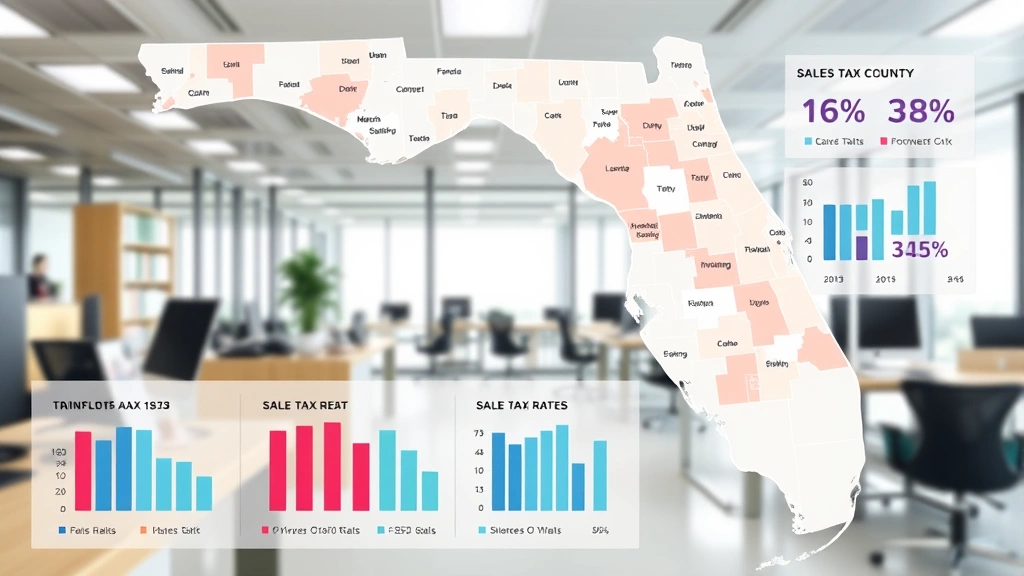
Beyond the 6% state rate, Florida’s 67 counties have the authority to impose additional discretionary sales surtaxes. These surtaxes range from 0.5% to 2%, depending on the county and the specific surtax authorization. Some counties impose multiple surtaxes for different purposes, such as transportation, infrastructure, or tourism development.
For example, Miami-Dade County imposes a total surtax of 1%, while Broward County adds 1.5% to the state rate. Smaller counties may have no additional surtax at all. This variation creates complexity for businesses serving customers across multiple Florida counties, particularly those operating online sales channels that ship to multiple locations.
The combined state and local sales tax rate in Florida ranges from 6% to 8.5%, depending on the county. This means a customer in one county might pay a significantly different tax amount than a customer in an adjacent county for the same purchase. Accurate sales tax software that recognizes county boundaries and applies the correct rates is essential for compliance.
Surtaxes are typically earmarked for specific purposes defined by county ordinance. Some fund transportation infrastructure, while others support education, public safety, or economic development. Knowing which surtaxes apply to your customer base helps you understand the total tax obligation and properly communicate pricing to customers.
What Products Are Taxable in Florida
Florida taxes most tangible personal property sold at retail. This includes clothing, electronics, furniture, groceries (with exceptions), household goods, and virtually any physical item transferred from seller to buyer. Additionally, certain services are taxable in Florida, including repair services, telecommunications, and rental of tangible personal property.
Food products present a nuanced situation. While most groceries are not subject to sales tax in Florida, prepared foods and items purchased at restaurants are taxable. Additionally, candy, soft drinks, and certain snacks are subject to tax even when purchased at retail, creating classification challenges for retailers selling mixed product categories.
Services that are taxable include:
- Repair and maintenance services on tangible personal property
- Landscaping and lawn care services
- Cleaning and janitorial services
- Installation services when performed by the seller
- Telecommunications services
- Hotel and lodging accommodations
- Rental of tangible personal property
Digital products and software licenses occupy a gray area. Generally, delivered or accessed electronically is not subject to sales tax in Florida, but downloadable software that conveys ownership may be taxed differently than software-as-a-service (SaaS) subscriptions. Businesses offering digital products should consult current guidance from the Florida Department of Revenue or a tax professional to ensure proper classification.
Sales Tax Exemptions and When They Apply
Florida recognizes numerous sales tax exemptions that allow certain purchases to be made tax-free. Understanding these exemptions is critical for businesses, as incorrectly applying them can result in audit exposure and penalties. The most significant exemptions include:
Resale Exemption: Businesses purchasing items for resale can provide a resale certificate to avoid paying sales tax on their purchases. This prevents the cascading tax effect where tax would be paid multiple times through the supply chain. Inventory management systems should track resale certificates and maintain proper documentation.
Agricultural Exemptions: Items used directly in agricultural production, including seeds, fertilizers, and farm equipment, may qualify for exemption. The exemption applies when items are used in the actual production of crops or livestock for sale.
Manufacturing Exemptions: Machinery and equipment used directly in manufacturing may be exempt. This includes items that become an integral part of the manufacturing process.
Nonprofit Organization Exemptions: Certain nonprofit organizations recognized by the IRS as tax-exempt may qualify for sales tax exemptions on their purchases when used for exempt purposes.
Government Exemptions: Federal, state, and local government agencies are typically exempt from sales tax on their purchases.
Medical Device Exemptions: Certain medical devices and equipment may be exempt, particularly those prescribed by healthcare providers.
To claim an exemption, the buyer must typically provide documentation, such as a resale certificate, exemption certificate, or other proof of qualification. Sellers who accept these documents in good faith are protected from liability if the exemption is later found to be invalid, provided they maintain proper records.
Nexus Requirements for Online Sellers
Nexus refers to the connection between a business and a state that creates a sales tax obligation. For Florida, determining whether your business has nexus is crucial, as it dictates whether you must register, collect, and remit sales tax.
Florida recognizes nexus through multiple pathways:
Physical Presence Nexus: If you have a physical location in Florida—such as a warehouse, office, retail store, or employee—you have nexus and must collect sales tax on all Florida sales.
Economic Nexus: Florida requires remote sellers to collect sales tax if they meet certain sales thresholds. The threshold is $100,000 in sales of tangible personal property delivered to Florida in the preceding 12 months. Once you exceed this threshold, you must register and begin collecting tax.
Affiliate Nexus: If you have affiliates or referral partners in Florida who direct sales to you, you may have affiliate nexus and be required to collect tax.
Marketplace Facilitator: If you sell through a marketplace facilitator (like Amazon or eBay), the platform may collect sales tax on your behalf if they have nexus in Florida. Understanding your role—whether you’re the seller or the facilitator—determines tax responsibilities.
For businesses engaged in B2B sales, nexus requirements may differ, as business-to-business transactions have different tax treatment in some cases. However, most B2B transactions in Florida remain subject to sales tax unless a resale exemption applies.
Sales Tax Compliance for E-Commerce Businesses
E-commerce businesses face unique compliance challenges due to the multi-jurisdictional nature of online sales. When you build an e-commerce site, implementing proper tax calculation is essential from the start.
Modern e-commerce platforms and tax software can automatically calculate the correct sales tax based on the customer’s shipping address, applying the appropriate state and county rates. This automation is critical for accuracy, as manual calculation across 67 Florida counties with varying surtax rates is impractical and error-prone.
Best practices for e-commerce sales tax compliance include:
- Implement tax software that integrates with your e-commerce platform and updates automatically when rates change
- Maintain detailed transaction records showing the location where tax was collected
- Regularly reconcile your tax collected with your sales records
- Use e-commerce plugins for WordPress or other platforms that support accurate tax calculation
- Keep resale certificates and exemption documentation organized and easily retrievable
- Monitor changes to sales tax rates and thresholds in Florida and other states where you have nexus
- File returns on time, even if no sales occurred in a particular period
Many e-commerce businesses underestimate the complexity of multi-state tax compliance. Using integrated solutions that handle both sales tax calculation and reporting reduces errors and ensures you’re collecting the correct amounts from customers while maintaining accurate records for filing.
Registration and Permit Requirements
If you have nexus in Florida and are required to collect sales tax, you must register with the Florida Department of Revenue and obtain a sales tax permit. This process is now handled online through the Florida Department of Revenue website.
Registration Requirements: You’ll need your Social Security Number or Federal Employer Identification Number (EIN), information about your business structure, and details about the type of business you operate. Registration typically takes a few business days, after which you’ll receive your sales tax permit number.
Permit Types: Florida issues different types of permits based on business activities. Most retailers and e-commerce businesses need a standard sales tax permit, but if you also engage in specific activities like fuel sales, alcohol sales, or rental property operations, you may need additional permits.
Renewal Requirements: Sales tax permits in Florida must be renewed periodically. The renewal process is also handled online, and the Department of Revenue will typically notify you when renewal is due. Failing to renew your permit can result in loss of your registration status.
Multi-Location Considerations: If you operate multiple locations in Florida, you may need separate permits for each location, particularly if you have distinct business operations at each site. However, some multi-location businesses can operate under a single permit with multiple locations listed. The specific requirements depend on your business structure and operations.
Filing and Payment Deadlines
Once registered, you must file sales tax returns on a schedule determined by your sales volume and the Department of Revenue’s assignment. Most businesses file monthly, though some high-volume businesses may be required to file more frequently, and very small businesses might be permitted to file quarterly or annually.
Monthly Filing: Most businesses file monthly returns by the 20th of the following month. For example, sales occurring in January are reported by February 20th. The return shows the total taxable sales, tax collected, and any applicable deductions or credits.
Payment Methods: Taxes can be paid online through the Department of Revenue’s website, by mail, or through electronic funds withdrawal. Online payment is the fastest method and provides immediate confirmation of receipt.
Penalties for Late Filing: Failure to file on time or pay the full amount owed results in penalties. The penalty is calculated as a percentage of the unpaid tax, starting at 5% for the first month late and increasing to 25% after four months. Additionally, interest accrues daily on unpaid taxes at a rate set by the Department of Revenue.
Extensions: In some cases, you may be able to request an extension for filing. However, this doesn’t extend your payment obligation, and taxes owed are still due on the original deadline. Requesting an extension requires contacting the Department of Revenue and providing justification.
Special Considerations for Specific Business Models
Dropshipping and Third-Party Fulfillment: In dropshipping models, the dropshipper typically has the sales tax obligation for sales to Florida customers. Even though you don’t physically hold inventory, your sales constitute a taxable transaction. Ensure your dropshipping agreements clarify who collects and remits tax.
Subscription Services: Recurring charges for services may be subject to sales tax in Florida. SaaS products and subscription boxes should be reviewed carefully to determine if they meet the criteria for taxation. Generally, services that provide access to digital products or recurring services are treated differently than one-time product sales.
Marketplace Sellers: If you sell through Amazon, eBay, Etsy, or other marketplaces, determine whether the platform is collecting sales tax on your behalf. Many platforms now act as marketplace facilitators and remit tax directly to states. However, you remain responsible for ensuring tax is collected and remitted, so understanding the platform’s practices is essential.
International Sales: Sales to customers outside the United States are generally not subject to Florida sales tax. However, you should be aware of import duties and other regulations that may apply. Keep documentation showing the destination of international orders in case of audit.
Gift Cards and Store Credit: When a customer purchases a gift card or receives store credit, the transaction is not immediately taxable. However, when the gift card is redeemed or store credit is used to purchase taxable items, the redemption is subject to sales tax based on the fair market value of the items purchased.
Returns and Refunds: If a customer returns an item and receives a refund, you can reduce your taxable sales by the amount refunded. Maintain detailed records of returns, including the reason for return and whether a refund or store credit was issued. Some businesses separate return transactions to track them distinctly from sales.
FAQ
What is the current sales tax rate in Florida?
The state sales tax rate in Florida is 6%. However, the total rate you collect depends on the county where the customer receives the goods. Combined state and local rates range from 6% to 8.5% depending on the county’s discretionary surtax.
Do I need to collect sales tax if I ship from outside Florida to Florida customers?
If you have economic nexus in Florida (exceeding $100,000 in sales in the prior 12 months) or physical presence nexus, you must collect and remit sales tax even if you ship from another state. The tax obligation is based on nexus, not on where you ship from.
Are digital products subject to sales tax in Florida?
Generally, electronically delivered products and services are not subject to sales tax in Florida. However, this area is complex, and some digital products may be treated differently. Consult the Florida Department of Revenue or a tax professional for specific product classifications.
How often must I file sales tax returns in Florida?
Most businesses file monthly by the 20th of the following month. Some high-volume businesses file more frequently, while very small businesses might file quarterly or annually. The Department of Revenue determines your filing frequency based on your sales volume.
What happens if I don’t file a sales tax return on time?
Late filing results in penalties starting at 5% of unpaid tax and increasing to 25% if four months late. Interest also accrues daily on unpaid amounts. Additionally, the Department of Revenue may assess additional penalties or pursue collection action.
Can I claim a resale exemption for items I purchase for my inventory?
Yes, if you’re purchasing items to resell, you can provide a resale certificate to avoid paying sales tax on those purchases. You must have a valid sales tax permit and maintain the resale certificates in your records.
What is the economic nexus threshold for Florida sales tax?
Florida requires remote sellers to collect sales tax if they have $100,000 or more in sales of tangible personal property delivered to Florida in the preceding 12 months. Once you exceed this threshold, you must register and begin collecting tax.
Are services subject to sales tax in Florida?
Many services are subject to sales tax in Florida, including repair services, installation services, and telecommunications. However, not all services are taxable. Consult the Florida Department of Revenue’s guidance for your specific service type.
How do I handle sales tax for sales made through a marketplace like Amazon?
Many marketplaces collect and remit sales tax on behalf of sellers. Verify with the specific platform whether they’re acting as a marketplace facilitator for Florida sales. If they are, you typically don’t need to remit tax separately, but you remain responsible for ensuring compliance.
What should I do if I made an error on a previous sales tax return?
Contact the Florida Department of Revenue to report the error. You may be able to file an amended return. If you underpaid tax, you’ll owe the unpaid amount plus interest. If you overpaid, you may be eligible for a refund or credit.