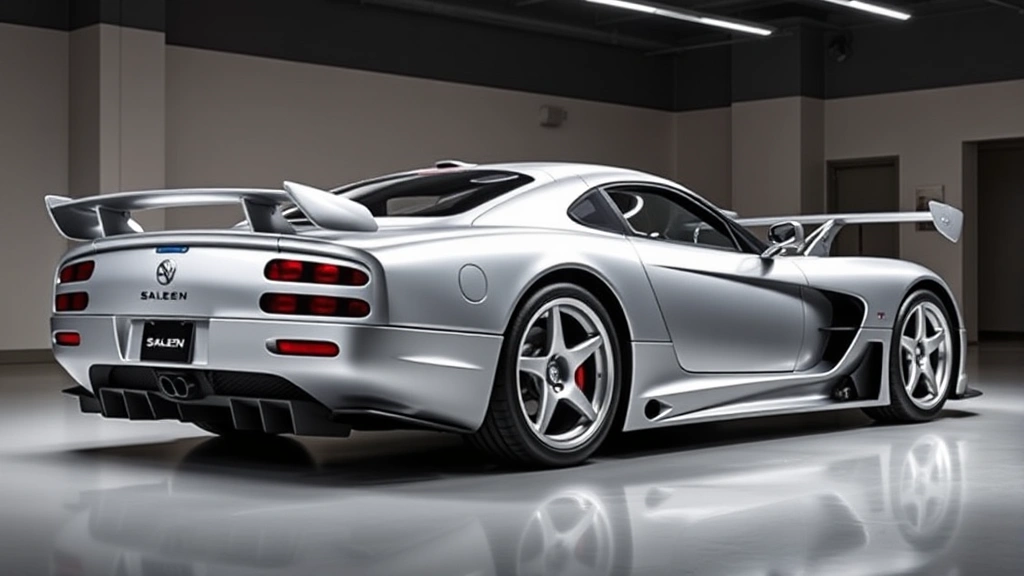
Saleen Supercars represent one of the most fascinating segments of the high-performance automotive market, blending American engineering excellence with hand-crafted precision. For collectors and enthusiasts considering whether these vehicles represent a sound investment or merely a passion project, understanding the brand’s history, market position, and resale dynamics is essential. Saleen has carved a unique niche in the luxury supercar world, transforming street-legal performance machines into collector’s items that command attention at auctions and private sales alike.
The question of whether Saleen Supercars constitute a collector’s dream requires examining multiple factors: historical significance, production numbers, performance specifications, market demand, and long-term value retention. This comprehensive review explores whether investing in a Saleen represents a prudent financial decision or an emotional purchase driven by automotive passion.
Saleen Brand History and Evolution
Steve Saleen founded Saleen Automotive in 1984, establishing the brand as a performance modifier and builder of high-powered vehicles. What began as a modest operation in Southern California evolved into a manufacturer of some of the most exclusive supercars in the world. The company gained prominence through its work with Ford Mustangs, creating performance variants that caught the attention of collectors and performance enthusiasts worldwide.
The transition from modifier to manufacturer marked a pivotal moment in Saleen’s trajectory. By the early 2000s, Saleen had begun developing original supercar platforms, including the iconic S7 and later the S7 Twin-Turbo. These vehicles represented Saleen’s commitment to creating legitimate competitors to established European supercars, leveraging American engineering and manufacturing expertise. The brand’s evolution demonstrates a clear progression from aftermarket tuner to legitimate supercar manufacturer, a distinction that significantly impacts collector value.
Saleen’s commitment to hand-assembly and limited production runs became hallmarks of the brand’s identity. Each vehicle bearing the Saleen nameplate underwent meticulous construction, with craftspeople spending hundreds of hours on individual cars. This artisanal approach to manufacturing created an aura of exclusivity that resonates strongly with collectors seeking vehicles with documented provenance and personal craftsmanship.
Production Numbers and Rarity
Rarity serves as a fundamental driver of collector vehicle values, and Saleen’s extremely limited production numbers position the brand advantageously in this regard. Across all production years, Saleen manufactured fewer than 200 S7 models worldwide, with the S7 Twin-Turbo variant representing an even more exclusive subset. These production figures place Saleen vehicles in the same exclusivity category as limited-run Ferraris and Lamborghinis, yet at significantly lower acquisition costs.
The S7 production run spanned from 2000 to 2009, yielding approximately 150 examples. The S7 Twin-Turbo, introduced in 2004, saw fewer than 30 units produced before the model transitioned to the next generation. Such scarcity creates natural collector demand, as enthusiasts recognize that locating another Saleen becomes increasingly difficult as time passes. When combined with the hand-built nature of each vehicle, production rarity becomes a compelling investment argument.
Limited edition variants and special commissions further enhance rarity considerations. Saleen produced several one-off vehicles and special editions for select customers, creating unique collector pieces with individual histories. These bespoke vehicles often command premium valuations, as their singular nature appeals to collectors seeking ultimate exclusivity. Understanding a particular Saleen’s production context and any special designations significantly impacts its collector value and desirability.
Performance and Technical Specifications
Saleen vehicles deliver genuine supercar performance, featuring hand-assembled engines and advanced chassis engineering. The original S7 utilized a 7.0-liter naturally aspirated V8 producing 550 horsepower, enabling acceleration from 0-60 mph in 3.2 seconds with a top speed exceeding 200 mph. These specifications positioned the S7 competitively against contemporary Ferraris and Lamborghinis, validating Saleen’s claim to supercar status.
The S7 Twin-Turbo represented a significant performance leap, employing a twin-turbocharged variant of the same 7.0-liter V8 that generated 750 horsepower. This dramatic power increase reduced 0-60 times to approximately 2.8 seconds, establishing the S7 Twin-Turbo as one of the fastest production vehicles of its era. The engineering sophistication required to achieve these performance figures while maintaining reliability demonstrated Saleen’s technical capabilities.
Beyond raw horsepower figures, Saleen vehicles featured advanced chassis engineering, including carbon fiber body panels, independent double-wishbone suspension, and sophisticated brake systems. The hand-built nature of these components meant each vehicle received individual attention to ensure optimal performance characteristics. Collectors appreciate these technical specifications not merely as performance metrics, but as evidence of genuine engineering innovation and manufacturing craftsmanship.
Market Value and Investment Potential
Saleen Supercar values have demonstrated resilience and growth, particularly for low-mileage examples with complete service histories. Early S7 models originally priced around $400,000 have appreciated modestly, with well-maintained examples commanding $450,000 to $600,000 at auction. S7 Twin-Turbo variants, being rarer and more powerful, typically fetch $650,000 to $850,000, reflecting their enhanced exclusivity and performance credentials.
The investment case for Saleen vehicles differs from traditional collector cars in important ways. Unlike classic vehicles that appreciate through scarcity and nostalgia, Saleen cars represent modern supercars that are still relatively young. Their values reflect a combination of rarity, performance credentials, and brand recognition. Collectors should approach Saleen purchases with realistic expectations regarding appreciation, understanding that these vehicles serve primarily as passion investments rather than aggressive financial vehicles.
Market liquidity for Saleen vehicles remains stronger than many ultra-rare supercars, as the lower price points compared to Ferrari or Lamborghini equivalents attract a broader collector base. Specialized auction houses and exotic car dealers actively market Saleen vehicles, ensuring that motivated sellers can typically locate buyers within reasonable timeframes. This accessibility enhances the investment appeal for collectors concerned about exit strategies.
When considering whether to purchase a Saleen as a business asset or collectible investment, understand that market conditions and vehicle-specific factors heavily influence outcomes. Documentation of service history, accident-free provenance, and mileage accumulation all significantly impact resale values. Buyers should invest in comprehensive pre-purchase inspections and request complete maintenance records before committing to acquisition.
Collector Appeal and Demand Factors
Saleen vehicles appeal to a specific collector demographic: individuals who value American engineering excellence, appreciate hand-crafted construction, and seek alternatives to established European supercar brands. This audience has grown substantially as automotive enthusiasts increasingly recognize Saleen’s contributions to high-performance vehicle development. The brand’s relative undervaluation compared to Ferrari or Lamborghini equivalents creates psychological appeal for collectors seeking underappreciated investments.
Historical significance plays an important role in collector desirability. The S7’s development represented a genuine achievement for an American independent manufacturer, creating a supercar that competed credibly with established European competitors. Collectors who value automotive innovation and American manufacturing heritage find compelling narratives in Saleen vehicles that extend beyond mere performance specifications.
The growing appreciation for 2000s-era supercars has enhanced Saleen demand among younger collectors and enthusiasts. As millennial collectors develop purchasing power, they increasingly seek vehicles from their formative years, creating renewed interest in contemporary supercars including Saleen models. Social media exposure and online automotive communities have amplified awareness of Saleen’s capabilities, introducing the brand to audiences who might not have encountered these vehicles through traditional channels.
Customization opportunities represent another appeal factor for Saleen collectors. The hand-built nature of these vehicles means owners can commission specific modifications, color combinations, and interior configurations. This bespoke element attracts collectors seeking vehicles with personal significance and individual character, distinguishing their cars from standardized production models.
Ownership Costs and Maintenance
Prospective Saleen owners must carefully consider total cost of ownership beyond the purchase price. These hand-built supercars require specialized maintenance, and finding qualified technicians represents a significant challenge in many geographic regions. Service costs for major mechanical work can reach $5,000 to $15,000 depending on the issue, substantially exceeding costs for conventional vehicles.
Insurance represents another substantial ownership expense. Saleen vehicles typically require specialized exotic car insurance policies that cost $3,000 to $8,000 annually depending on the specific model, driver age, and usage parameters. Storage and transportation costs add further to total ownership expenses, as these vehicles require climate-controlled facilities and specialized transport for long-distance movement.
Fuel consumption presents an ongoing cost consideration. The naturally aspirated S7 achieves approximately 12-14 miles per gallon in mixed driving, while the turbocharged S7 Twin-Turbo delivers slightly better efficiency due to advanced engine management systems. For collectors who drive their vehicles regularly, fuel costs can accumulate significantly over time.
Parts availability remains a consideration, though Saleen maintains parts inventories and can fabricate replacement components as needed. Brake pad replacement, fluid services, and routine maintenance can typically be performed by qualified independent mechanics familiar with high-performance vehicles. However, major engine or transmission work may require specialized expertise available only through Saleen-authorized facilities or highly experienced exotic car specialists.
Comparing Saleen to Competitors
When evaluating Saleen vehicles within the collector supercar market, comparison to contemporary competitors provides valuable context. Ferrari F430 models from the same era command higher prices, typically ranging from $600,000 to $1,000,000, reflecting the marque’s brand prestige and established collector following. Lamborghini Gallardos similarly command premium valuations, often exceeding $500,000 for well-maintained examples.
Saleen vehicles offer compelling value propositions compared to these European alternatives. A Saleen S7 Twin-Turbo at $750,000 delivers similar performance to Ferrari F430s priced at $900,000, while offering unique hand-built provenance and genuine American engineering credentials. This value differential appeals to collectors seeking performance and exclusivity without paying the premium associated with established European marques.
Comparison to other American supercars provides additional perspective. The Dodge Viper, produced in larger quantities, commands lower valuations despite impressive performance credentials. The relative rarity of Saleen vehicles compared to Vipers creates stronger collector demand and more favorable investment dynamics. Corvettes, while more accessible, lack the exclusivity and hand-crafted prestige that define the Saleen brand.
Porsche 911 Turbo models from the same era represent another comparison point, offering more reliable parts availability and broader technician familiarity. However, Porsche’s higher production volumes result in more abundant market supply and lower valuations for comparable examples. Collectors choosing Saleen vehicles over Porsches typically prioritize exclusivity and unique character over convenience and accessibility.
Where to Buy and Sell Saleen Vehicles
Acquiring a Saleen requires engagement with specialized channels that cater to exotic car enthusiasts and collectors. Established auction houses including RM Sotheby’s, Gooding & Company, and Bonhams regularly feature Saleen vehicles in their sales, providing transparent pricing discovery through competitive bidding. These venues attract serious collectors and ensure proper documentation and condition verification.
Specialized exotic car dealers represent another acquisition avenue, offering opportunities for in-person inspection and detailed condition assessment. Dealers like Exotic Cars Las Vegas, Beverly Hills Car Club, and similar establishments maintain inventories of high-performance vehicles including Saleen models. These dealers typically provide warranty support and financing options that may appeal to collectors seeking additional security.
Private sales through automotive enthusiast networks and online platforms offer alternatives to traditional dealer channels. When pursuing private acquisitions, collectors should engage independent mechanics for pre-purchase inspections and verify vehicle history through specialized databases. Understanding seller motivation and vehicle provenance becomes particularly important in private transactions lacking dealer intermediation.
When considering how to utilize modern marketplace platforms for exotic vehicle sales, approach these channels with caution. Facebook Marketplace and similar platforms occasionally feature high-value vehicles, but lack the verification mechanisms and buyer protections available through specialized exotic car dealers. Collectors selling Saleen vehicles should prioritize platforms and venues that attract qualified buyers capable of understanding the vehicles’ value propositions.
For those interested in marketing collector vehicles effectively, professional documentation including high-quality photography, detailed service records, and comprehensive vehicle history significantly enhance buyer confidence. Providing complete maintenance documentation, original sales paperwork, and any special commissions or modifications establishes provenance that justifies premium valuations.
Building relationships within automotive enthusiast communities creates opportunities for direct buyer connections. Clubs, forums, and social media groups dedicated to exotic cars and Saleen vehicles specifically can facilitate introductions to motivated collectors. These organic networks often result in more favorable transaction terms than traditional commercial channels.
FAQ
Are Saleen Supercars reliable investments?
Saleen vehicles represent reasonable collector investments for buyers seeking performance and exclusivity at lower price points than established European supercars. However, these vehicles should be purchased primarily for enjoyment rather than aggressive financial returns. Market appreciation has been modest but consistent, with well-maintained examples retaining value effectively. Reliability depends heavily on maintenance history and usage patterns.
What is the most valuable Saleen model?
The S7 Twin-Turbo commands the highest valuations, typically ranging from $650,000 to $850,000 for well-maintained examples. Special edition variants, low-mileage examples, and vehicles with documented unique commissions fetch premium prices. The original naturally aspirated S7 models are more affordable, typically valued between $450,000 and $600,000.
How many miles can a Saleen supercar accumulate safely?
Saleen vehicles can accumulate substantial mileage while maintaining reliability if properly maintained. Examples exist with 30,000 to 50,000 miles showing no significant mechanical issues. However, higher-mileage examples command lower valuations, and buyers should expect to pay premium prices for low-mileage examples under 15,000 miles. Engine condition and maintenance history matter more than absolute mileage figures.
Where can I find Saleen vehicles for sale?
Specialized exotic car auction houses including RM Sotheby’s, Gooding & Company, and Bonhams regularly feature Saleen vehicles. Exotic car dealers in major metropolitan areas maintain inventories of Saleen models. Online platforms dedicated to exotic cars and enthusiast forums occasionally feature private sales. Engaging a broker specializing in exotic vehicles can expedite the search process.
What are typical insurance costs for Saleen ownership?
Saleen supercar insurance typically costs $3,000 to $8,000 annually depending on the specific model, driver age, driving record, and usage parameters. Specialized exotic car insurance providers offer policies tailored to high-performance vehicles. Collectors should obtain insurance quotes before purchase to understand total ownership costs accurately.
Can I use a Saleen as a daily driver?
While technically possible, using a Saleen as a daily driver is not recommended. These hand-built supercars feature tight tolerances, sophisticated suspension systems, and performance-oriented engineering that make them less suitable for routine commuting. Additionally, insurance policies often restrict mileage or usage for collector vehicles, and daily driving rapidly accumulates miles that negatively impact resale values.
How do Saleen values compare to Ferrari?
Saleen vehicles are significantly undervalued compared to Ferrari equivalents with similar performance specifications. A Saleen S7 Twin-Turbo typically costs $150,000 to $250,000 less than a comparable Ferrari F430, despite delivering similar performance metrics. This value differential creates attractive opportunities for collectors seeking supercar performance without paying Ferrari premiums.


