Top Deals on Ford F-150? Buyer’s Guide
The Ford F-150 remains America’s best-selling truck for over four decades, combining rugged capability with modern convenience features that appeal to both commercial buyers and personal vehicle owners. Whether you’re searching for a new F-150 or exploring used options, understanding the current market landscape, pricing trends, and available incentives is essential to securing the best possible deal. This comprehensive buyer’s guide examines current F-150 pricing, explores where to find top deals, and provides actionable strategies for negotiating the best purchase terms in today’s automotive marketplace.
The F-150 market has experienced significant shifts in recent years, influenced by supply chain dynamics, consumer demand patterns, and evolving technology standards. Buyers today have more options than ever before, from traditional dealership purchases to online platforms and private sellers. Understanding these channels, combined with knowledge of seasonal buying patterns and manufacturer incentives, empowers you to make informed purchasing decisions that align with your budget and requirements.
Understanding Ford F-150 Pricing Dynamics
Ford F-150 pricing fluctuates based on multiple market factors, including model year, generation, mileage, condition, and regional demand variations. According to Edmunds automotive pricing data, the 2024 Ford F-150 Regular Cab starts around $28,000-$32,000, while SuperCrew configurations range from $35,000 to over $75,000 for premium trims with advanced features. Used models typically offer 15-30% savings compared to new equivalents, though pricing depends heavily on model year and condition.
The current F-150 market reflects broader automotive industry trends, with inventory levels stabilizing after pandemic-related shortages. This stabilization has created more competitive pricing opportunities for informed buyers. Understanding the factors that influence pricing helps you identify genuine deals from inflated asking prices. Trim level selection significantly impacts final cost—the Regular Cab XL provides basic functionality at lower price points, while SuperCrew Platinum editions include luxury amenities, advanced technology, and premium materials that justify higher investments for discerning buyers.
Powertrain selection also affects pricing substantially. Standard EcoBoost engines offer fuel efficiency and cost savings, while the available 5.0L V8 delivers maximum towing capacity and performance at premium pricing. The newer PowerStroke diesel option commands significant premiums but provides exceptional torque and fuel economy for heavy-duty applications. Regional pricing variations exist due to local demand, dealer competition, and regional economic factors—urban markets often feature more aggressive pricing than rural areas due to higher competition density.
Where to Find Ford F-150 for Sale
Finding Ford F-150 for sale across multiple channels maximizes your deal opportunities and expands available inventory significantly. Traditional dealership networks remain the primary sales channel, offering certified pre-owned options with warranty coverage, financing support, and trade-in services. Ford’s official dealer locator enables filtering by location, inventory availability, and specific trim preferences, streamlining the search process considerably.
Online automotive marketplaces have revolutionized truck purchasing by providing transparent pricing, extensive inventory access, and comparative shopping capabilities. Platforms like Cars.com and AutoTrader aggregate listings from thousands of dealers nationwide, enabling price comparisons and trend analysis. These platforms typically include vehicle history reports, detailed specifications, and customer reviews that inform purchasing decisions. Our guide on how to use Facebook Marketplace also applies to private seller transactions, though commercial dealerships provide superior protections.
Private sellers represent another significant source, often pricing vehicles below dealer retail rates since they eliminate intermediary markups. However, private purchases typically lack warranty coverage and require independent pre-purchase inspections—essential due diligence for protecting your investment. Auction sites like Copart and IAA offer vehicles from fleet liquidations, insurance claims, and lease returns at competitive pricing, though these typically require dealer licenses or auction platform registration.
Manufacturer-certified pre-owned (CPO) programs specifically warrant attention, as Ford’s CPO F-150s include comprehensive warranty coverage, rigorous inspection standards, and financing incentives. These vehicles bridge the gap between new and private used purchases, offering reliability assurance at moderate pricing premiums. Exploring multiple channels before committing ensures you’ve identified the optimal deal matching your specific requirements and budget constraints.

” alt=”Professional automotive showroom with multiple Ford F-150 trucks displayed indoors, showcasing various trim levels and colors in modern dealership setting with professional lighting” />
New vs. Used F-150 Comparison
Deciding between new and used F-150 purchases requires evaluating total cost of ownership, warranty coverage, technology preferences, and usage requirements. New F-150s provide the latest technology, full manufacturer warranties, and customization options aligned with specific preferences. The 2024 model year includes advanced driver assistance systems, enhanced infotainment platforms, and improved efficiency standards reflecting automotive industry innovations. New vehicle purchases offer financing incentives directly from Ford Financial Services, typically featuring competitive APR rates for qualified buyers.
However, new F-150 depreciation represents a significant financial consideration—vehicles lose approximately 20% value in the first year and 50% within five years according to Kelley Blue Book depreciation analysis. Used F-150 purchases minimize this depreciation impact while accessing proven reliability data and real-world ownership feedback. A 3-5 year old F-150 with 30,000-50,000 miles typically costs 40-50% less than equivalent new models while retaining substantial useful lifespan.
Used vehicle advantages include lower insurance premiums, reduced registration costs, and established maintenance histories facilitating informed purchasing decisions. However, used purchases necessitate thorough pre-purchase inspections by independent mechanics, vehicle history report analysis via CarFax or AutoCheck, and verification of service records documenting regular maintenance. The sweet spot for value typically exists in the 2-4 year age range, balancing cost savings with retained reliability and modern feature sets.
Consider your specific use case when evaluating new versus used options. Commercial fleet operators seeking maximum uptime and warranty coverage benefit from new purchases, while personal users with flexible transportation needs and mechanical aptitude gain superior value from used options. Certified pre-owned F-150s offer middle-ground solutions, combining used pricing with new-vehicle warranty protections and dealer-backed reliability guarantees.
Seasonal Buying Patterns and Incentives
Ford F-150 pricing exhibits seasonal patterns reflecting automotive industry sales cycles, consumer behavior trends, and dealer inventory management strategies. End-of-month and end-of-quarter periods typically feature aggressive pricing as dealerships target sales quotas—the final week of March, June, September, and December consistently offer elevated incentive levels and negotiation flexibility. Month-end timing aligns sales manager compensation structures with inventory turnover objectives, creating opportunities for informed buyers.
Year-end clearance events, occurring during October through December, represent prime purchasing windows as dealers liquidate outgoing model years to make inventory space for new arrivals. Manufacturers typically increase rebate programs and financing incentives during these periods, sometimes offering $5,000-$10,000 in combined incentives on F-150 purchases. Holiday promotional periods, particularly Thanksgiving through New Year, feature additional manufacturer support driving dealer-level pricing reductions.
Conversely, spring and early summer represent challenging buying seasons, with reduced incentive availability and firmer dealer pricing reflecting stronger consumer demand. Luxury truck segment purchases concentrate during these months, reducing negotiation leverage for budget-conscious buyers. Weather considerations also influence seasonal patterns—northern regions experience reduced truck sales during winter months, creating inventory surpluses and pricing flexibility, while southern markets maintain steady demand year-round.
Monitoring manufacturer incentive programs through Ford’s official website and automotive incentive tracking sites like Incentive Research Institute identifies current rebate programs, financing specials, and loyalty bonuses. These incentives fluctuate monthly based on sales performance, inventory levels, and competitive pressures. Combining seasonal timing awareness with incentive program knowledge maximizes your negotiating position and deal quality significantly.
Negotiation Strategies for Maximum Savings
Successful F-150 negotiations require preparation, market knowledge, and strategic communication with sales professionals. Establishing your maximum budget before dealership visits prevents emotional decision-making and maintains negotiating discipline. Research comparable vehicles using pricing tools, establishing realistic market values for specific trim levels, mileage ranges, and condition categories. Armed with data-driven pricing benchmarks, you negotiate from positions of strength rather than uncertainty.
Obtaining pre-purchase financing approval through banks or credit unions before dealership visits eliminates dealer financing pressure tactics and enables comparison shopping between financing options. Dealership finance managers often present higher-rate loans than borrowers independently qualify for—pre-approval removes this manipulation vector. When dealers present financing offers, you maintain leverage to decline or negotiate improved terms based on external offers.
Trade-in vehicle valuation requires independent assessment using Kelley Blue Book, NADA Guides, or Edmunds tools before discussing trade-in with dealers. Dealership appraisers often undervalue trade-ins to increase net deal profitability. Presenting independent valuations establishes negotiating baselines and prevents excessive trade-in deductions. Consider selling vehicles privately if dealer offers appear significantly below market rates—the additional effort often yields $2,000-$5,000 premiums compared to dealership trade-in values.
During negotiations, separate vehicle pricing from financing discussions, addressing each component independently to prevent bundled deal complexity that obscures true costs. Request the dealer’s cost sheet or invoice pricing to understand dealer margins—this information, combined with rebate program knowledge, establishes your negotiating ceiling. Remain prepared to walk away if dealers refuse reasonable offers; alternative inventory and competitive dealerships provide leverage and remind sales professionals that losing deals costs more than accepting reasonable margins.
Financing Options and Trade-In Value
F-150 financing options extend beyond traditional dealership lending, encompassing bank loans, credit union financing, manufacturer financing, and lease alternatives. Each option presents distinct advantages and cost implications requiring careful evaluation. Manufacturer financing through Ford Credit frequently features competitive rates for qualified buyers and may include special incentives unavailable through alternative lenders. However, captive finance companies sometimes charge premium rates to less-qualified borrowers—compare offers regardless of source.
Credit unions typically offer superior rates compared to banks and captive finance companies, particularly for members with established banking relationships. Credit union financing often includes flexible terms, lower prepayment penalties, and relationship-based rate reductions. Bank financing provides competitive alternatives, especially for borrowers with excellent credit profiles. Online lenders have expanded financing availability, though rates typically exceed credit union and bank offerings.
Trade-in valuation significantly impacts net F-150 purchase costs, making accurate assessment essential. Dealership trade-in appraisals often undervalue vehicles by 10-15% compared to private sale values. Using independent valuation tools establishes realistic values, enabling informed negotiations. Presenting vehicle condition documentation, maintenance records, and service history supports valuation arguments and justifies higher offers. Consider private sales for vehicles with significant value—the additional effort and time investment often yield net savings exceeding dealership convenience premiums.
Lease alternatives provide lower monthly payments compared to purchases, eliminating long-term ownership risks and maintenance responsibilities. However, mileage restrictions, wear-and-tear penalties, and lack of equity building make leasing suboptimal for high-mileage users or those seeking long-term cost minimization. Purchase financing typically offers superior total cost of ownership for buyers planning 5+ year retention periods.
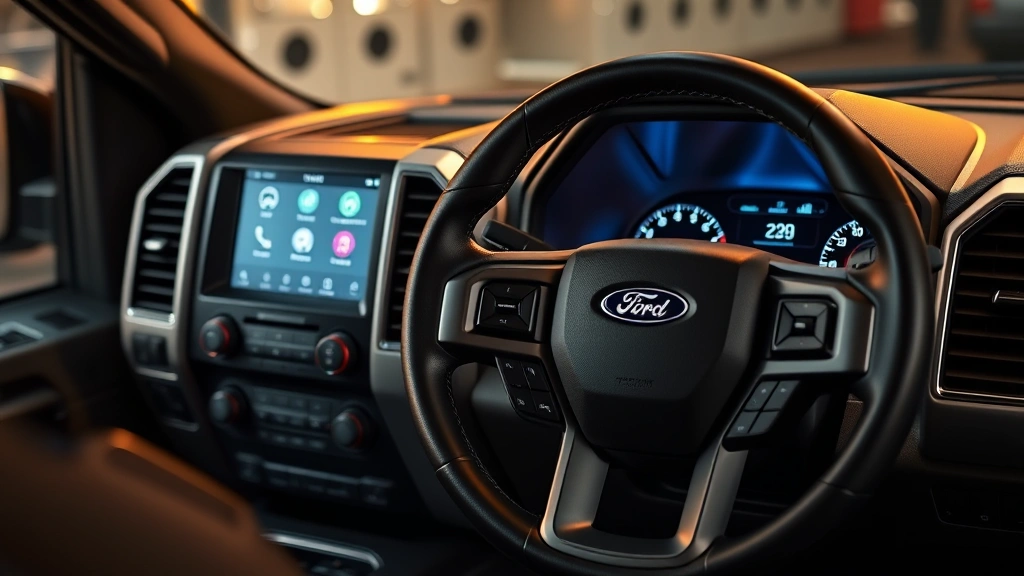
” alt=”Close-up of Ford F-150 dashboard and steering wheel, showing modern infotainment system and gauges with professional automotive photography lighting” />
Key Features Worth the Investment
Ford F-150 feature selections significantly impact long-term satisfaction and resale value, making thoughtful trim and option choices essential. Advanced driver assistance systems (ADAS) including adaptive cruise control, lane-keeping assistance, and automatic emergency braking justify investment premiums through safety benefits and insurance discounts. These technologies reduce accident risk and insurance claims, offsetting higher upfront costs through long-term savings.
Towing packages, including upgraded cooling systems, integrated trailer brake controllers, and reinforced suspension components, prove essential for buyers regularly towing trailers or boats. The investment costs $1,500-$3,000 but becomes invaluable for towing applications, preventing damage to base-model components inadequate for heavy loads. Integrated technology packages combining navigation, premium audio systems, and connectivity features enhance driving experience and support long-term resale value.
Payload capacity upgrades and bed options deserve consideration based on intended usage. Crew cab configurations sacrifice bed length but maximize passenger comfort—critical for commercial operations or family transportation. Regular cabs maximize cargo capacity, appealing to work-focused users. Specialized bed options including spray-in liners, tonneau covers, and integrated storage systems add functionality valued by professional users.
Powertrain selection significantly influences feature value propositions. EcoBoost engines deliver fuel efficiency and lower operational costs, while V8 engines provide maximum towing capacity and performance. The PowerStroke diesel engine balances efficiency with towing capability, justifying premium pricing for high-utilization vehicles. Matching powertrain selection to intended usage maximizes feature value and operational efficiency.
Interior material quality, seating comfort, and climate control features impact daily driving satisfaction substantially. Premium leather seating, heated/cooled seats, and advanced climate zones justify investment for buyers spending significant time in vehicles. Contrast this against basic cloth interiors sufficient for occasional use or commercial applications. Prioritizing features aligned with your specific usage patterns optimizes value and long-term satisfaction.
When evaluating feature investments, consider resale market demand for specific options. Popular features like backup cameras, blind-spot monitoring, and remote start command resale premiums, while niche options may not recover their investment costs. Balancing personal preferences with market-demanded features ensures satisfactory ownership experience while protecting future resale value—critical considerations for data-driven purchasing decisions in the automotive marketplace.
FAQ
What is the average price for a Ford F-150?
Average F-150 pricing varies significantly by model year and condition. New 2024 models range from $28,000-$75,000+ depending on trim and options. Used F-150s typically cost 15-50% less than new equivalents, with 3-5 year old models offering optimal value propositions. Regional variations and local market conditions influence specific pricing.
When is the best time to buy a Ford F-150?
End-of-month periods (final week of March, June, September, December) and year-end clearance events (October-December) typically feature maximum incentives and negotiating flexibility. Avoid spring and early summer when demand peaks and dealer pricing firms. Monitor manufacturer incentive programs for optimal timing.
Should I buy new or used?
New purchases provide latest technology, full warranties, and customization options but suffer significant depreciation. Used purchases minimize depreciation while accessing proven reliability and established service records. Used vehicles aged 2-4 years typically offer optimal value, balancing cost savings with modern features and retained lifespan.
What financing options are available?
Financing options include manufacturer financing through Ford Credit, bank loans, credit union financing, online lenders, and lease alternatives. Compare multiple sources before purchasing, as rates vary significantly. Obtain pre-approval before dealership visits to eliminate financing pressure tactics and enable competitive comparison.
How can I find the best deals on Ford F-150 for sale?
Search across multiple channels including dealership networks, online marketplaces like Cars.com and AutoTrader, private sellers, and manufacturer-certified pre-owned programs. Compare pricing across regions, monitor seasonal patterns, and utilize incentive tracking to identify optimal deals. Combine multiple information sources before committing.
What features justify investment premiums?
Advanced driver assistance systems, towing packages, premium audio systems, and integrated technology justify investment premiums through safety benefits, functionality enhancement, and resale value protection. Match feature selections to intended usage patterns to optimize value and long-term satisfaction.
How do I negotiate effectively?
Prepare with market research, establish maximum budgets, obtain pre-purchase financing approval, and research comparable vehicle pricing. Separate vehicle pricing from financing discussions, present independent trade-in valuations, and remain prepared to walk away from unfavorable offers. Information and negotiating discipline drive superior deal outcomes.