Enclosed Trailer for Sale: Comprehensive Buyer’s Guide
Enclosed trailers represent a significant investment for businesses, contractors, and entrepreneurs requiring secure cargo transportation. Whether you’re launching a mobile service business, expanding logistics capabilities, or upgrading your fleet, understanding the enclosed trailer market is essential for making informed purchasing decisions. This comprehensive guide examines key factors influencing trailer selection, pricing dynamics, and strategic considerations that impact your bottom line.
The enclosed trailer market has experienced substantial growth, driven by increased demand from e-commerce logistics providers, mobile service businesses, and small-to-medium enterprises seeking flexible transportation solutions. Understanding market trends, trailer specifications, and vendor landscapes enables buyers to negotiate better terms and select equipment that maximizes operational efficiency and return on investment.
Understanding Enclosed Trailer Types and Specifications
Enclosed trailers come in multiple configurations, each serving distinct business purposes and operational requirements. Single-axle trailers typically range from 5×8 to 8×16 feet, offering maneuverability for urban environments and smaller cargo volumes. These models suit contractors, mobile service providers, and small businesses requiring occasional transportation capacity. Dual-axle trailers (8×16 to 8×24 feet) accommodate heavier loads and provide enhanced stability for highway transportation, making them ideal for logistics operations and larger commercial enterprises.
Gooseneck trailers represent premium options featuring extended cargo space and superior weight distribution capabilities. These heavy-duty models, typically 20-40 feet in length, serve commercial trucking operations, equipment rental businesses, and large-scale logistics providers. Understanding your specific cargo requirements—weight capacity, dimensions, frequency of use—directly impacts trailer type selection and total cost of ownership.
Specifications extending beyond basic dimensions significantly influence functionality and operational efficiency. Interior height variations (6 feet versus 6.5 feet) affect loading procedures and cargo compatibility. Door configurations—single swing-out, double doors, or side-entry options—determine accessibility patterns and unloading procedures. Flooring materials range from standard wood to aluminum or composite options, with durability and maintenance implications affecting long-term expenses. Ventilation features, insulation ratings, and climate control capabilities become critical for temperature-sensitive cargo including electronics, pharmaceuticals, or perishable goods.
Brake systems represent another crucial specification category. Electric brakes suit lighter-duty applications, while hydraulic systems provide superior stopping power for heavier loads and highway transportation. Brake type selection impacts towing vehicle requirements, insurance classifications, and operational safety profiles. When evaluating enclosed trailer for sale listings, comprehensive specification reviews ensure alignment with intended applications and regulatory compliance requirements.
Key Factors Influencing Enclosed Trailer Pricing
Enclosed trailer pricing reflects complex interactions among material costs, manufacturing capacity, market demand, and vendor positioning. Entry-level single-axle trailers typically range from $3,500-$6,500, while mid-range dual-axle models command $8,000-$15,000. Premium gooseneck trailers and specialized configurations exceed $20,000, with custom builds reaching $40,000+ depending on specifications and features.
Material composition directly impacts pricing and performance characteristics. Steel frame construction offers cost advantages but requires regular maintenance and rust prevention protocols. Aluminum components reduce weight, improving fuel efficiency and towing capacity, but increase upfront costs by 15-25%. Composite and hybrid materials represent emerging options balancing durability, weight, and cost considerations. Interior finishing materials—from basic plywood to premium aluminum or composite liners—significantly influence pricing and operational functionality.
Market demand cycles substantially affect trailer availability and pricing leverage. Peak seasons (spring through early fall) typically feature higher prices and reduced inventory selection due to increased contractor activity and seasonal business expansion. Off-season purchasing (late fall through winter) often yields better pricing and more negotiation flexibility as vendors prioritize inventory movement. Understanding seasonal patterns enables strategic purchasing timing aligned with budget cycles and operational requirements.
Geographic factors influence pricing through transportation costs, local demand patterns, and regional economic conditions. Rural areas with strong agricultural or construction sectors often feature higher trailer availability and competitive pricing. Urban markets may offer limited selection but provide convenient access to service and parts suppliers. Regional economic conditions, construction activity levels, and logistics infrastructure development affect local market pricing and inventory depth.
Vendor positioning—whether selling directly from manufacturers, operating as regional distributors, or functioning as independent dealers—impacts pricing structures and negotiation opportunities. Manufacturer direct sales eliminate middleman markups but may require minimum order quantities or longer delivery timelines. Established dealers provide inventory immediacy, trade-in options, and service relationships, often justifying premium pricing through convenience and support services. Understanding vendor types enables strategic shopping and informed negotiation approaches.
” alt=”Professional business buyer inspecting enclosed cargo trailer specifications and features in outdoor commercial lot”>
New vs. Used Enclosed Trailers: Cost-Benefit Analysis
New trailer purchases offer warranty protections, manufacturer support, and customization capabilities justifying premium pricing for risk-averse buyers and businesses prioritizing operational reliability. New units typically cost 40-60% more than comparable used models but provide extended warranty periods (2-5 years), manufacturer defect coverage, and optimized performance characteristics. For businesses where unexpected downtime creates significant operational disruption or revenue loss, new trailer investments provide insurance value exceeding initial cost premiums.
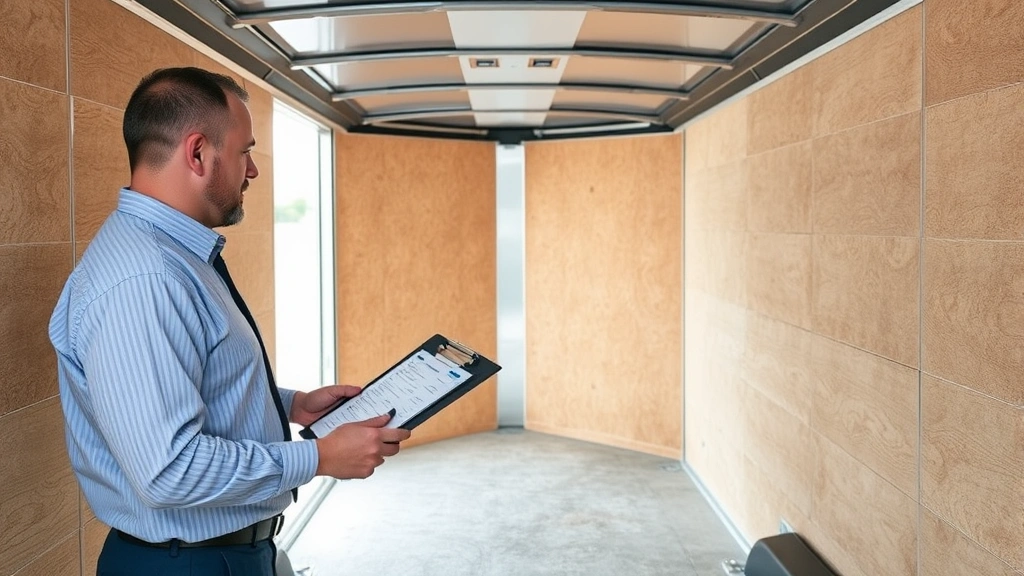
Used trailer markets present substantial cost savings—typically 30-50% below comparable new models—attracting budget-conscious buyers and businesses with flexible operational timelines. Used trailer viability depends critically on condition assessment, maintenance history documentation, and remaining useful life evaluation. Thorough pre-purchase inspections examining structural integrity, frame alignment, brake functionality, electrical systems, and interior conditions prevent costly post-purchase repairs and operational failures.
Depreciation patterns significantly influence purchase timing and financial outcomes. New trailers depreciate most rapidly during initial 2-3 years, with rates stabilizing thereafter. Used trailers with 5-10 years service life often represent optimal value propositions—depreciation has substantially moderated while remaining useful life typically extends 8-15 additional years with proper maintenance. Very old trailers (15+ years) may offer attractive pricing but warrant comprehensive mechanical evaluation given uncertainty regarding remaining operational lifespan and repair requirements.
Financing implications differ substantially between new and used purchases. Lenders typically offer more favorable terms for new trailers (lower interest rates, longer amortization periods) due to manufacturer warranties and collateral value certainty. Used trailer financing often requires shorter terms and higher interest rates reflecting increased risk profiles. When calculating total cost of ownership, financing expenses substantially impact economic viability of new versus used decisions.
Operating cost considerations extend beyond purchase price to encompass maintenance, repairs, and downtime expenses. New trailers require minimal maintenance during warranty periods, reducing operational unpredictability. Used trailers may require immediate repairs or ongoing maintenance investments, with costs varying substantially based on condition and maintenance history. For businesses with tight operational margins or limited maintenance expertise, new trailer purchases provide cost predictability supporting financial planning and budgeting accuracy.
Vendor Selection and Manufacturer Reputation
Vendor selection fundamentally influences post-purchase support, parts availability, warranty honoring, and overall customer satisfaction. Established manufacturers with national distribution networks—including major brands like Cargo Pro, Haulmark, Wells Cargo, and Enclosed Trailers Plus—provide standardized quality, widespread dealer networks, and accessible parts suppliers. Regional manufacturers often offer competitive pricing and personalized service but may present challenges obtaining replacement parts or warranty service if relocating or expanding operations geographically.
Reputation assessment requires multi-source evaluation including independent reviews, Better Business Bureau ratings, customer testimonials, and industry forum discussions. Better Business Bureau provides verified complaint histories and resolution documentation. Industry publications like Trucking Info and Fleet Owner Magazine regularly evaluate trailer manufacturers and vendors. Online forums and social media groups dedicated to contractors, logistics professionals, and business owners provide authentic user experiences and practical recommendations.
Warranty terms and conditions merit detailed comparison and legal review. Comprehensive warranties covering structural components, electrical systems, and mechanical elements provide superior protection than limited warranties excluding specific categories. Warranty transferability—whether remaining coverage transfers to subsequent owners—affects resale value and long-term asset utility. Geographic warranty coverage limitations may create challenges if business operations span multiple regions or states requiring service access.
Service network accessibility represents often-overlooked vendor selection criteria with significant operational implications. Vendors maintaining conveniently located service facilities or authorized repair networks enable rapid issue resolution minimizing downtime. Vendors relying on distant service centers or limited repair networks create operational disruptions if equipment failures occur during critical business periods. When evaluating vendors, confirm service facility locations relative to primary operating areas and verify availability of emergency or expedited repair services.
Customization capabilities and flexibility accommodate specialized business requirements and operational preferences. Vendors offering extensive customization options—interior configurations, specialty features, color selections, branding elements—enable trailers precisely matching business needs and brand identity. Standardized manufacturers with limited customization options may require accepting generic configurations or seeking expensive post-purchase modifications. Balancing customization desires against cost premiums and delivery timeline extensions requires clear prioritization of functional versus aesthetic preferences.
Financing Options for Trailer Purchases
Multiple financing pathways accommodate different business situations, cash flow patterns, and financial objectives. Traditional bank loans remain popular options for established businesses with strong credit profiles and documented revenue history. Bank financing typically offers competitive interest rates (6-12% depending on creditworthiness and economic conditions) and flexible amortization periods (3-7 years). Bank loans require comprehensive documentation, personal guarantees, and collateral pledges but provide lower total interest costs compared to alternative financing.
Manufacturer financing programs, offered directly by major trailer manufacturers or through affiliated finance subsidiaries, often feature promotional rates and streamlined approval processes. Promotional financing periods (0% APR for 12-24 months) can substantially reduce total borrowing costs for well-qualified buyers. Manufacturer financing typically requires purchasing from authorized dealers and maintains minimum credit score requirements, but approval processes often move faster than traditional bank lending.
Equipment leasing represents alternative financing accommodating businesses preferring operational flexibility and predictable monthly expenses. Lease arrangements typically include maintenance and support services, reducing operational complexity. Leasing suits businesses with uncertain equipment needs, rapid growth trajectories, or preferences avoiding asset ownership and associated depreciation. Lease expenses qualify as business deductions, providing tax advantages compared to loan interest deductions alone. However, leasing generates no equity buildup and may prove more expensive than ownership over extended timeframes.
Equipment financing companies and specialty lenders provide alternatives when traditional banks decline applications or require unacceptable terms. These lenders typically accept lower credit scores, emerging businesses with limited history, and situations involving self-employment or irregular income. Higher interest rates (12-18%) reflect increased risk profiles but provide financing access otherwise unavailable. Comparing terms across multiple lenders prevents accepting unnecessarily unfavorable arrangements.
Small business administration (SBA) loans offer favorable terms and extended repayment periods supporting small business equipment purchases. SBA loan programs typically feature lower interest rates than conventional lenders and amortization periods extending up to 10 years. SBA loans require documented business plans, personal financial statements, and collateral valuations but provide substantial cost advantages for qualifying businesses. SBA resources provide detailed program information and lender directories.
Cash purchases, while requiring substantial upfront capital, eliminate financing costs and interest expenses. Businesses with available cash reserves may benefit from purchasing power negotiation leverage and avoiding ongoing debt obligations. However, committing capital to equipment purchases reduces working capital flexibility, potentially constraining operational expansion or emergency response capabilities. Balancing immediate cash deployment against growth opportunities and operational contingencies requires careful financial analysis.
Maintenance and Operational Considerations
Enclosed trailer longevity and operational reliability depend critically on preventive maintenance protocols and systematic condition monitoring. Regular inspections—monthly or quarterly depending on usage intensity—identify emerging issues before escalating into expensive repairs or operational failures. Brake system inspections, electrical connection verification, structural crack assessment, and weatherproofing condition evaluation form essential maintenance components preventing catastrophic failures.
Tire maintenance represents underestimated expense category with significant safety and operational implications. Trailer tires deteriorate through use, weather exposure, and age regardless of mileage. Regular tire pressure verification, rotation schedules, and replacement when tread depth or sidewall condition deteriorates prevents blowouts and maintains operational safety. Proper tire maintenance also improves fuel efficiency and extends suspension component lifespan.
Weatherproofing and corrosion prevention require ongoing attention, particularly for trailers exposed to harsh environmental conditions. Seal inspections around doors, vents, and penetrations prevent water intrusion causing interior damage and cargo spoilage. Rust prevention protocols—including regular washing, protective coating application, and moisture control—extend structural lifespan and maintain resale value. Climate-controlled storage when trailers remain idle reduces weathering and extends overall equipment longevity.
Documentation and record-keeping systems track maintenance activities, repair expenses, and performance patterns informing operational decisions. Comprehensive maintenance logs enable early identification of recurring issues, component failure patterns, and replacement timing optimization. Documented maintenance history substantially enhances resale value when transitioning equipment, demonstrating conscientious ownership and operational care.
Professional maintenance services versus owner-performed maintenance require assessment based on technical capabilities, available time, and cost considerations. Professional service providers offer expertise, specialized tools, and warranty compliance but increase operational expenses. Owner-performed maintenance reduces costs but requires technical knowledge and creates liability if improper procedures cause equipment damage or safety issues. Many businesses optimize costs through professional service for complex systems (brakes, electrical) while performing routine maintenance (cleaning, basic inspections) internally.
” alt=”Business owner reviewing enclosed trailer maintenance checklist and service records in professional office setting”>
Regulatory Requirements and Compliance
Enclosed trailer operation requires compliance with federal, state, and local regulations affecting registration, insurance, safety standards, and operational procedures. Vehicle registration varies by state and trailer gross vehicle weight rating (GVWR). Trailers under 3,000 pounds typically require minimal registration in many states, while heavier trailers necessitate formal registration, annual renewals, and associated fees. Understanding jurisdiction-specific requirements prevents penalties and ensures operational legality.
Insurance requirements extend beyond basic liability to encompass cargo coverage, physical damage protection, and potentially specialized coverage depending on transported materials. Commercial trailer insurance typically costs $300-$800 annually depending on trailer value, cargo type, usage patterns, and coverage selections. Uninsured or underinsured trailer operation creates substantial financial exposure if accidents, theft, or cargo damage occurs. Verifying insurance requirements with state regulators and consulting insurance professionals ensures adequate protection.
Safety standards and equipment requirements mandate specific features including lighting systems, reflective markings, brake functionality, and coupling mechanisms meeting Department of Transportation (DOT) standards. Older trailers may lack current safety features requiring retrofitting before legal operation. Brake system inspections and certification may be required periodically depending on trailer age and jurisdiction. Understanding specific requirements prevents unsafe operation and legal violations.
Weight and dimension restrictions affect trailer selection and operational planning. Federal highway regulations limit overall length, width, and height to specific dimensions, while weight restrictions vary by axle configuration and road type. Exceeding legal weight limits creates liability exposure, potential fines, and cargo damage risks. Understanding payload capacity and weight distribution principles prevents overloading and ensures safe, legal operation.
Commercial driver’s license (CDL) requirements depend on towing vehicle gross combination weight rating (GCWR) rather than trailer specifications alone. Understanding combined vehicle and trailer GCWR determines whether drivers require commercial licensing. Improper classification creates insurance and legal liability exposure. Consulting Federal Motor Carrier Safety Administration resources clarifies specific requirements for your operational situation.
Market Trends Shaping Enclosed Trailer Demand
E-commerce expansion and last-mile delivery proliferation have substantially increased enclosed trailer demand among logistics providers and mobile service businesses. McKinsey research indicates logistics and transportation equipment investments will increase 15-20% annually through 2025 as businesses expand delivery capabilities and supply chain resilience. Enclosed trailers enable temperature-controlled transport, theft prevention, and professional brand presentation increasingly important in competitive service markets.
Sustainability considerations increasingly influence trailer specifications and material selections. Lightweight materials reducing fuel consumption, recyclable components, and energy-efficient features appeal to environmentally conscious businesses and support corporate sustainability objectives. Manufacturers incorporating sustainable practices and materials often command premium pricing justified by operational efficiency improvements and brand alignment benefits.
Smart technology integration represents emerging trend with operational implications. GPS tracking systems, temperature monitoring sensors, and electronic brake systems enhance operational visibility, enable predictive maintenance, and improve safety outcomes. Technology-integrated trailers typically cost 10-15% more but provide substantial value through operational insights and risk reduction. Businesses operating multiple trailers particularly benefit from fleet management technology improving utilization rates and maintenance scheduling.
Used trailer market growth reflects economic pressures encouraging cost-conscious purchasing and sustainability through equipment reuse. Statista market research indicates used trailer sales have grown 12% annually, outpacing new trailer sales growth. Online marketplaces have substantially improved used equipment accessibility and pricing transparency, enabling broader buyer participation and more efficient price discovery.
Customization trends reflect businesses seeking equipment precisely matching specific operational needs rather than accepting standardized configurations. Modular trailer designs enabling configuration changes and specialized interior options accommodate diverse applications from food service to equipment transport. Customization premiums (10-25% above base pricing) often prove justified when enabling expanded service offerings or improved operational efficiency.
Supply chain considerations increasingly influence purchasing timing and vendor selection. Manufacturing capacity constraints and shipping delays have created extended lead times (6-12 months) for new trailers from major manufacturers. Buyers requiring immediate equipment availability increasingly consider used markets or regional manufacturers with shorter delivery timelines. Understanding supply chain realities prevents unrealistic delivery expectations and enables contingency planning.
FAQ
What size enclosed trailer do I need for my business?
Trailer sizing depends on cargo volume, weight, and frequency of transportation. Most service businesses operate effectively with 6×12 or 8×16 trailers accommodating typical equipment loads. Logistics operations require larger 8×24 or gooseneck configurations. Analyzing typical cargo dimensions and weight, combined with growth projections, informs appropriate sizing. Oversizing wastes fuel and operational costs, while undersizing limits revenue potential and requires multiple trips.
Should I purchase new or used enclosed trailers?
New trailers suit businesses prioritizing reliability and warranty protection despite higher upfront costs. Used trailers appeal to budget-conscious buyers accepting modest risk for substantial savings. Evaluate your operational tolerance for downtime, available maintenance expertise, and financial constraints. When considering used options, invest in professional pre-purchase inspections identifying potential issues and negotiating repairs or price adjustments.
How much does enclosed trailer maintenance typically cost annually?
Annual maintenance costs typically range $500-$1,500 depending on usage intensity, trailer age, and condition. New trailers under warranty often require minimal maintenance. Used trailers may require unexpected repairs, particularly if previous owners neglected maintenance. Budget conservatively for older equipment, and maintain detailed records identifying recurring issues requiring component replacement.
What financing options are available for enclosed trailer purchases?
Traditional bank loans, manufacturer financing, equipment leasing, and SBA loans represent primary options. Compare interest rates, terms, and total costs across providers. Manufacturer promotional financing often offers compelling rates for qualified buyers. Leasing provides operational flexibility and includes maintenance, while ownership builds equity and provides depreciation tax benefits. Assess your business situation, growth trajectory, and financial objectives when selecting financing approaches.
Are enclosed trailers tax deductible business expenses?
Enclosed trailers purchased for business use qualify for depreciation deductions and potential Section 179 expensing allowing immediate deduction of qualifying equipment costs. Consult tax professionals regarding your specific situation, as rules vary based on business structure, equipment use, and applicable tax regulations. Proper documentation and business use verification enable maximum tax benefit realization.
What regulatory requirements apply to enclosed trailer operation?
Requirements vary by state and trailer specifications but typically include vehicle registration, commercial insurance, DOT safety compliance, and weight regulation adherence. Verify specific requirements with your state’s transportation department and insurance providers. Older trailers may require retrofitting to meet current safety standards before legal operation. Understanding requirements prevents penalties and ensures operational legality.
How can I find reliable enclosed trailer vendors and manufacturers?
Research vendor reputation through Better Business Bureau ratings, customer reviews, industry publications, and professional forums. Verify service network accessibility relative to your operating area. Request references from existing customers and inquire about warranty terms, customization capabilities, and post-purchase support. Comparing multiple vendors prevents hasty decisions and identifies partners aligned with your business requirements and values.