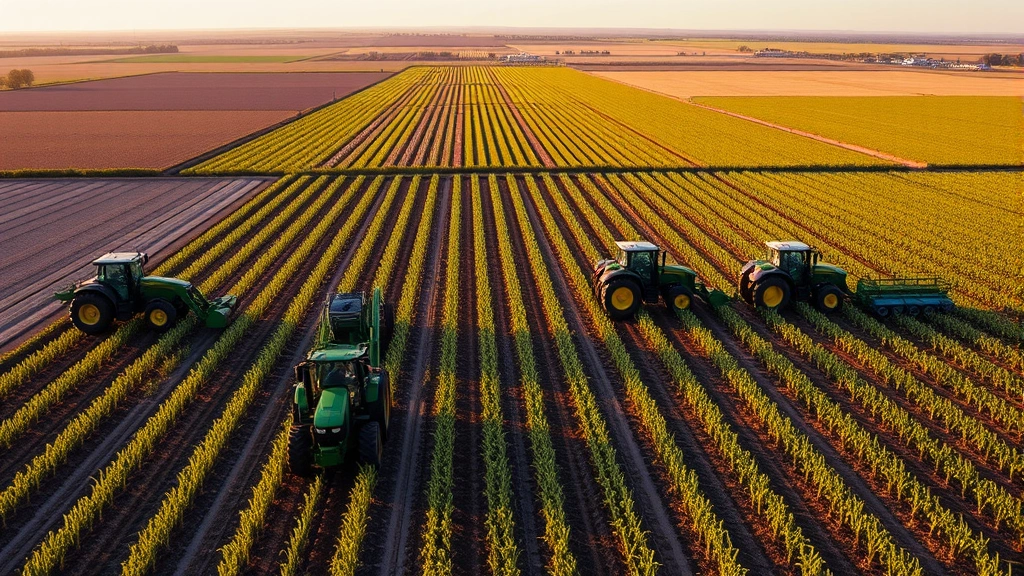
John Deere Sales Surge? Market Insights on Agricultural Demand
The agricultural equipment industry has witnessed significant fluctuations in recent years, and John Deere stands at the center of this transformation. As one of the world’s largest manufacturers of agricultural machinery, John Deere’s sales performance serves as a barometer for broader trends in farming, commodity prices, and rural economic health. Understanding these market dynamics is crucial for investors, farmers, and anyone tracking the agricultural sector’s trajectory.
Recent data suggests that John Deere has experienced notable shifts in demand patterns, driven by a complex interplay of factors including commodity price cycles, farm profitability, supply chain normalization, and macroeconomic conditions. This comprehensive analysis explores the current state of John Deere’s sales, the underlying market forces driving agricultural equipment demand, and what these trends mean for stakeholders across the agricultural value chain.
The significance of monitoring John Deere’s performance extends beyond the company itself. As a leading indicator of agricultural sector health, John Deere’s sales figures reflect farmer sentiment, investment capacity, and confidence in future crop profitability. For those interested in understanding how businesses track market performance, exploring e-commerce analytics tools can provide valuable insights into sales metrics and market analysis methodologies.
John Deere Sales Performance Overview
John Deere’s financial performance has demonstrated resilience despite global economic uncertainties. The company’s equipment sales have shown strong recovery patterns, particularly in the North American market, which represents the largest segment of its business. In recent fiscal periods, John Deere reported substantial revenue increases, with equipment sales contributing significantly to overall corporate performance.
The company’s sales surge reflects both pent-up demand from previous years and robust current-period orders. Farmers who delayed equipment purchases during uncertain economic periods have returned to the market, creating a backlog of orders that manufacturers have been working through. This demand surge has allowed John Deere to maintain premium pricing while managing production constraints that plagued the industry in previous years.
Understanding how businesses manage such significant sales volume requires sophisticated tracking systems. Those involved in commerce operations might benefit from learning about what constitutes an e-commerce platform, as these principles apply to B2B agricultural sales channels as well.
Key metrics indicate that John Deere’s sales per unit have increased, suggesting not only higher volume but also favorable product mix shifts toward larger, more profitable equipment categories. The company’s order book has remained robust, with delivery schedules extending multiple quarters into the future. This visibility into future revenue provides confidence in sustained performance, though it also creates challenges in meeting customer expectations for timely equipment delivery.
Agricultural Demand Drivers and Market Conditions
Agricultural equipment demand is fundamentally driven by farmer economics and confidence in future profitability. When farmers expect strong crop prices and favorable growing conditions, they invest in new equipment to increase productivity and efficiency. Conversely, when commodity prices collapse or weather patterns become uncertain, equipment purchases are deferred or cancelled.
The current cycle has been characterized by mixed signals. While commodity prices have experienced volatility, certain crops have maintained relatively strong price levels, particularly corn and soybeans in North American markets. This has supported farmer cash flow and enabled equipment investments that might otherwise have been postponed. Additionally, many farmers have accumulated equity from previous profitable years, providing financial capacity for capital purchases.
Labor availability in agriculture has also influenced equipment demand. As rural labor becomes scarcer and more expensive, farmers increasingly turn to mechanization and automation to maintain productivity. This structural shift toward capital-intensive farming operations supports sustained equipment demand independent of short-term commodity price movements. For those tracking these market shifts, understanding how digital marketplaces facilitate commerce reveals how agricultural equipment dealers have adapted their sales channels.
Weather patterns and climate considerations have emerged as significant demand drivers. Farmers in regions experiencing drought or excessive moisture seek equipment that enables more efficient water management and soil conservation. John Deere’s emphasis on precision agriculture technology aligns with these needs, positioning the company advantageously as farmers invest in climate-adaptive farming practices.
Commodity Prices and Farmer Profitability
The relationship between commodity prices and John Deere sales is direct and measurable. Agricultural economists have long documented that equipment sales correlate strongly with farm income, which itself depends heavily on commodity prices. When corn, soybean, wheat, or other crop prices rise, farmers experience improved cash flow and increased willingness to invest in equipment upgrades.
Recent commodity market dynamics have been complex. While prices have experienced significant swings, they have generally remained within ranges that support reasonable farm profitability. Crop insurance programs and government support mechanisms have also cushioned farmers against extreme price volatility, reducing the downside risk of equipment investments. This policy environment has encouraged more aggressive capital spending than might occur in purely free-market conditions.
Input costs present a counterbalance to commodity price strength. Fertilizer, fuel, and seed costs have risen substantially, reducing net farm income despite higher crop prices. This squeeze on farm profitability moderates equipment demand compared to scenarios where commodity prices rise without corresponding input cost increases. John Deere has had to navigate this environment by emphasizing the productivity and cost-saving benefits of its newer equipment models.
International commodity markets also influence John Deere’s sales, particularly for export-oriented farmers. Trade policies, tariffs, and international demand for agricultural commodities affect global farm profitability and equipment investment decisions. The company’s global footprint means it benefits from strong agricultural conditions in multiple regions, though it also faces headwinds in markets experiencing commodity price weakness.
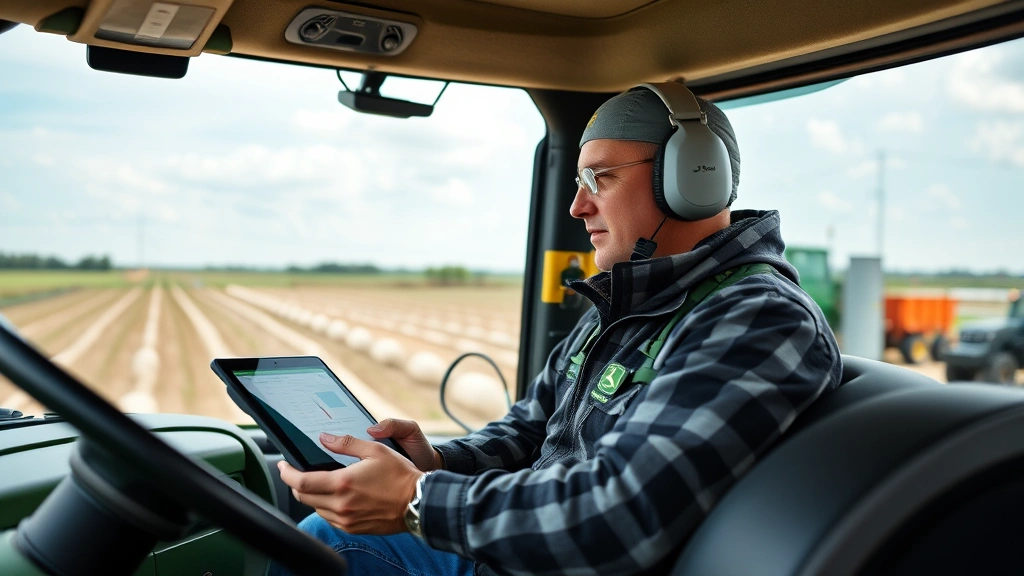
Supply Chain Recovery and Production Capacity
For several years, agricultural equipment manufacturers faced significant supply chain constraints that limited their ability to meet demand. Semiconductor shortages, component availability issues, and logistical challenges created bottlenecks that prevented production from matching order levels. John Deere’s recent sales surge reflects not only increased demand but also improving supply chain functionality that enables the company to convert orders into delivered equipment.
The normalization of supply chains has been gradual and uneven across different product categories. Some equipment lines have returned to more normal production schedules, while others continue to face component constraints. John Deere has invested heavily in supply chain resilience, including nearshoring of critical components and diversification of supplier bases. These investments reduce future vulnerability to supply disruptions but require significant capital expenditure.
Production capacity utilization has improved substantially, with manufacturing facilities operating at higher levels than in recent years. This operational efficiency contributes to margin expansion and supports the company’s profitability improvements. However, capacity constraints remain a limiting factor on sales growth, meaning that demand exceeds production capability in many product categories. This dynamic supports strong pricing and order backlogs but frustrates customers seeking faster delivery.
Inventory management has become critical in the current environment. Dealers maintain limited inventory due to supply constraints and the desire to manage working capital efficiently. This creates challenges for customers seeking immediate equipment availability and influences purchasing decisions. Some farmers have opted for used equipment or competitor products when John Deere delivery timelines extended beyond acceptable windows.
Market Competition and Industry Trends
John Deere operates in a competitive agricultural equipment market where several significant manufacturers vie for market share. AGCO Corporation, CNH Industrial, and various regional manufacturers compete directly in many product categories. Competition influences pricing, product innovation, and market dynamics that affect John Deere’s sales performance and profitability.
Recent years have witnessed consolidation trends in the agricultural equipment industry, with larger manufacturers acquiring smaller competitors to expand product portfolios and geographic reach. John Deere itself has pursued strategic acquisitions, including companies focused on precision agriculture technology and autonomous equipment systems. These acquisitions strengthen the company’s competitive position and support premium pricing for feature-rich equipment.
Dealer networks represent crucial competitive assets in agricultural equipment markets. John Deere’s extensive dealer network provides service capabilities, customer relationships, and market access that competitors struggle to match. Dealers are increasingly important as equipment becomes more complex and service requirements expand. The company’s investment in dealer support and digital tools that enhance dealer effectiveness contributes to competitive advantage.
Product differentiation through technology has become increasingly important. Farmers seeking to optimize input costs and maximize yields turn to precision agriculture solutions that integrate equipment, data analytics, and decision support tools. John Deere’s ecosystem of connected equipment and software platforms provides competitive advantages in this emerging market segment. Understanding how businesses develop and market such integrated solutions relates to broader sales and business development strategies in technology-driven industries.
Regional Variations in Equipment Demand
Agricultural equipment demand varies significantly across geographic regions based on local crop types, farm sizes, weather patterns, and economic conditions. John Deere’s global sales reflect these regional variations, with different product mixes and demand patterns in North America, Europe, South America, and Asia-Pacific regions.
North America represents John Deere’s largest and most profitable market. The region’s large-scale commodity crop production, mechanization prevalence, and farmer capital availability support strong equipment sales. Recent demand in North America has been particularly robust, with farmers in the Corn Belt and Great Plains regions investing in new equipment. This regional strength has substantially contributed to the company’s overall sales surge.
International markets present both opportunities and challenges. South American agricultural production, particularly in Brazil and Argentina, supports significant equipment demand. However, currency fluctuations, trade policies, and economic conditions in these regions create volatility. European markets face different dynamics, with smaller farm sizes, different crop mixes, and more stringent environmental regulations influencing equipment demand and product requirements.
Emerging agricultural markets in Asia and Africa represent long-term growth opportunities for John Deere, though current penetration remains limited. As farming in these regions becomes more mechanized and commercialized, equipment demand should increase substantially. The company’s strategy in these markets emphasizes affordable product options and dealer network development to capture future growth.
Technology and Innovation Impact
Technological innovation has become central to John Deere’s competitive strategy and sales performance. Precision agriculture technologies that enable data-driven farming decisions appeal to progressive farmers seeking to optimize yields and reduce input costs. John Deere’s investments in automation, artificial intelligence, and autonomous equipment position the company at the forefront of agricultural technology.
Autonomous equipment represents a frontier for agricultural mechanization. Self-driving tractors and implements offer potential benefits including improved efficiency, reduced labor requirements, and optimized field operations. John Deere has demonstrated autonomous equipment prototypes and begun limited commercial deployments. As the technology matures and regulatory frameworks develop, autonomous equipment could drive significant replacement demand cycles.
Connectivity and data analytics have become standard features in modern agricultural equipment. Farmers increasingly expect equipment to collect operational data and integrate with farm management software systems. John Deere’s equipment platforms capture extensive data on equipment performance, field conditions, and operational patterns. This data enables continuous improvement, predictive maintenance, and optimization recommendations that enhance customer value and support recurring software revenue streams.
Sustainability considerations increasingly influence agricultural equipment design and farmer purchasing decisions. Equipment that reduces fuel consumption, minimizes soil compaction, or enables precision application of inputs appeals to environmentally conscious farmers and aligns with regulatory trends toward sustainable agriculture. John Deere’s product development emphasizes these sustainability attributes, supporting premium pricing and market differentiation.
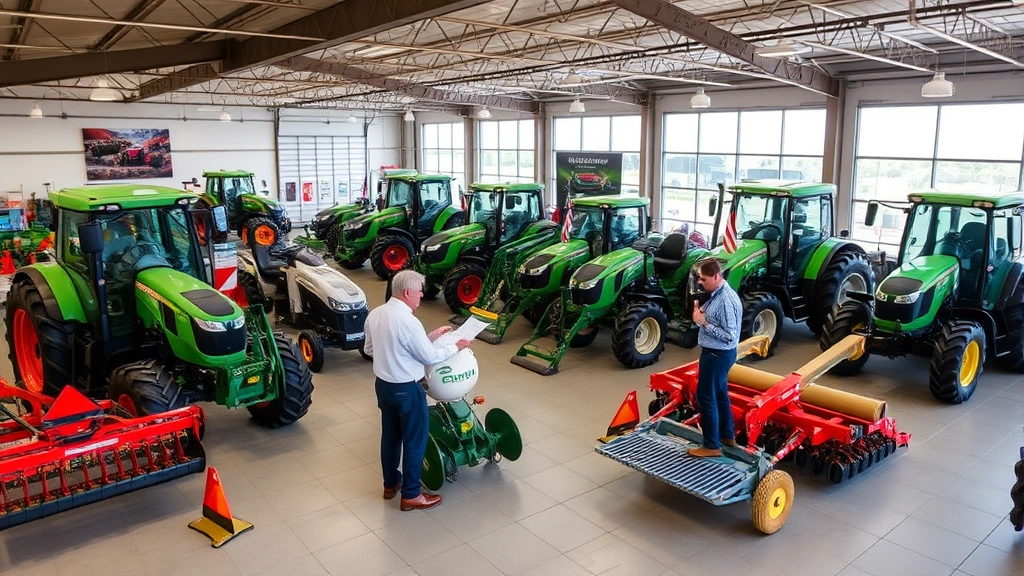
Future Outlook and Predictions
The outlook for John Deere sales depends on multiple interconnected factors including commodity prices, farm profitability, supply chain normalization, and macroeconomic conditions. Most agricultural economists anticipate continued moderate growth in equipment demand over the medium term, supported by structural trends toward mechanization and technology adoption.
Commodity price forecasts suggest continued volatility but generally stable to slightly improving conditions for major crops. This should support farmer equipment investment decisions, though significant price declines would quickly dampen demand. Climate change and weather uncertainty remain wildcards that could either support or hinder equipment sales depending on how specific regions are affected.
Supply chain normalization should continue, gradually eliminating the production constraints that currently limit sales. This normalization will reduce pricing power and order backlogs but should enable more predictable business operations. Competition may intensify as supply constraints ease and competitors gain production capacity to meet demand.
Technological adoption rates will influence future sales patterns. If precision agriculture and autonomous equipment technologies achieve rapid adoption, equipment replacement cycles may accelerate, supporting stronger long-term demand. Conversely, if adoption rates remain modest, growth may moderate as the market matures.
For those interested in how sales organizations adapt to changing market conditions, exploring business sales opportunities and understanding market dynamics provides valuable context for various industries including agricultural equipment distribution.
Regulatory trends toward emissions reduction and sustainability could drive equipment replacement cycles as farmers upgrade to compliant equipment. John Deere’s emphasis on cleaner engine technologies and fuel-efficient designs positions the company favorably for regulatory-driven demand.
Currency fluctuations will continue affecting international sales, particularly in emerging markets where John Deere seeks growth. Stronger U.S. dollar headwinds could pressure international sales, while weakness would provide tailwinds. Geopolitical uncertainties and trade policy changes represent additional factors that could influence future sales patterns.
FAQ
What factors are driving the current John Deere sales surge?
Multiple factors contribute to the sales surge: pent-up demand from prior years, improved farm profitability from commodity prices, supply chain normalization enabling production increases, farmer confidence in future conditions, and technology adoption driving equipment upgrades. The combination of these factors has created a favorable demand environment that John Deere has capitalized on through production increases and maintained pricing.
How do commodity prices affect John Deere sales?
Commodity prices directly influence farm income and equipment investment capacity. Higher commodity prices improve farmer cash flow, enabling equipment purchases. Conversely, price declines reduce farm profitability and lead to deferred equipment investments. The relationship is well-documented by agricultural economists and represents one of the most reliable predictors of agricultural equipment demand cycles.
What is John Deere’s competitive position in the agricultural equipment market?
John Deere maintains a leading competitive position through its extensive dealer network, comprehensive product portfolio, technology leadership in precision agriculture, and strong brand reputation. While competitors like AGCO and CNH Industrial compete vigorously, John Deere’s integrated ecosystem of connected equipment and software platforms provides competitive advantages that support premium pricing and market share.
How are supply chain constraints affecting John Deere’s ability to meet demand?
While supply chains have normalized significantly from pandemic-era disruptions, constraints remain in some product categories. John Deere’s production capacity, while improved, remains below order levels in many categories. The company has invested in supply chain resilience and nearshoring strategies to reduce future vulnerability, but capacity limitations continue to constrain sales growth and create extended delivery timelines.
What role does technology play in John Deere’s sales strategy?
Technology increasingly differentiates John Deere’s products and supports premium pricing. Precision agriculture capabilities, autonomous equipment development, connectivity features, and data analytics tools appeal to progressive farmers. Investment in technology attracts customers seeking efficiency improvements and cost optimization, supporting both equipment sales and recurring software revenue.
What are the key risks to John Deere’s sales outlook?
Major risks include commodity price declines that would reduce farmer profitability, recession that dampens business investment, supply chain disruptions that constrain production, intensifying competition as supply constraints ease, regulatory changes that require expensive equipment modifications, and geopolitical uncertainties affecting international markets. Currency fluctuations also represent significant risks for a globally diversified manufacturer.