
Where to Buy Hospital Beds? Complete Buyer’s Guide
Finding the right hospital bed for home care, recovery, or long-term medical needs requires understanding your options, budget, and specific requirements. Whether you’re purchasing for a family member’s post-surgery recovery or managing a chronic condition, hospital beds have evolved significantly to offer comfort, functionality, and accessibility. This comprehensive guide walks you through the best places to purchase hospital beds, what to look for, and how to make an informed decision that meets both medical and financial needs.
The market for hospital beds has expanded dramatically over the past decade, with options ranging from basic manual models to advanced electric beds with memory foam mattresses and integrated monitoring systems. Understanding where to buy and what features matter most will help you secure the right equipment at a competitive price. Let’s explore the various purchasing channels and key considerations for this important healthcare investment.

Medical Supply Retailers and Specialty Stores
Local medical supply retailers remain one of the most reliable places to purchase hospital beds for sale. These specialized stores employ trained staff who understand the nuances of different bed models, frame types, and mattress options. Major chains like Apria Healthcare, Aeroflow Health, and Byram Healthcare maintain physical locations across North America where customers can view beds in person before purchasing.
The advantage of shopping at medical supply retailers includes:
- Expert consultation: Staff can assess your specific medical needs and recommend appropriate models
- Physical inspection: Test comfort levels and bed mechanisms before committing to purchase
- Warranty and support: Professional installation, maintenance, and customer service included
- Insurance navigation: Many retailers help process insurance claims and understand coverage requirements
- Rental options: Flexibility to rent before buying or upgrade as needs change
Retailers typically stock multiple brands including Stryker, Hill-Rom, Invacare, and Drive Medical. Prices at these locations generally range from $2,000 for basic manual beds to $8,000+ for advanced electric models with premium features. Staff can also explain the differences between standard hospital beds and bariatric models designed for patients requiring higher weight capacity.
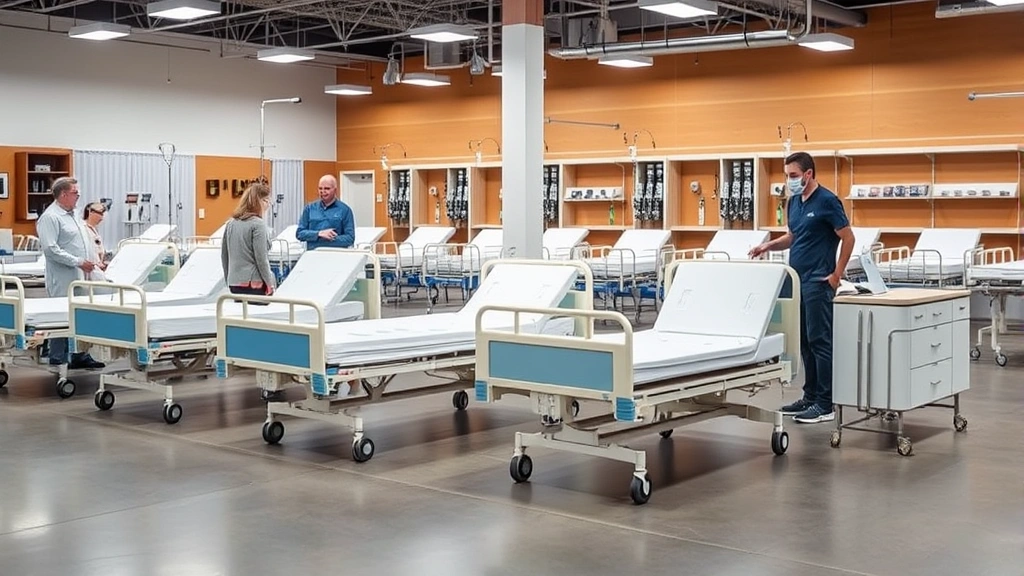
Online Marketplaces and E-Commerce Platforms
E-commerce has revolutionized hospital bed purchasing by offering convenience, competitive pricing, and access to a broader range of models. Major platforms including Amazon, eBay, and specialized medical equipment sites provide extensive selection with customer reviews and detailed product specifications.
Popular online retailers for hospital beds include:
- Amazon: Wide selection with prime shipping options and customer reviews from verified purchasers
- Wayfair: Comprehensive medical furniture section with price comparisons and delivery coordination
- Overstock: Competitive pricing and frequent promotional discounts on medical equipment
- Walmart and Target: Basic models at accessible price points with in-store pickup options
- Specialized medical sites: MedicalEMall, Vitality Medical, and BracesDirect focus exclusively on healthcare products
When shopping online, verify seller credentials, read reviews carefully, and confirm return policies. Many e-commerce platforms now offer white-glove delivery and assembly services for an additional fee. According to Statista’s e-commerce market analysis, the medical equipment segment has grown 18% annually as consumers increasingly prefer online purchasing for healthcare products.
Compare prices across multiple e-commerce platforms to identify the best deals. Many retailers offer price-match guarantees, so don’t hesitate to negotiate or request discounts on higher-priced items.
Direct Manufacturer Sales
Purchasing directly from manufacturers like Stryker, Hill-Rom, Invacare, and Drive Medical can sometimes yield better pricing and customization options. Many manufacturers operate direct-to-consumer sales channels or authorized dealer networks that bypass retail markups.
Benefits of manufacturer direct purchases include:
- Customization: Request specific features, colors, or configurations not available through retailers
- Bulk discounts: Facilities purchasing multiple units receive significant price reductions
- Extended warranties: Manufacturers often provide longer coverage periods for direct purchases
- Technical support: Direct access to engineering and product specialists
- Latest models: Early access to new releases and discontinued model clearance sales
Contacting manufacturers directly requires research to find sales representatives in your region. Many medical equipment companies maintain websites with dealer locators and direct contact information. Hill-Rom’s healthcare solutions and Stryker’s patient care division both offer comprehensive online catalogs with specification sheets and pricing guides.
Hospital Equipment Rental Services
Renting hospital beds provides flexibility for temporary needs, allowing you to test equipment before purchasing or avoid large upfront costs during recovery periods. Rental services typically charge $50-$150 monthly depending on bed complexity and features.
Major rental providers include:
- Aeroflow Health: Nationwide rental network with delivery and setup included
- Apria Healthcare: Insurance billing and flexible rental-to-purchase options
- Local DME providers: Community-based companies offering personalized service and rapid delivery
- Hospital discharge programs: Many hospitals partner with rental services to provide equipment immediately after discharge
Rental-to-purchase programs allow rental payments to apply toward eventual ownership, making this an attractive option for those uncertain about long-term needs. Most providers maintain equipment in excellent condition and offer maintenance included in rental fees, eliminating repair costs.
Insurance Coverage and Medicare Options
Understanding insurance coverage significantly impacts your final cost. Medicare Part B covers hospital beds classified as Durable Medical Equipment (DME) when prescribed by a physician for home use. Coverage typically includes 80% of approved equipment costs after meeting your deductible.
Key insurance considerations:
- Prior authorization: Most insurers require physician documentation and pre-approval before purchasing
- Supplier networks: Medicare requires purchasing from approved DME suppliers to receive coverage benefits
- Rental vs. purchase: Insurance may cover rental for temporary needs and purchase for permanent conditions
- Supplemental insurance: Medigap plans may cover the remaining 20% coinsurance amount
- Private insurance: Coverage varies by plan; contact your provider for specific details
According to CMS Medicare coverage guidelines, hospital beds must meet specific medical necessity criteria documented by your physician. The prescription should detail your condition, mobility limitations, and why a hospital bed is medically necessary rather than a regular bed.
Veterans may access hospital beds through the VA benefits program, with coverage extending to service-connected disabilities. Medicaid programs vary by state but generally cover hospital beds for eligible beneficiaries with medical necessity documentation.
Comparison Shopping Strategies
Effective comparison shopping requires evaluating multiple factors beyond initial purchase price. Create a detailed specification list including bed type, mattress quality, safety features, and warranty coverage before contacting vendors.
Essential comparison criteria:
- Bed type: Manual, semi-electric, or full electric models each serve different needs and budgets
- Weight capacity: Standard beds support 250-300 lbs; bariatric models accommodate 400-600+ lbs
- Mattress quality: Pressure-relief foam, gel, or air mattresses prevent bedsores for immobile patients
- Safety features: Side rails, emergency lowering systems, and brake mechanisms affect functionality
- Ease of use: Intuitive controls and quiet motors matter for caregiver burden and patient rest
- Dimensions: Measure doorways and room space to ensure bed fits your home layout
- Warranty coverage: Compare years covered, what’s included, and manufacturer responsiveness
- Delivery and setup: Factor in installation costs, assembly time, and old equipment removal
Request written quotes from at least three vendors including all fees. Many retailers offer price matching, so bring competitive quotes to negotiate better terms. Request trial periods when possible; some companies allow 30-day home trials before finalizing purchases.
Consider total cost of ownership including mattress replacement, maintenance contracts, and potential repairs. A slightly more expensive bed with comprehensive warranty coverage may provide better long-term value than the cheapest option.
As discussed in our guide on e-commerce marketing strategies, retailers increasingly use promotional tactics to drive sales. Be aware of limited-time discounts and seasonal sales, but don’t let marketing pressure override your medical needs assessment.
Researching hospital bed reviews through independent sources like Consumer Reports and healthcare forums provides unbiased perspective on reliability and durability. The Health Affairs journal publishes research on durable medical equipment accessibility and affordability, offering insights into industry trends and consumer outcomes.
Key Features to Evaluate
Modern hospital beds offer sophisticated features that enhance comfort and safety. Understanding which features align with your specific situation helps justify price differences and prevents overpaying for unnecessary options.
Mattress selection significantly impacts patient comfort and health outcomes. Pressure-relief mattresses reduce bedsore risk for immobile or semi-mobile patients. Memory foam options provide comfort for patients spending extended periods in bed. Gel-infused mattresses regulate temperature, benefiting patients with circulation issues. High-quality mattresses cost $500-$2,000 but represent essential investments for long-term bed use.
Electric adjustment capabilities allow patients to modify bed height and position without caregiver assistance. Full electric beds with head and foot elevation provide maximum independence and comfort. Semi-electric models offer electric height adjustment with manual head and foot positioning, reducing costs while maintaining essential functionality. Manual beds require physical effort for all adjustments, making them suitable only for patients with mobility and strength.
Safety features include side rails preventing falls, emergency lowering systems for power failures, and brake mechanisms securing the bed. Weight-rated frames and reinforced construction accommodate bariatric patients safely. Trendelenburg positioning capabilities allow head-down positioning for therapeutic purposes, particularly valuable for patients with respiratory or circulation conditions.
Portability and storage matter for temporary recovery situations. Lightweight aluminum frames facilitate movement and storage. Folding models compact for transport. Permanent installations require sturdy steel construction and stable positioning.
Budget Planning and Financing Options
Hospital bed costs range from $1,500 for basic manual models to $12,000+ for premium electric beds with advanced features. Establishing a realistic budget before shopping prevents overspending while ensuring adequate functionality for your needs.
Budget categories include:
- Entry-level: $1,500-$3,000 for manual or basic semi-electric beds
- Mid-range: $3,000-$6,000 for quality electric beds with standard features
- Premium: $6,000-$12,000 for advanced models with specialized features
- Bariatric: $4,000-$10,000 depending on weight capacity and features
Financing options make expensive beds more accessible. Many retailers offer payment plans with zero interest for 12-24 months. Credit cards with promotional financing periods can spread costs without interest charges. Home equity loans or lines of credit provide tax-deductible financing for home medical equipment.
Flexible spending accounts (FSA) and health savings accounts (HSA) allow using pre-tax dollars for hospital bed purchases, reducing effective costs by 20-37% depending on tax brackets. Check plan documentation for medical equipment coverage eligibility.
Explore charitable organizations and patient advocacy groups that sometimes provide equipment assistance programs. The AARP caregiving resource center maintains databases of equipment assistance programs organized by state and condition.
Delivery, Installation, and Setup
Professional delivery and installation services ensure hospital beds are properly assembled, tested, and positioned for safe operation. Many retailers include these services; others charge additional fees ranging from $100-$500 depending on complexity.
Delivery considerations include:
- Timeline: In-stock models typically deliver within 3-7 business days; special orders may require 2-4 weeks
- Access: Confirm doorways, hallways, and elevators accommodate bed dimensions
- Setup location: Identify the room where the bed will remain to ensure proper positioning
- Old equipment removal: Arrange disposal or donation of existing furniture
- Assembly: Professional installation ensures safety and warranty validity
- Training: Technicians should explain operation, maintenance, and safety features
After installation, test all functions including height adjustment, rail operation, and emergency features before technicians leave. Request written documentation of installation, warranty activation, and emergency contact numbers for support issues.
Maintenance, Warranties, and Long-Term Support
Hospital bed longevity depends on proper maintenance and manufacturer support. Comprehensive warranties protect your investment and ensure access to repairs when needed.
Typical warranty coverage includes:
- Frame warranties: 5-10 years for structural integrity
- Motor warranties: 2-5 years for electric components
- Mattress warranties: 1-3 years for defects and comfort issues
- Parts replacement: Coverage for rails, wheels, and other components
Extended warranty options provide coverage beyond standard periods, particularly valuable for beds expected to serve long-term needs. Service contracts including preventive maintenance, repairs, and replacement parts offer peace of mind and avoid unexpected costs.
Regular maintenance preserves bed functionality and safety. Clean frames and rails weekly. Inspect wheels, brakes, and electrical connections monthly. Rotate or flip mattresses according to manufacturer recommendations. Keep control panels dry and protected from spills. Most manufacturers provide maintenance guidelines in product documentation.
Establish relationships with medical equipment suppliers for ongoing support. Reliable suppliers respond quickly to service issues, maintain parts inventory, and provide knowledgeable technical assistance. Quality customer service often justifies slightly higher purchase prices through superior long-term value.
FAQ
What is the average cost of a hospital bed?
Hospital bed costs range from $1,500 for basic manual models to $12,000+ for premium electric beds with advanced features. Most quality electric beds suitable for home care cost $3,000-$6,000. Insurance coverage significantly reduces out-of-pocket expenses for eligible beneficiaries.
Does Medicare cover hospital beds?
Yes, Medicare Part B covers hospital beds classified as Durable Medical Equipment when medically necessary and prescribed by a physician. Coverage typically includes 80% of approved costs after deductible. You must purchase from Medicare-approved DME suppliers to receive benefits.
Can I rent a hospital bed instead of buying?
Yes, renting hospital beds is ideal for temporary recovery needs. Monthly rental costs range from $50-$150 depending on bed complexity. Many rental-to-purchase programs allow rental payments to apply toward eventual ownership if you decide to buy.
What’s the difference between manual and electric hospital beds?
Manual beds require physical effort for all adjustments including height and positioning. Electric beds use motors for height adjustment and positioning, reducing caregiver burden and enhancing patient independence. Electric beds cost more but provide superior functionality for long-term use.
Where can I find hospital beds near me?
Local medical supply retailers like Apria Healthcare and Aeroflow Health maintain physical locations where you can view and test beds. Search “medical supply store near me” or contact your insurance provider for approved DME supplier lists. Many retailers offer same-day or next-day delivery.
Are bariatric hospital beds significantly more expensive?
Bariatric hospital beds supporting 400-600+ lbs typically cost $1,000-$3,000 more than standard models due to reinforced construction and heavy-duty components. Many manufacturers offer bariatric options across their product lines, providing choices at various price points.
What mattress type is best for hospital beds?
Pressure-relief foam or gel mattresses prevent bedsores for immobile patients. Memory foam provides comfort for patients spending extended periods in bed. Air mattresses offer adjustable firmness and superior pressure distribution. Choose based on your specific medical needs and budget.
How long do hospital beds typically last?
Quality hospital beds last 7-10 years with proper maintenance. Frame durability depends on material quality and usage intensity. Motors and electrical components may require replacement after 5-7 years. Mattresses typically need replacement every 3-5 years depending on usage and care.