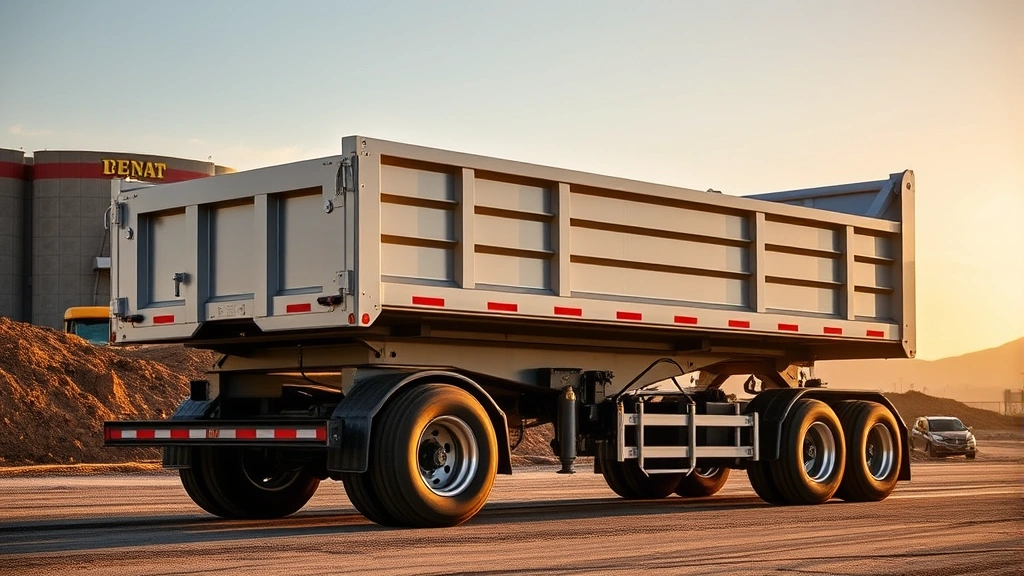
Best Dump Trailers for Sale: Comprehensive Buyer’s Guide
Investing in a dump trailer represents a significant capital expenditure for construction companies, landscapers, demolition contractors, and waste management businesses. Whether you’re operating a small residential service or managing a large commercial fleet, selecting the right dump trailer for sale directly impacts your operational efficiency, profitability, and safety compliance. This comprehensive guide walks you through the essential factors, specifications, and market considerations to make an informed purchasing decision.
The dump trailer market has evolved substantially over the past decade, with manufacturers offering increasingly sophisticated hydraulic systems, safety features, and material options. According to industry data, the global dump trailer market is projected to maintain steady growth as construction activity rebounds and infrastructure projects expand. Understanding your specific operational requirements, budget constraints, and regulatory obligations is crucial before committing to a purchase.
This buyer’s guide provides actionable insights into trailer specifications, financing options, vendor evaluation criteria, and maintenance considerations that will help you identify the best dump trailers available in today’s market. We’ve compiled research from equipment dealers, industry reports, and operational best practices to ensure you have comprehensive information for your investment decision.
Understanding Dump Trailer Types and Configurations
Dump trailers come in several distinct configurations, each designed for specific operational requirements and material types. The most common classification divides trailers into single-axle, tandem-axle, and tri-axle models, with load capacities ranging from 5 tons to over 20 tons depending on configuration and local regulations.
Single-axle dump trailers typically carry 5 to 10 tons and are ideal for smaller contractors, landscapers, and residential services. These models offer exceptional maneuverability in tight spaces and lower operating costs due to reduced fuel consumption and maintenance requirements. They’re particularly popular among high-ticket sales professionals operating independent contracting businesses.
Tandem-axle trailers provide 10 to 15 ton capacity and represent the sweet spot for many mid-sized operations. The dual-axle configuration distributes weight more evenly, reducing road wear and improving stability on uneven terrain. These trailers accommodate most commercial construction debris, landscaping materials, and demolition waste.
Tri-axle dump trailers represent the heavy-duty segment, capable of handling 15 to 25+ tons depending on specifications and local weight regulations. These are essential for major construction projects, mining operations, and aggregate transport. The three-axle design provides maximum stability and load distribution, though they require appropriate licensing and incur higher operational costs.
Beyond axle configuration, dump trailers vary in bed type: standard open-top designs, gooseneck configurations for improved stability, lowboy models for equipment transport, and specialized hoppers for specific materials. Understanding these distinctions helps align your purchase with actual operational needs rather than purchasing excess capacity.
Key Specifications and Capacity Considerations
When evaluating dump trailers for sale, several critical specifications determine whether a unit will effectively serve your business requirements. Payload capacity represents the maximum weight the trailer can safely carry, while tare weight indicates the empty trailer’s mass. The difference between these figures determines your actual hauling capacity.
Bed dimensions significantly impact material volume capacity. Standard configurations measure 8 feet wide by 12-16 feet long, though custom dimensions are available. A 14-foot bed typically accommodates 10-14 cubic yards of material, while 16-foot configurations handle 14-18 cubic yards. Calculate your typical load requirements by material type—soil, gravel, and demolition debris have different densities affecting volume-to-weight ratios.
Dump height affects material discharge efficiency and operational convenience. Most trailers dump at 45-55 degrees, with hydraulic systems designed for specific angles. Verify that the dump height accommodates your typical unloading locations and doesn’t exceed clearance restrictions at your regular job sites. Some specialized applications require custom angles or partial-dump capabilities.
Hitch compatibility requires careful attention. Ensure the trailer’s hitch type matches your towing vehicle’s capacity and configuration. Gooseneck trailers require ball mounts, while bumper-pull models use standard couplers. Verify that your vehicle’s gross vehicle weight rating (GVWR) and towing capacity exceed the combined weight of the loaded trailer by a safe margin—never operate at maximum capacity.
Ground clearance, approach angles, and departure angles affect where you can operate the trailer. Trailers with lower clearance may struggle on rough terrain or in unfinished construction sites. Review these specifications against your typical work environments to avoid costly operational limitations.
Material and Construction Quality
The dump trailer’s structural integrity directly correlates with durability, safety, and total cost of ownership. Steel construction remains the industry standard, with variations in grade, thickness, and coating determining longevity and maintenance requirements.
High-strength steel (HSLA) has become increasingly common in modern dump trailers, offering superior strength-to-weight ratios compared to conventional steel. This allows manufacturers to reduce overall trailer weight while maintaining or exceeding load capacity, improving fuel efficiency and reducing wear on towing vehicles.
Coating systems significantly impact rust resistance and maintenance costs. Options include:
- Paint only: Most economical but requires regular inspection and touch-up work
- Galvanized coating: Provides superior corrosion resistance, particularly valuable in coastal regions or wet climates
- Powder coating: Offers excellent durability and aesthetic appeal with minimal maintenance
- Epoxy or polyurethane systems: Premium options providing maximum protection for extended service life
The bed floor material impacts both durability and maintenance requirements. Hardwood floors provide good traction and are easily replaceable when worn, making them economical for high-use operations. Composite or rubber flooring reduces maintenance but represents higher initial cost. Some operators prefer sealed steel floors with specialized coatings for maximum longevity.
Sidewall height and construction affect both capacity and durability. Taller sidewalls increase volume capacity but may exceed weight regulations in some jurisdictions. Reinforced sidewalls with internal bracing prevent bulging under heavy loads and extend service life. Examine welds carefully—high-quality construction uses continuous welds without gaps or inconsistencies.
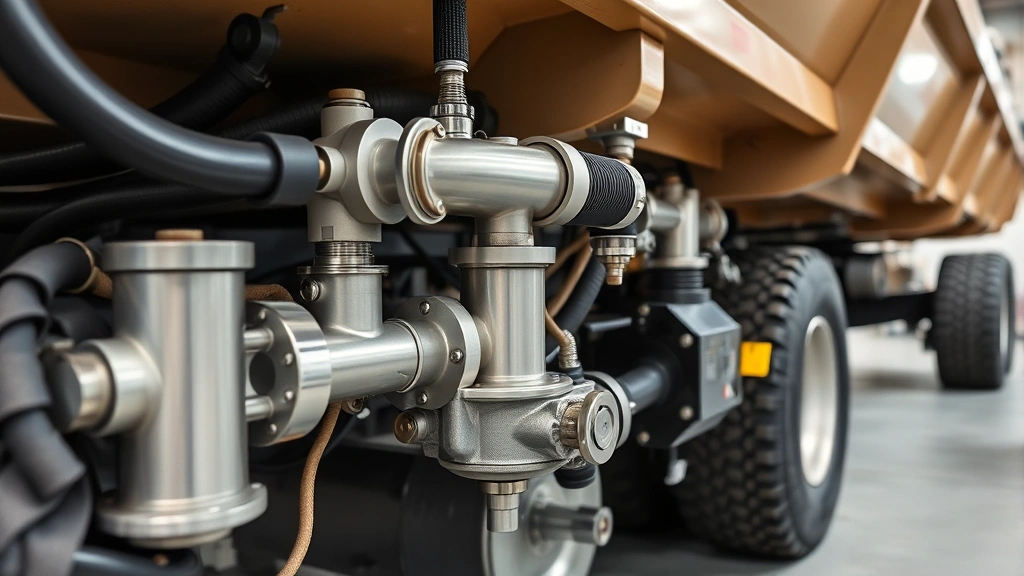
” alt=”Dump trailer hydraulic system components and tractor connection” style=”max-width:100%;height:auto;”>
Hydraulic Systems and Dumping Mechanisms
The hydraulic system represents the dump trailer’s most critical mechanical component, determining reliability, speed, and operational safety. Modern systems use single-acting or double-acting cylinders, with power sourced from the towing vehicle’s engine via PTO (power take-off) shaft or onboard pump systems.
Single-acting cylinders use hydraulic pressure to raise the bed, relying on gravity to lower it. These systems are simpler, more economical, and require less power from the towing vehicle. Single-acting designs work well for standard applications but may not provide sufficient control for delicate materials or precise placement.
Double-acting cylinders use hydraulic power for both raising and lowering, providing superior control and allowing partial dumps. These systems cost more initially but offer operational advantages in situations requiring careful material handling or staged unloading. Many commercial operations prefer double-acting systems despite higher investment.
Hydraulic hose quality directly affects safety and longevity. Premium-grade hoses with proper sizing, routing, and protection against abrasion last significantly longer than economy options. Verify that all hoses include proper shielding in high-wear areas and that connections use industry-standard fittings with redundant safety features.
Pump capacity, measured in gallons per minute (GPM), determines how quickly the bed raises. Larger pumps dump faster but require more engine power and fuel consumption. Select pump capacity matching your operational tempo—fast dumping reduces cycle time for high-volume operations, while moderate speeds suffice for lower-frequency use.
Safety relief valves prevent system overpressure that could damage cylinders or hoses. Verify that your chosen trailer includes properly rated relief valves and that the system includes secondary containment or drip trays to manage hydraulic fluid leaks. Regular hydraulic fluid analysis prevents system degradation and extends component life.
Safety Features and Regulatory Compliance
Operating dump trailers involves inherent safety risks that proper equipment design and maintenance mitigate. Federal and state regulations establish minimum safety standards, with additional requirements varying by jurisdiction and application type.
Brake systems require careful evaluation. Most dump trailers use surge brakes (hydraulic brakes activated by towing vehicle deceleration) or electric brakes (controlled via brake controller). Air brakes, common on heavy commercial units, provide superior stopping power for larger loads. Ensure your towing vehicle can accommodate the brake system type and that you understand operational procedures.
Lighting systems must meet DOT standards, including clearance lights, brake lights, and reflective markings. Modern LED systems offer superior visibility, lower power consumption, and longer service life compared to traditional incandescent options. Verify that all lighting is properly sealed against moisture and dirt accumulation.
Tire selection impacts safety, efficiency, and operational cost. Commercial-grade tires rated for the trailer’s load capacity are essential. Dual wheels on tandem and tri-axle configurations require careful monitoring to prevent uneven wear. Establish a tire maintenance schedule and budget for replacement at 70-80% tread depth rather than waiting for failure.
Jack systems allow independent operation of the trailer when disconnected from the towing vehicle. Mechanical jacks are economical and reliable, while electric jacks offer convenience for frequent hitching/unhitching. Ensure the jack capacity exceeds the trailer’s fully-loaded weight and that it’s properly rated for your typical ground conditions.
Tie-down systems, load securement points, and bed dividers prevent cargo shifting during transport. Verify that all attachment points are properly welded and rated for the expected load. Some materials require specific securement methods or tarping systems—ensure your trailer configuration accommodates these requirements.
Pricing and Financing Options
Dump trailer pricing varies substantially based on size, configuration, materials, and manufacturer reputation. Single-axle models range from $5,000 to $12,000, tandem-axle trailers cost $10,000 to $20,000, and tri-axle units command $18,000 to $35,000+ for premium configurations. Custom builds can exceed these ranges significantly.
When evaluating pricing, calculate total cost of ownership including financing costs, insurance, maintenance, repairs, and eventual resale value. A seemingly expensive premium trailer may prove more economical over 10+ years of operation if it requires less maintenance and retains resale value better than budget alternatives.
Financing options for dump trailers for sale include dealer financing, bank loans, equipment leasing, and business credit lines. Many dealers offer promotional financing (0-3% APR for 24-60 months) that can substantially reduce total acquisition cost. Compare loan terms carefully, considering both monthly payments and total interest paid over the loan term.
Leasing provides an alternative to ownership, particularly for seasonal operations or businesses with uncertain equipment needs. Monthly lease payments ($300-$800 depending on trailer value) include maintenance and insurance, simplifying budgeting and eliminating obsolescence risk. However, leasing typically costs more over extended periods than ownership.
Used dump trailers for sale can offer substantial savings, typically 30-50% below new unit pricing. Inspect used trailers carefully, examining frame integrity, hydraulic system condition, tire wear, and maintenance history. Request documentation of recent repairs and verify that the unit hasn’t been involved in accidents or structural damage. Consider purchasing used units only from reputable dealers who provide warranty coverage.
Tax considerations may affect your purchase decision. Consult with your accountant regarding depreciation schedules, Section 179 deductions, and bonus depreciation opportunities that could reduce your tax liability. These incentives sometimes make purchasing more advantageous than leasing.

” alt=”Modern dump trailer parked at construction site with varied earth materials” style=”max-width:100%;height:auto;”>
Top Manufacturers and Brands
Established manufacturers dominate the dump trailer market, offering proven designs, readily available parts, and strong resale value. Research from TruckInfo equipment databases and industry publications identifies consistent performers across market segments.
PJ Trailers maintains market leadership through innovative designs, quality construction, and extensive dealer network. Their models range from economy to premium configurations, accommodating virtually any budget and application. PJ’s reputation for durability and parts availability makes them a reliable choice for commercial operations.
Maclift specializes in heavy-duty dump trailers with premium hydraulic systems and construction quality. Their trailers command higher prices but typically deliver superior longevity and lower maintenance costs. Maclift is particularly popular among contractors operating in demanding environments.
Hudson offers competitively priced dump trailers with solid construction and adequate performance for most applications. Their mid-market positioning appeals to contractors seeking value without premium pricing. Hudson dealers provide good support and parts availability across most regions.
Kaufman focuses on specialized dump trailer configurations, including gooseneck models and custom designs. Their expertise in non-standard applications makes them valuable for contractors with unique requirements. Kaufman typically requires longer lead times but delivers precisely specified equipment.
Emerging manufacturers and regional builders often provide competitive pricing and customization options unavailable from major brands. However, verify that these options offer adequate dealer support, parts availability, and warranty coverage before committing to purchase. Brands without established dealer networks may prove problematic when repairs are needed.
Where to Find Dump Trailers for Sale
Multiple channels exist for locating and purchasing dump trailers, each offering distinct advantages and requiring different evaluation approaches. Understanding these channels helps you identify the best options for your specific situation.
Authorized dealers represent the primary sales channel for new equipment. Dealers typically offer financing, warranty coverage, and service support as part of their business model. Building relationships with local dealers provides long-term advantages, including priority service scheduling and access to trade-in opportunities. Many dealers also stock used equipment from trade-ins and fleet upgrades.
Online marketplaces including Craigslist, Facebook Marketplace, and EquipmentTrader.com connect buyers with private sellers and smaller dealers. These platforms offer broader selection and potentially better pricing, but require careful vetting to avoid fraudulent listings or misrepresented equipment. Always inspect units in person before committing to purchase.
Auction sites including IronPlanet and Machinery Auctions offer opportunities to acquire equipment at discount prices, often from fleet liquidations or business closures. Auction purchases typically involve “as-is” conditions without warranty, requiring thorough pre-purchase inspection and careful bidding strategy to avoid overpaying for problem equipment.
Equipment rental companies sometimes sell used trailers from their fleets. These units typically have comprehensive maintenance records and known service histories, making them attractive options for buyers valuing documented condition. Rental equipment may show higher wear but generally receives consistent maintenance.
Trade publications and industry websites including Construction Equipment Guide and Equipment World feature classified listings from dealers and private sellers. These specialized platforms attract serious buyers and sellers, reducing scam risk compared to general marketplaces.
Government surplus auctions occasionally feature dump trailers from fleet liquidations. These auctions typically require registration and cash payment, but can yield exceptional values. Monitor GovDeals and state surplus sites regularly for opportunities.
Maintenance and Longevity
Proper maintenance directly determines how long your dump trailer serves your business and how much it costs to operate. Establishing and following a structured maintenance schedule prevents costly failures and extends equipment life substantially.
Pre-operation inspections should occur before each use, examining tires for proper inflation and damage, checking lights and brake function, verifying hydraulic fluid levels, and inspecting the bed for debris or damage that could affect operation. These brief checks prevent many common problems and identify developing issues before they cause failures.
Monthly maintenance includes more thorough inspections: checking all bolts and fasteners for tightness, examining hoses for cracks or leaks, testing brake operation under load, and reviewing tire wear patterns. Clean the trailer regularly to prevent dirt accumulation that accelerates corrosion and obscures developing problems.
Seasonal maintenance before winter includes winterizing hydraulic fluid (using appropriate viscosity for cold temperatures), inspecting electrical connections for corrosion, checking tire tread depth, and applying protective coatings to prevent salt and moisture damage. Spring maintenance includes flushing and replacing hydraulic fluid if winter operation created contamination.
Annual professional service should be performed by qualified technicians, including complete hydraulic system inspection, seal replacement, bearing lubrication, electrical system testing, and structural inspection for cracks or corrosion. This comprehensive evaluation identifies issues before they develop into serious problems.
Hydraulic fluid maintenance proves particularly critical. Change hydraulic fluid annually or per manufacturer recommendations, and more frequently in dusty or harsh environments. Use only manufacturer-approved fluid types—mixing incompatible fluids causes system failure. Keep hydraulic fluid clean through proper storage and handling to prevent contamination-related failures.
Tire maintenance extends service life and prevents blowouts. Rotate tires every 10,000-15,000 miles, maintain proper inflation pressure (check monthly), and replace tires when tread reaches 4/32 inch (penny test). Dual wheels require special attention to ensure even wear between paired tires.
Structural inspections should examine welds for cracks, particularly in high-stress areas like frame corners and hitch connections. Surface rust can be treated with wire brushing and touch-up paint, but structural rust that reduces metal thickness requires professional repair. Address rust aggressively to prevent progressive deterioration.
Keeping detailed maintenance records documents service history, supports warranty claims, and facilitates resale. Record all maintenance, repairs, fluid changes, and parts replacements. This documentation demonstrates responsible ownership and justifies higher resale value when you eventually upgrade to newer equipment.
FAQ
What’s the typical lifespan of a dump trailer?
Well-maintained dump trailers typically last 15-25 years or longer. Longevity depends heavily on maintenance consistency, operating conditions, and material quality. Trailers in harsh environments or receiving inadequate maintenance may require replacement after 8-10 years, while premium equipment in favorable conditions can exceed 25 years. Calculate annual ownership costs over your expected equipment life to make informed purchasing decisions.
Can I use a dump trailer with my pickup truck?
Yes, if your pickup has adequate towing capacity. Single-axle dump trailers typically weigh 3,000-5,000 pounds empty and can carry 5-10 tons, requiring a truck rated for at least 12,000-15,000 pounds towing capacity. Verify your truck’s GVWR and towing specifications before purchase. Larger trailers require heavy-duty trucks or commercial towing vehicles. Exceeding your vehicle’s capacity creates safety hazards and voids warranties.
What’s the difference between a dump trailer and a dumpster?
Dump trailers are mobile equipment towed behind vehicles, offering flexibility and high capacity. Dumpsters are stationary containers requiring waste removal services. Dump trailers suit contractors and businesses with variable material volumes and multiple job sites. Dumpsters work better for stationary operations with consistent waste streams. Many contractors use both—trailers for on-site collection and dumpsters for office/yard waste.
How do I choose between new and used dump trailers for sale?
New trailers offer warranty coverage, latest technology, and customization options, but cost 30-50% more than comparable used units. Used trailers provide immediate cost savings and faster deployment, but require careful inspection and offer limited warranty protection. Consider your budget, equipment reliability requirements, and usage timeline. Budget-conscious operations often purchase used, while contractors requiring maximum reliability prefer new equipment with warranty coverage.
What maintenance costs should I budget annually?
Budget 10-15% of the trailer’s purchase price annually for maintenance and repairs. A $15,000 trailer would require $1,500-$2,250 yearly maintenance budget. Costs vary based on usage intensity, operating environment, and equipment age. Newer equipment costs less to maintain, while older trailers may exceed this estimate. Establish a maintenance reserve fund to cover unexpected repairs without disrupting cash flow.
Can I customize a dump trailer to my specific needs?
Most manufacturers offer customization options including bed dimensions, hydraulic configurations, material selections, and specialized features. Custom builds require longer lead times (8-16 weeks) and may cost 10-20% more than standard models. Discuss your requirements with manufacturers or dealers—they can recommend cost-effective customizations that meet your needs without excessive complexity. Avoid over-customization that limits future resale value.
What regulations apply to operating dump trailers?
Regulations vary by state and jurisdiction but typically include weight limits (often 80,000 pounds GVWR on highways), brake requirements, lighting standards, and load securement rules. Commercial operations may require additional licensing, insurance, and vehicle registrations. Consult your state’s Department of Transportation and local regulations before operating. Business for sale listings often detail regulatory requirements relevant to equipment-based operations.
How does dump trailer pricing compare to leasing costs?
Purchasing typically costs less over 10+ year ownership periods, despite higher upfront costs. Leasing offers lower monthly payments ($300-$800) and includes maintenance, but accumulates to higher total costs over extended periods. Calculate your expected equipment life and usage patterns to determine which option provides better value. Seasonal businesses often benefit from leasing, while year-round operations favor purchasing.